
Last updated August 26, 2026
Free on-site gate assessment - hinges, posts, and your LiftMaster or Nice gate operator checked before anything is quoted
The assessment is free and the quote is the invoice.
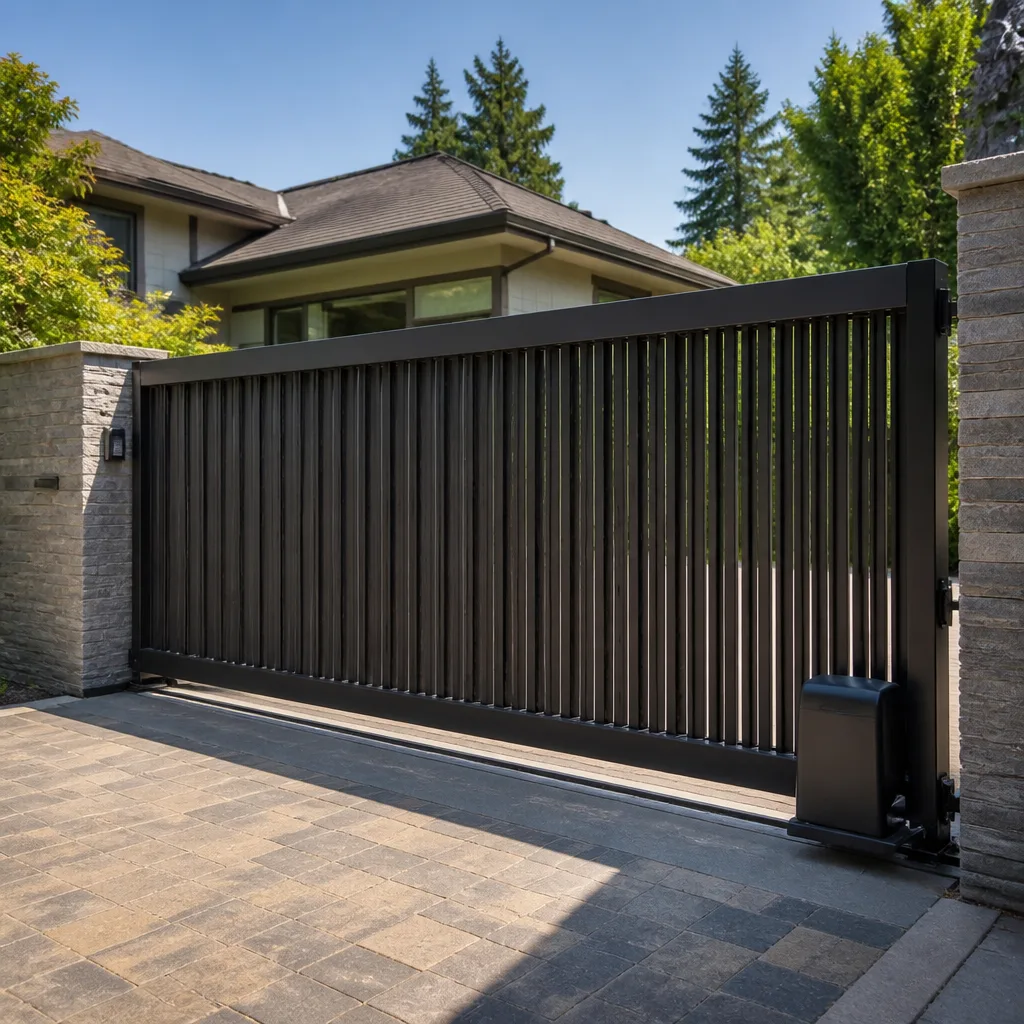
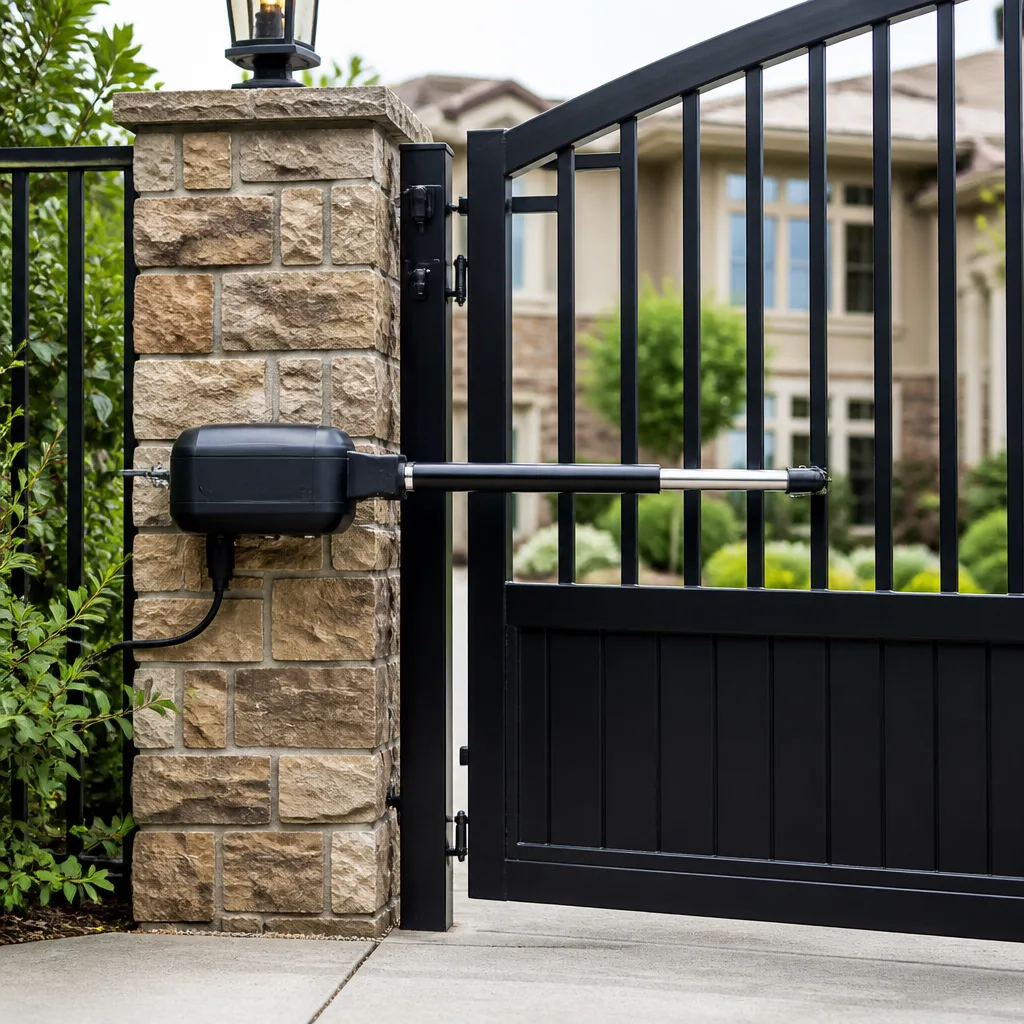
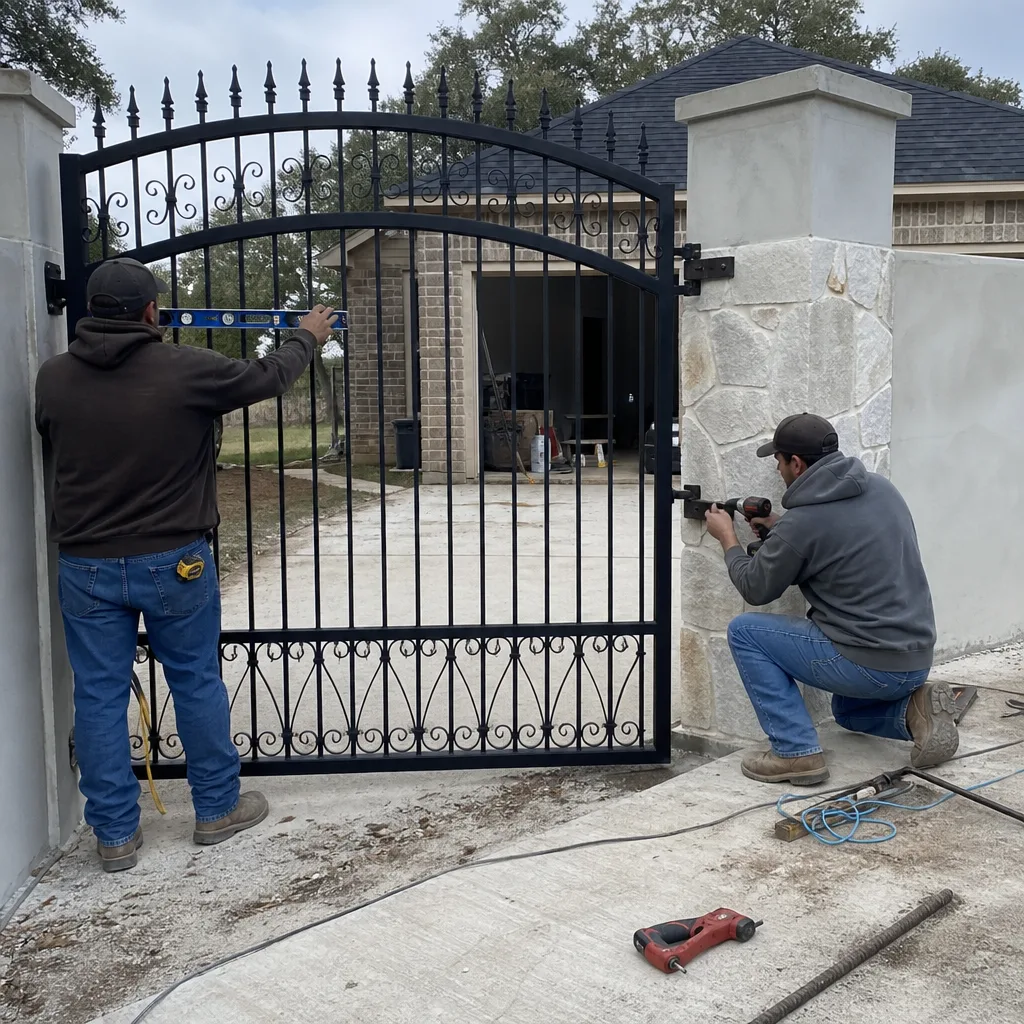
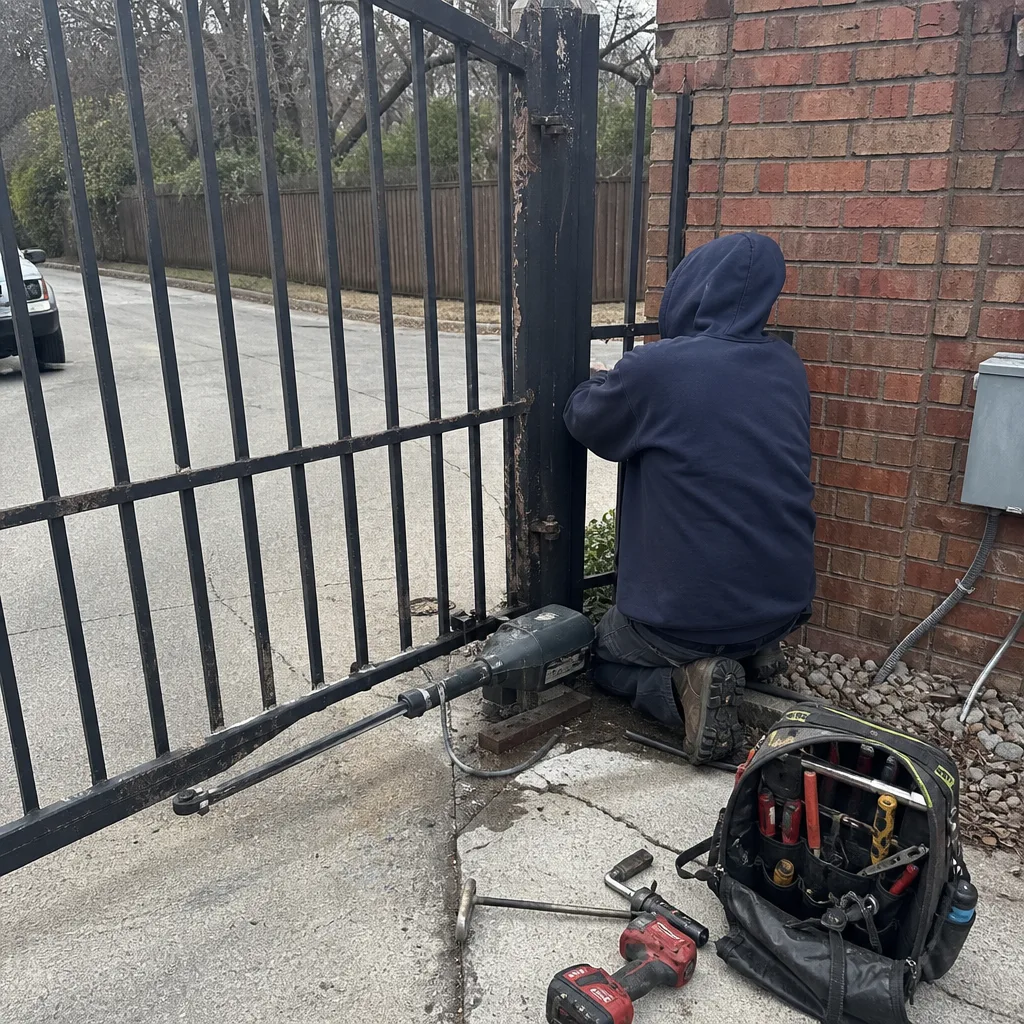 Before
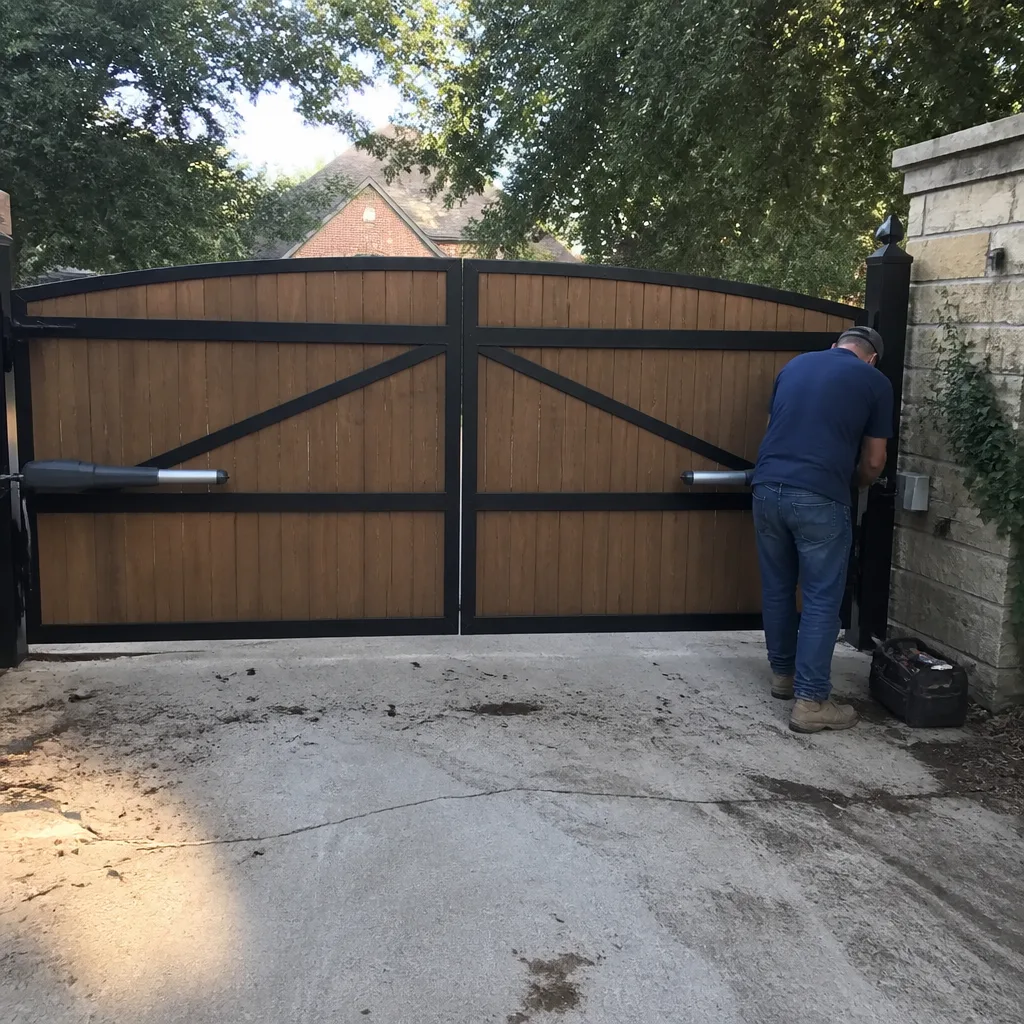 After
After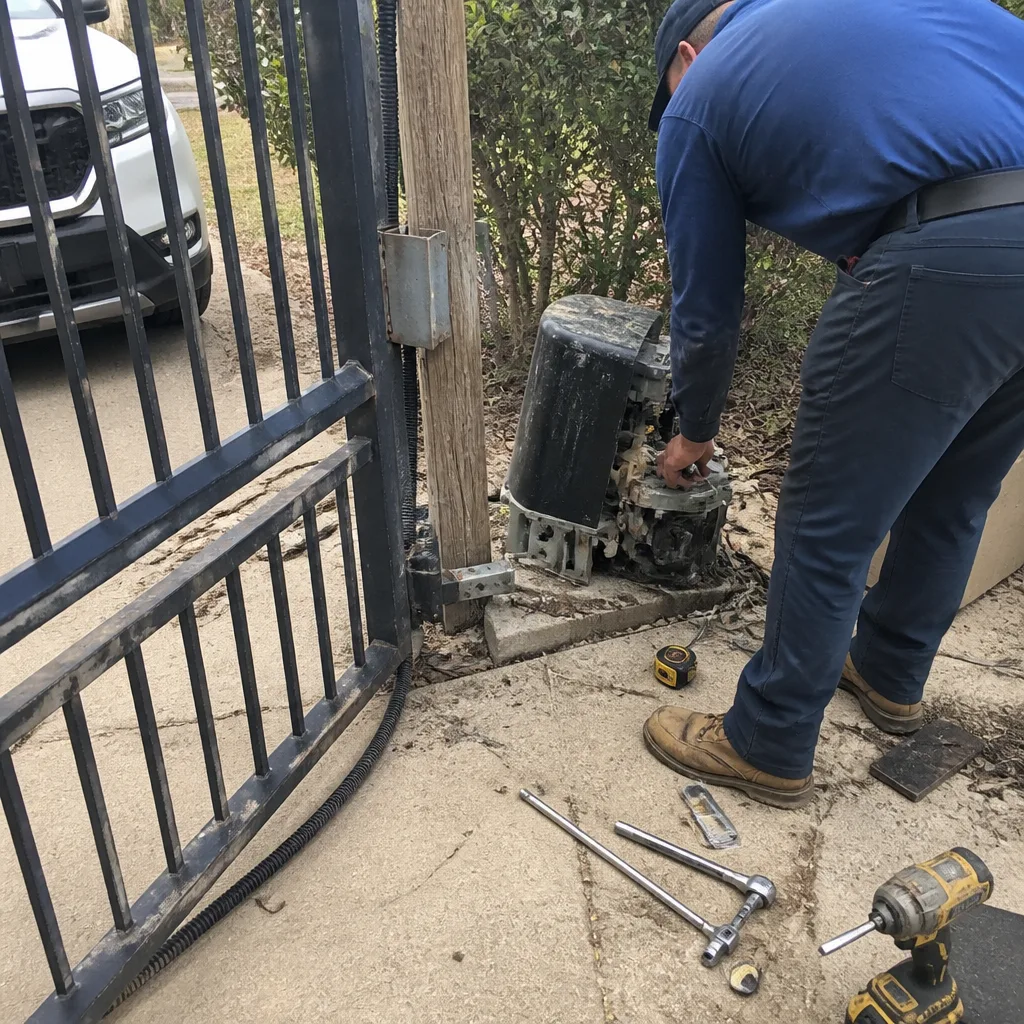 Before
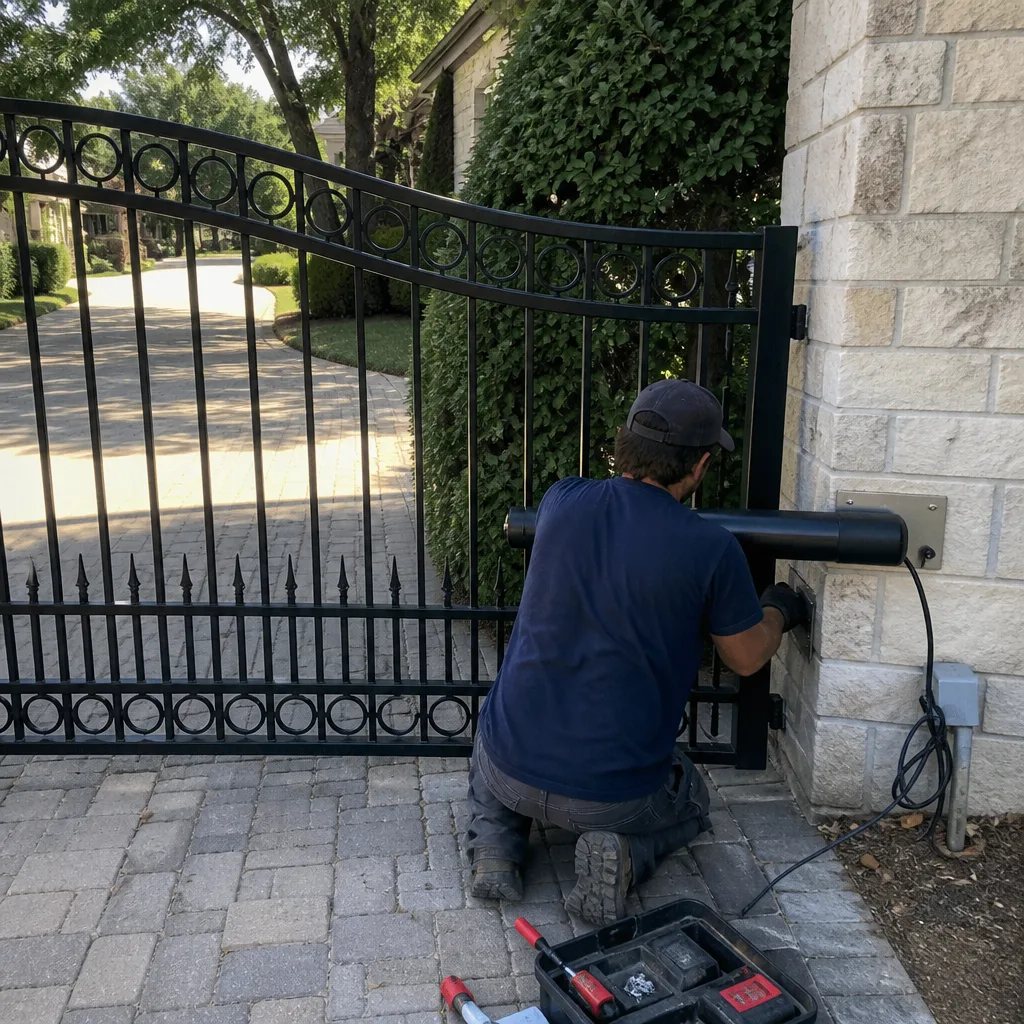 After
After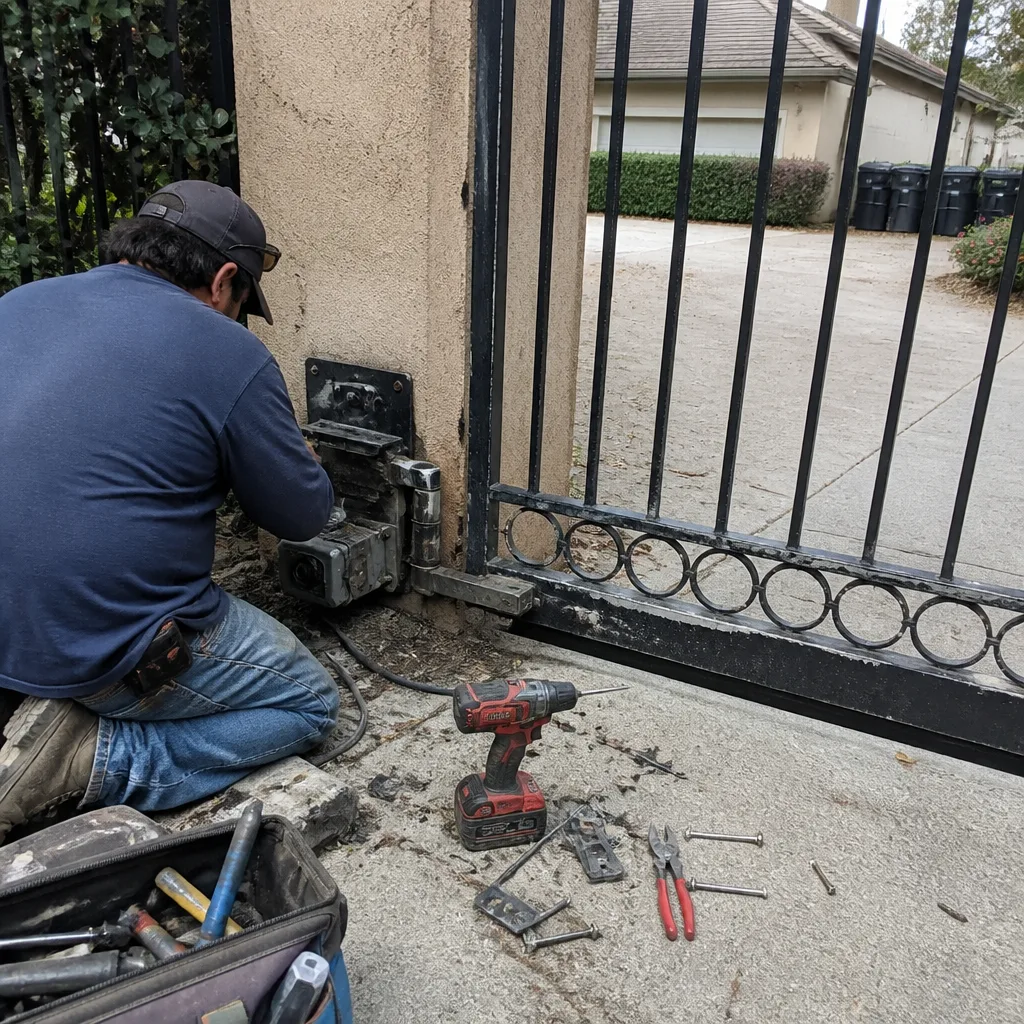 Before
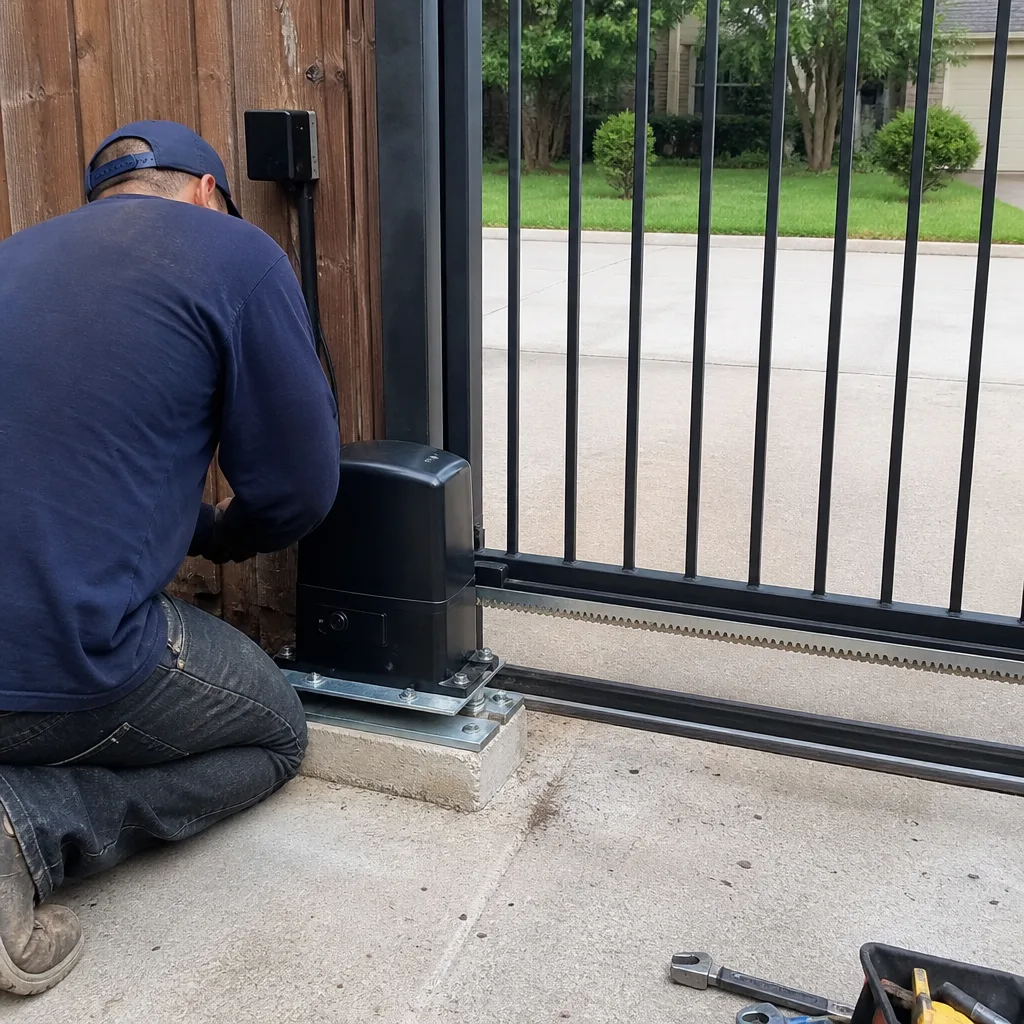 After
AfterDIY vs Professional Gate Repair: The Fort Worth Homeowner’s Decision Guide
Most gate repairs in Fort Worth don’t fail because the homeowner lacked skill. They fail because the homeowner misjudged which part of the gate was actually broken. A sagging gate is rarely a hinge problem, a gate that won’t close is rarely a motor problem, and a leaning post is never just a post problem. What follows is a straight guide to which repairs a careful homeowner can genuinely handle in a Saturday afternoon, which ones carry real risk, and how to tell the difference before you dig, cut, or weld yourself into a $900 problem. For a deeper look at pricing, see our Gate Repair Cost Breakdown: The Fort Worth Homeowner’s Reference for 2026.
Quick Answer
DIY gate repair in Fort Worth makes sense for surface-level jobs: tightening hinges, replacing a latch, greasing rollers, adjusting a limit switch on a manual gate. It does not make sense for structural post work, weld repairs on a security gate, or automatic opener wiring. The line is simple: if the fix requires digging below the frost line, cutting or welding load-bearing metal, or touching line-voltage wiring, call a professional. Everything else, with the right tools and patience, is fair game.
Table of Contents
- Repairs a Careful Homeowner Can Genuinely Handle
- Repairs That Look Simple But Carry Real Risk
- The Hidden Cost of a Failed DIY Repair
- What Fort Worth Homeowners Get Wrong on Gate Operators
- The Actual Tools and Time Required for Common DIY Gate Fixes
- How to Talk to a Contractor After a DIY Attempt Goes Sideways
- Fort Worth-Specific Factors That Change the Calculus
- Common Mistakes to Avoid
Repairs a Careful Homeowner Can Genuinely Handle
We’re not going to tell you every gate repair requires a professional. That’s the line national companies use to charge you $400 for what amounts to a wrench turn. Here’s the honest list of repairs that a homeowner who can read a level and hold a drill can handle. These are jobs where the failure is visible, the fix is mechanical, and the risk of making things worse is low.
- Tightening or replacing hinge bolts and screws: If your gate drags on the latch side but the posts are still plumb, the fix is often as simple as tightening the hinge hardware. Over time, Fort Worth’s clay soil heaves with wet-dry cycles, and that movement loosens bolts. A socket set and 30 minutes handles this.
- Replacing a surface-mounted latch or gravity latch: When the latch no longer catches, and the gate itself is level, a new latch is a $20 part and a screwdriver job. No cutting, no welding, no risk to the structure.
- Lubricating hinges, rollers, and the operator chain or screw: A gate that groans in July in Fort Worth is usually dry metal. White lithium grease on the hinges and a silicone spray on the rollers restores smooth operation. This is 15 minutes and it’s genuinely preventive.
- Adjusting the closing speed or force settings on the opener (when you have the manual): On most residential openers, including Linear and Ghost Controls models, there’s an access panel with two small adjustment screws. If your gate slams or stops halfway, and you have the manual, adjusting these settings is safe and reversible. If you don’t have the manual, stop and look it up before touching anything.
- Cleaning and tightening the track on a sliding gate: A sliding gate that binds is often just a track full of gravel and oak leaves. Clean it out, check the wheels for pitting, and re-tighten the track bolts. This takes an hour and it’s a job you’ll do again in six months anyway.
- Replacing wheels on a cantilever or V-track gate (when the old ones are bolt-on): This is the upper end of DIY. If your wheels are bolt-on rather than welded, you can swap them yourself. You’ll need a jack capable of lifting the gate, jack stands, and a socket set. It’s a two-hour job and the risk is managing the gate’s weight safely while it’s lifted, not the mechanical work itself.
The pattern here: these are all repairs where the gate’s structure stays intact, the hardware is bolt-on, and the most expensive mistake you can make is stripping a screw. That’s genuinely doable.
For anything beyond this list, or if you’re not sure which category your gate falls into, our Fort Worth gate repair guide walks through the most common failures we see by neighborhood.
Repairs That Look Simple But Carry Real Risk
Now the other side. These are repairs that look beginner-friendly on the surface, and that’s exactly why they produce the most expensive messes. We’ve seen all of these in Fort Worth driveways more than once.
Post work near utilities is the first and most serious one. In Fort Worth, your gate posts are often within a few feet of where the gas line runs from the street to your house, or where the main power feed comes in. Digging out a concrete footer to re-plumb a leaning post without locating those lines first is how a $400 post repair becomes a service interruption and a very uncomfortable conversation with the utility company. The city and county both maintain maps, but nothing guarantees where the line actually is until a locating service marks it. This is not a job for a post-hole digger and an afternoon.
Welding on a security gate is the second one. A driveway gate that’s been protecting a Fort Worth property for 20 years has hinges and brackets that carry real static load. When one of those welds cracks, the gate still looks fine for a while, and that’s the danger. A homeowner with a Harbor Freight flux-core welder will lay a bead across the crack without grinding out the old weld, without proper penetration, and without understanding that they’ve now put a brittle spot right where the gate flexes. It holds for a month. Then it fails at 6 a.m. on a Monday with the gate hanging half off. On-site welding means the gate stays in your driveway, the bead is laid by someone who has done this since before YouTube existed, and the repair is checked under load before we leave.
Automatic operator wiring is the third. Not the low-voltage photo eye wiring, not the keypad, and not the remote programming. The line-voltage side. A gate operator on a Fort Worth residential driveway typically runs on 120V straight off a dedicated circuit. If you’re not comfortable inside your breaker panel, you’re not comfortable inside a gate operator cabinet. The good news is most operator problems are not line-voltage problems. They’re limit switch issues, photo-eye misalignment, and dead remote batteries. But the moment you’re holding a multimeter and looking at 120V leads wondering which one is hot, you’ve crossed the line into a job that requires a licensed electrician or a gate professional who does this work every day.
For gate motor and opener issues specifically, we’ve put together a Fort Worth gate motor and opener service page that explains what we check and why.
The Hidden Cost of a Failed DIY Repair
The obvious cost of a failed DIY repair is that you still have to pay the professional, and now you’ve also spent $80 in parts and a weekend. That’s real, but it’s not the full picture. The hidden cost is what happens to the gate between the moment the DIY fix fails and the moment someone actually comes out.
Here’s an example we’ve seen on the north side of Fort Worth. A homeowner noticed his post was leaning slightly. He braced it with a scrap 2×4 wedged against the driveway, figured he’d get to it properly in the fall. Over the next six weeks, that post kept moving. Because the gate was now out of alignment, the latch was carrying weight it was never designed to carry. The latch snapped. The gate swung open in a storm, the wind caught it, and the top hinge tore loose from the post. What was originally a $350 post re-plumb turned into a $1,200 post replacement plus a new gate panel, because the post had rusted through at ground level from water intrusion around the now-tilted footer.
That’s the actual timeline of structural damage: a post that’s lost its plumb will keep losing it. A hinge carrying weight it wasn’t designed for will tear out. A wire that’s been taped and twisted will corrode inside the jacket and fail in the next rain. The delay itself is a cost multiplier.
The lesson here isn’t “call a pro for everything.” It’s “if you touch a structural or electrical component and you’re not certain it’s right, get the second look before it fails, not after.” We’ve also learned that Fort Worth homeowners who get a Gatewood Fence & Gate home estimate early, even for something they decide to DIY later, make better decisions because they’ve seen what’s actually going on.
What Fort Worth Homeowners Get Wrong on Gate Operators
Gate operators are the one component where Fort Worth homeowners attempt DIY repairs more than any other, often because the operator is a box with buttons and a manual. Here’s what goes wrong most often, and the single diagnostic step that would have stopped them before they got in too deep.
Mistake #1: Assuming the motor is bad when the actual problem is the gate itself. A gate operator is a motor attached to a gate. If the gate has been sagging for six months, the operator has been working harder every single day. The motor may be fine. The gate may be the problem. People replace a $400 control board on a Viking opener, then discover the gate still binds because the issue was a hinge post that moved. Fix the gate first, then diagnose the operator.
Mistake #2: Adjusting limit switches without understanding what they do. The limit switch tells the operator where the gate stops in the open and closed positions. When a Fort Worth homeowner turns that screw “a little” to make the gate close tighter, they’re often setting the gate to drive past its stop point. That’s how gears strip and how gates get pulled off their hinges. If you can’t answer “which direction is which limit, and what happens if I overshoot,” don’t touch it.
Mistake #3: The one diagnostic step that would have told them to stop. Before you open the operator cabinet, disconnect the operator from the gate. On almost every residential opener, including BFT and Ghost Controls units, there’s a manual release lever or a pin. Pull it. Now open and close the gate by hand. If it swings freely with no binding, the problem is in the operator. If it binds, drags, or catches, the problem is in the gate itself and no amount of operator repair will fix it. That single step takes three minutes and saves hundreds of dollars in misdirected parts.
We cover operator repair in more depth on our gate motor and opener service page for Fort Worth, including the specific failures we see most on LiftMaster, BFT, and Linear systems in this area.
The Actual Tools and Time Required for Common DIY Gate Fixes
Vague skill ratings don’t help anyone. Here’s what you’ll actually need for the DIY-appropriate repairs, in real terms, for a Fort Worth residential gate. This assumes a standard single driveway gate, not a commercial or estate gate.
- Latch replacement or hinge tightening: Socket set with metric and SAE, adjustable wrench, screwdriver set, a level, and 30 to 60 minutes. No specialty tools. The most common mistake is using the wrong socket and rounding a bolt head.
- Wheel replacement on a cantilever or V-track sliding gate: A floor jack rated for the gate’s weight (most residential driveway gates weigh 400 to 800 pounds, so a 2-ton jack is sufficient), two jack stands, a socket set, a mallet, and penetrating oil. Budget two to three hours. The critical step is supporting the gate at two points before removing any wheel. The risk is a gate that tips into you or onto a child or pet.
- Lubrication and cleaning: White lithium grease, a silicone spray, a wire brush, a shop rag, and 15 to 30 minutes. This is the lowest-risk, highest-payoff task on the list.
- Photo-eye realignment: A screwdriver, a piece of string or a laser level, and 30 minutes. The photo eye sends a beam from one side to the other; if they’re not aligned, the gate won’t close. Most Fort Worth homeowners discover that the actual problem is a vine or a grass clump in front of the eye, not the alignment at all.
- Post re-plumb or any footer work: A 2-person crew with a concrete saw or heavy post-hole digger, a concrete mixer, 4 to 6 hours minimum, and a utility locate before any digging. We’re listing this here to be explicit about what it actually takes. This is not a Saturday job with the tools in your garage. It’s also the job where you’re most likely to hit something you don’t want to hit.
If you read through this list and still feel confident, go for it. The line we’ve drawn is not about protecting our business. It’s about keeping a Fort Worth homeowner from spending two weekends, $150 in parts, and ending up with a gate that’s less safe than when they started. For bigger projects, a gate installation in Fort Worth includes the post work, the concrete, and the hardware, and it’s priced upfront before we start.
How to Talk to a Contractor After a DIY Attempt Goes Sideways
This is the conversation nobody wants to have, but it’s more common than you think. Fort Worth homeowners call us after a DIY attempt became more than they could handle. What they say in that first call shapes how fast and how expensive the repair turns out to be. Here’s the honest version of that conversation.
Disclose everything, and don’t be embarrassed. We are not going to judge you for attempting a repair yourself. We are going to be frustrated if we open up a panel and find a spliced wire you didn’t mention, because now we’re chasing a problem you introduced instead of the original failure. The 30 seconds of awkwardness is cheaper than the hour of diagnostic time.
Say what you changed, not what you think you broke. Instead of “I think the control board is fried,” tell us “I adjusted the left limit screw, then the gate started stopping two feet short.” That’s more useful than any diagnosis, because it tells us where to start looking.
Bring the old parts if you have them. If you replaced a gear, a wheel, a capacitor, keep the old one. Showing us the failed part tells us whether the original problem is addressed or whether it’ll happen again.
Be honest about the timeline. If a repair has been failing for weeks, tell us. The difference between “the gate stopped working yesterday” and “it’s been acting up since the storm in May” changes what we’re looking for entirely. Structural damage compounds over time; knowing when it started matters.
Expect a straight answer on cost, and hold us to it. The price we quote is the price you pay, before any work starts. We don’t do the “phone quote one price, door quote another” routine. If we can see the gate in person, we can price it accurately. That’s how it’s worked since 2001, and it’s not changing.
This is also a good moment to mention the free second opinion on any written estimate. If another company gave you a quote for a DIY-related repair you’re not sure about, we’ll look at it and tell you what we’d actually do. No pressure, no obligation, and no charge for the look.
Fort Worth-Specific Factors That Change the Calculus
Every guide on DIY gate repair is written for some abstract American suburb. Here’s what’s different in Fort Worth specifically, and why it changes the DIY-versus-professional math.
Clay soil and the wet-dry cycle. Fort Worth sits on expansive clay soil. In the summer, the soil dries and shrinks, pulling away from concrete footers. In the spring and fall rains, it swells and pushes against them. That cycle is why gate posts in Fort Worth lean more than in other places. It’s also why a DIY post fix that doesn’t account for the depth of the footer, the type of concrete, and the drainage around the post will fail again within a year or two. A professional post set here accounts for that cycle specifically.
Heat and electronics. A Fort Worth summer puts 105-degree days on the pavement in front of your gate, and the operator cabinet can get even hotter. Cheap control boards degrade in that heat. If you’re installing a new board yourself, the fine-print operating temperature range matters, and it’s why some Fort Worth homeowners go through a board every two years while others go ten. It’s about the component quality and whether the cabinet has airflow, not just the brand name.
Storm season and wind load. Spring in Fort Worth means straight-line winds and the occasional tornado warning. A gate that’s already loose or misaligned is a wind catcher. The forces on a 16-foot steel gate in a 60 mph gust are considerable, and a gate that would have been fine gets folded around its hinges if it’s not properly secured. After a big storm, we see a wave of calls from people whose gates were already bending but now can’t close at all.
Code and HOA rules. Parts of Fort Worth and the surrounding communities have specific setback and height requirements for driveway gates. Some HOAs regulate gate operators, emergency access, and even the color of the gate. Before you replace a gate panel yourself or install a new operator, know what your HOA and the city require. It’s a lot cheaper to ask first than to replace a gate twice.
Rural versus urban Fort Worth. The service area we cover includes everything from dense neighborhoods inside the loop to rural properties on two-acre lots in the county. On rural properties, gates are larger, operators are often solar-powered or on long electrical runs, and the gate is doing real work keeping livestock in and people out. Those systems are more complex, and the DIY calculus shifts accordingly.
Common Mistakes to Avoid
- Adjusting the hinges before checking the posts. If the posts have moved, no hinge adjustment will fix the gate. You’ll tighten, it’ll sag again in two weeks, and you’ll think you did something wrong. You didn’t. You just fixed the wrong thing. Start by checking post plumb with a level before touching a hinge.
- Cutting concrete without knowing what’s under it. In Fort Worth, gas lines, water lines, and electrical conduit all run near driveway entrances. A concrete saw doesn’t care what it hits. Have utilities marked before you dig or cut.
- Attempting a fence panel repair on a gate that’s actually a structural problem. Many Fort Worth homes have a gate that’s hung from a fence post set in the same clay soil as everything else. That post wasn’t set deep enough originally, and now the whole assembly moves. Replacing the panel just moves the weakness.
- Programming a remote without clearing the old codes first. If you add a new remote to an older operator and the old remote still works, you haven’t fixed anything, you’ve just added another opener. Clear the operator memory, then re-add all remotes. Otherwise, whoever had the old remote still has access to your driveway.
- Ignoring a gate that’s getting harder to open manually. A gate that slowly becomes harder to push open is telling you something. It’s telling you a bearing is failing, a wheel is flat-spotting, or a post is moving. If you keep forcing it open, you’ll break the part that was only wearing out, and you’ll be replacing a hinge assembly instead of a wheel.
- Using a gate repair as a reason to buy a new gate you don’t need. National chains and some local companies make more money selling new gates than repairing existing ones. We don’t. Our repair-first approach means we fix what’s broken, weld what’s cracked, and keep your gate in your driveway. Before you agree to a full replacement, get a second opinion. We do free ones.
- Assuming the cheapest quote is the best value. In Fort Worth, gate repair quotes vary widely. The cheapest gate repair often means the post isn’t included, the concrete isn’t included, or the labor is a flat fee that will balloon with “unexpected complications.” The best quote is the one that’s specific, includes everything, and comes from someone whose name you can verify.
When to Call a Professional
Call a professional when the post is no longer plumb, when a load-bearing weld has cracked, when the operator is doing anything involving line voltage, or when the gate has become dangerous to open or close by hand. Also call us if you’ve already attempted a DIY fix and the gate still isn’t right. We’ll sort out what happened, no judgment. Gatewood Fence & Gate offers free estimates in Fort Worth, the surrounding county, and the rural areas we serve. Hal Gatewood has been at this since 2001, his name is on the shop, and the phone number is a real one that a real person answers. Call (817) 241-4067 and tell us what’s going on with your gate.
Frequently Asked Questions
DIY gate repair is cheaper in the short term for surface-level jobs like latch replacements and lubrication, where parts cost $20 to $60 and you already own the basic tools. For structural work, post re-plumbing, or weld repairs, DIY is often more expensive once you factor in the failed attempt, the materials, and the redo. In our experience, a post that was “fixed” with a brace and a prayer ends up costing 2-3x the original professional quote once we’re called in. For an exact quote on your specific gate, call (817) 241-4067 and we’ll give you a number upfront, free.
Never attempt post re-plumbing that requires digging out a concrete footer, never attempt weld repairs on load-bearing hinges or brackets, and never work inside a gate operator cabinet if line voltage is present. These three categories account for almost every serious injury and expensive redo we see in the Fort Worth area. The risk is not the gate hurting you in the moment; it’s the failure weeks or months later when the gate is under load.
A properly set gate post in Fort Worth sits in a concrete footer at least 30 inches deep, often deeper for larger gates, with gravel drainage at the base. The expansive clay soil here will move anything that is set shallow. If your post has been in the ground for several years and has started leaning after a wet spring, the footer was likely undersized or shallow. We can assess your post, tell you if it’s recoverable, and give you a price to re-plumb it properly. Estimates are free and the price is locked before work starts.
For many surface-level repairs like hinge tightening, latch replacement, or photo-eye realignment, we can often get to you the same day or next day, depending on the schedule. Structural post work and weld repairs take longer because they involve concrete cure times and on-site welding. Every call is answered by a live person, 24/7, so you’ll know the actual timeline from the first conversation. Call (817) 241-4067 to check availability for your specific repair.
No. There’s no trip charge inside the county for estimates, and the estimate itself is free. If another company has quoted you and you want a second opinion, that’s free too. We quote the job before any work starts, and the price doesn’t change at the door. That’s a core promise, not a marketing line.
Every job we do carries the 90-Day Done Right Promise in writing. If the repair we performed fails or isn’t right within 90 days, one call brings Hal Gatewood back to make it right, no runaround and no re-quote. It’s stamped on the job, not buried in fine print. That promise applies to gate repairs, operator service, and the welding we do on site.
The Bottom Line
The DIY-versus-professional decision on a Fort Worth gate isn’t about skill. It’s about which repairs have a real failure consequence and which ones don’t. A latch is a latch. A post is a structural load point. A hinge bolt is a bolt. A cracked weld is a gate waiting to fall. Know which one you’re dealing with before you start. If you’re not sure, call someone who is. Gatewood Fence & Gate has been repairing and installing gates in Fort Worth since 2001, and we’ll tell you straight whether a repair is something you can handle yourself or something you should leave to us. The phone number is (817) 241-4067, and a live person answers it. No voicemail, no call center, no runaround.
Written by Hal Gatewood, Owner at Gatewood Fence & Gate, serving Fort Worth since 2001.