
Last updated August 26, 2026
Free on-site gate assessment - hinges, posts, and your LiftMaster or Nice gate operator checked before anything is quoted
The assessment is free and the quote is the invoice.
 Before
 After
After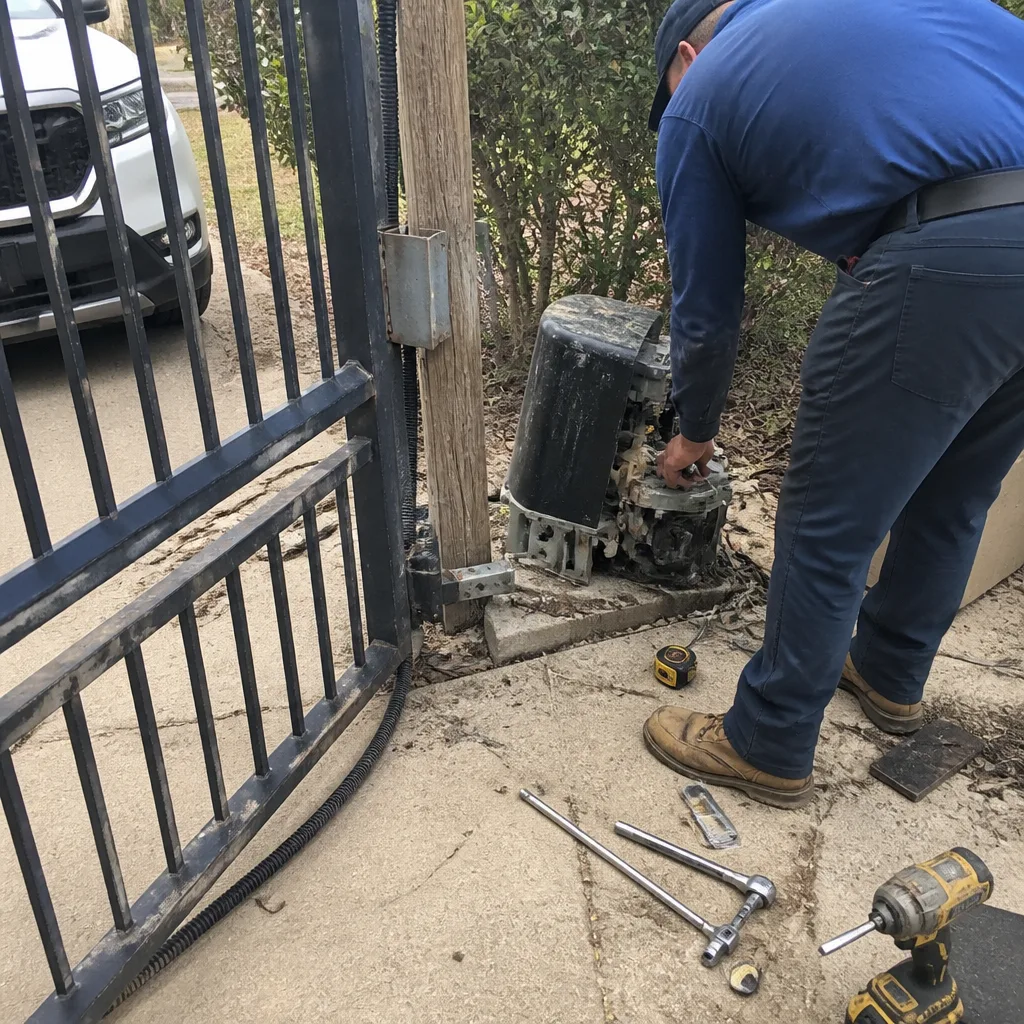 Before
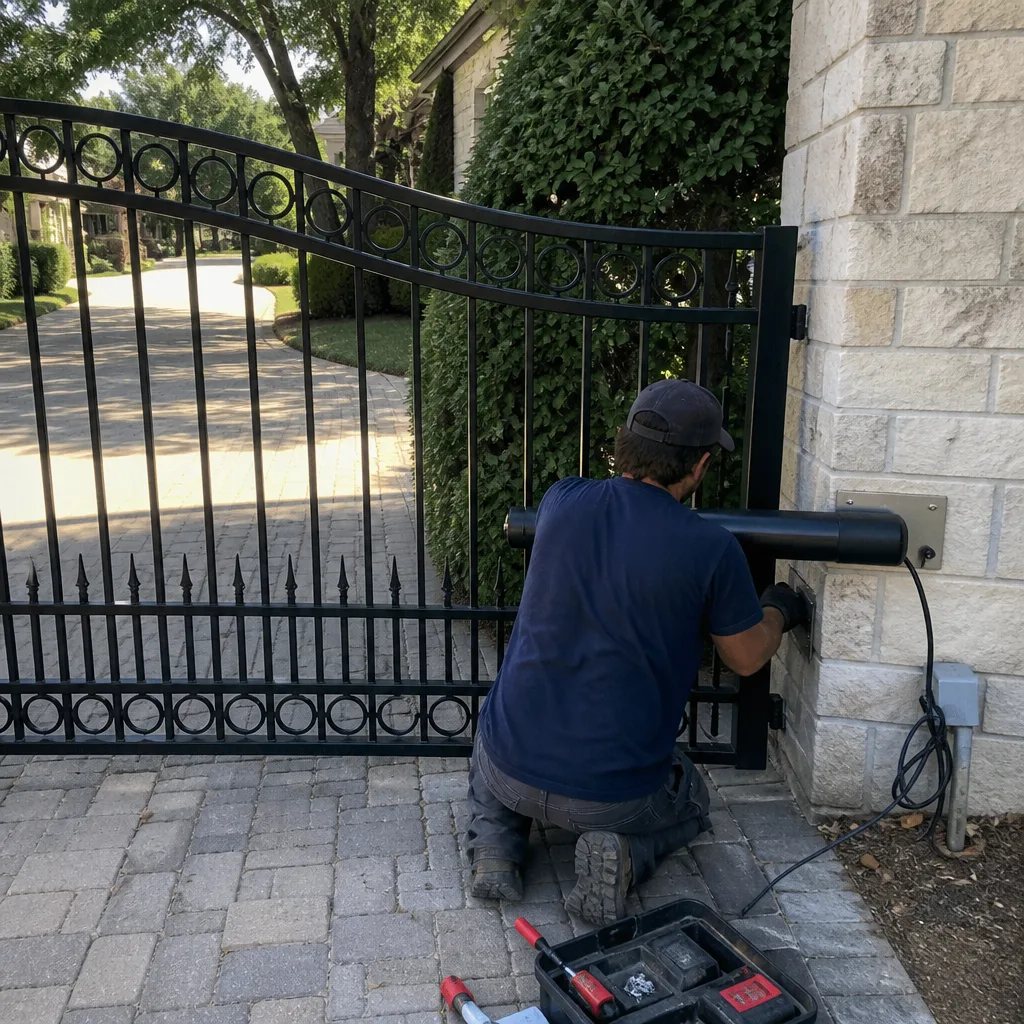 After
After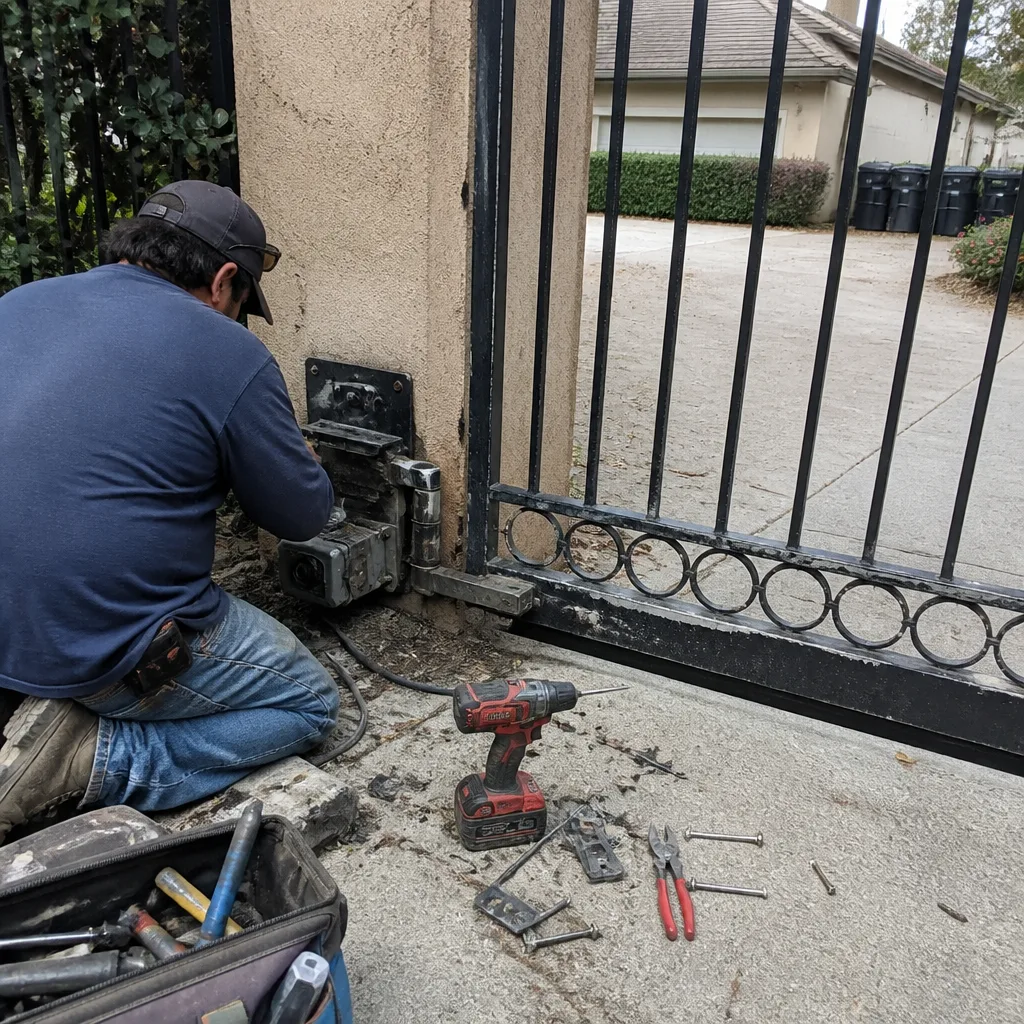 Before
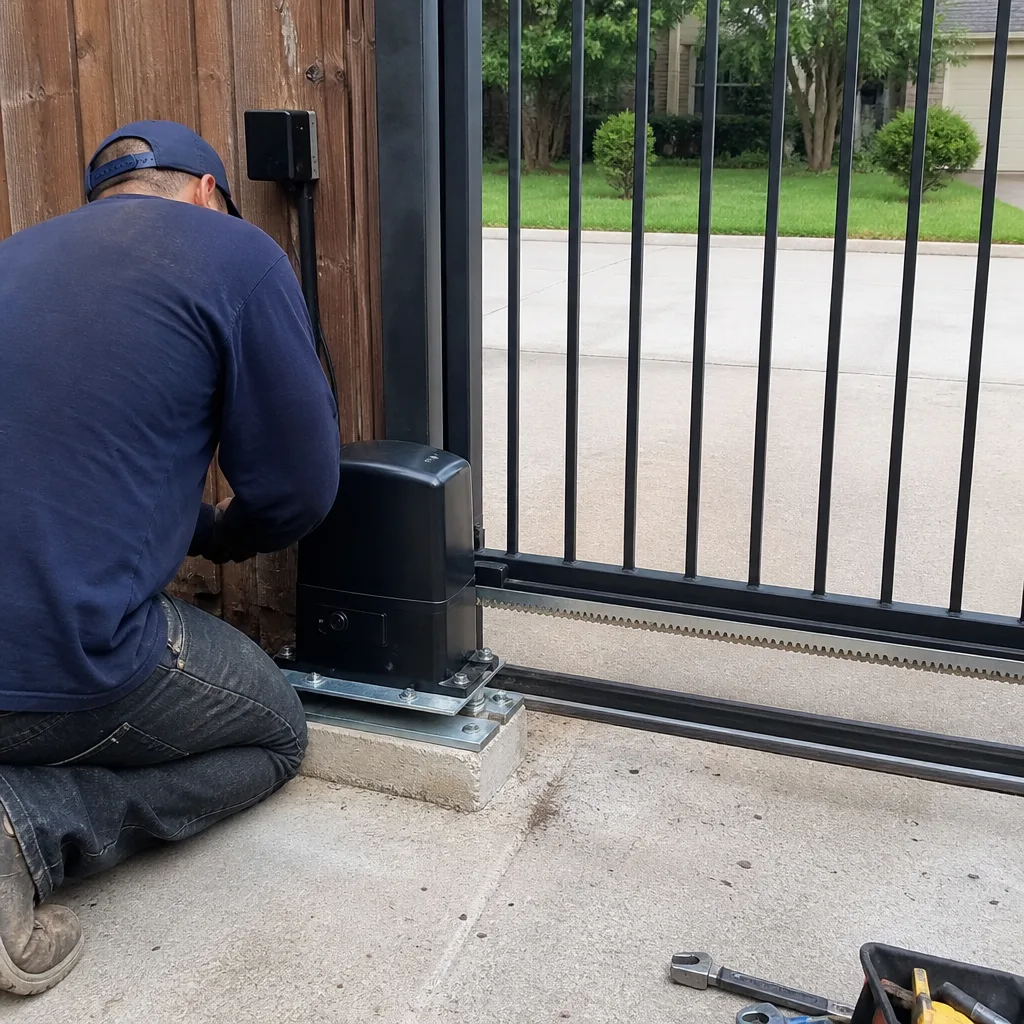 After
AfterGate Repair Maintenance Checklist for Fort Worth Homeowners
A gate that swings clean in March can be dragging concrete by August. Fort Worth’s ground moves under your hinges, and the Blackland Prairie clay that makes our soil so stubborn has a way of finding every weak point in a gate’s frame. Most maintenance checklists you’ll find online were written by someone who has never watched a Texas summer warp a gate panel or a North Texas storm fill a track with silt; for more guides & resources, keep reading. This guide is different because it starts with the dirt under your posts, not with a can of spray lubricant. You’ll learn what to check every month, what to ignore until it matters, and when to stop looking and start calling someone who welds.
Quick Answer
A Fort Worth gate needs monthly hinge and post checks during shrink-swell season (spring and fall), a full lubrication pass every 90 days using high-temp grease rated for triple-digit heat, and a twice-yearly operator stress test before summer peaks. The single most valuable maintenance habit is watching the gate’s reveal gap: if it narrows at the top or drags at the latch side, the post has moved and no amount of hinge oil will fix it. Do the ten-minute walkaround below once a month, and you’ll catch 80% of failures before they strand you outside the fence; for what to watch for, see Gate Repair Warning Signs: A Fort Worth Homeowner’s Reference Guide.
Table of Contents
- Why Fort Worth Gates Fail Differently
- The Monthly Walkaround: 15 Minutes That Prevents Most Repairs
- Hinge and Post Inspection: Reading the Clay
- The Lubrication Schedule That Survives Texas Heat
- Testing Your Gate Operator for Heat Stress Before Summer Peaks
- Weld Seams and Paint: What to Check After a Hail or Wind Event
- The Month-by-Month Fort Worth Gate Calendar
- Common Mistakes to Avoid
- When to Call a Professional
- Frequently Asked Questions
- The Bottom Line
Why Fort Worth Gates Fail Differently
Here’s what most gate maintenance guides get wrong about Fort Worth: they treat a gate like a machine that sits on stable ground. But a gate is only as good as the posts holding it, and a post is only as good as the soil gripping it. In Fort Worth, that soil is a specific nuisance. The Blackland Prairie clay that runs through much of Tarrant County expands dramatically when wet and shrinks just as hard when dry. A concrete post set in that clay gets pushed and pulled through the year, and the gate hanging on it moves with it.
We see the evidence at Gatewood Fence & Gate home jobs all over Fort Worth: gates that were installed square and plumb in January are suddenly binding at the latch in June. The hinges didn’t fail. The ground shifted. That distinction changes how you do maintenance, because you’re not just oiling parts. You’re monitoring the relationship between the gate, the post, and the dirt.
Add in the heat. A Fort Worth July can park itself above 100 degrees for a week at a time. Gate operators, which are heat-generating motors by nature, get pushed harder in those temperatures. Grease thins out and runs down the hinge. Paint cracks faster than on the coast. And the storms that roll through in spring and fall don’t just drop rain; they drive wind and hail into the exact surfaces that hold a gate together.
The point is not to fear the weather. The point is to work with it. A maintenance plan that accounts for shrink-swell soil, triple-digit heat, and storm season looks different from a generic checklist, and it works better.
The Monthly Walkaround: 15 Minutes That Prevents Most Repairs
You don’t need to be a gate technician to catch most problems. You need eyes and a willingness to walk around the gate instead of just walking through it. Do this once a month, on the same weekend if you can, so the habit sticks. It takes about fifteen minutes.
- Watch the gate open and close fully. Stand to the side and watch the entire travel. Is the movement smooth, or does it hesitate, wobble, or scrape at any point? A small hitch now is a failed part later.
- Measure the reveal gap. The reveal is the space between the gate’s latch edge and the frame or post it closes against. Look at the top third and the bottom third. If those gaps don’t match, the post or the panel has moved. A quarter-inch difference is worth investigating.
- Listen for new sounds. Grinding, squealing, clicking, or a low hum that wasn’t there last month all mean something. A quick ear check catches motor issues before they strand the gate.
- Check the latch and the receiver. Operate the latch by hand. Does it engage fully? A latch that only catches halfway will eventually fail, and a gate that unlatches on its own is nothing but trouble on a windy day.
- Clear the track or the path. For slide gates, clear debris from the track, especially after wind or rain. Silt from a Fort Worth downpour can build up fast and make the gate work harder than it should. For swing gates, trim any grass or weeds growing near the bottom edge that could drag.
- Look at the ground around the posts. New cracks in the concrete, soil pulling away from the post, or erosion around the base are early signs that the post is starting to move. These don’t fix themselves.
If you spot anything in that list, you have a choice. Watch it for another cycle, or get ahead of it. Most our Gate Repair services are cheaper and simpler when caught early, before a shifted post turns into a snapped hinge and a gate on the ground.
Hinge and Post Inspection: Reading the Clay
Every Fort Worth homeowner should learn to read the hinge line like a tired old surveyor. The hinges tell you where the stress is concentrating, and the post tells you why. Start with the hinges themselves.
Look at each hinge pin. Wear on one side of the pin means the gate is leaning. A hinge that has pulled away from the post, even an eighth of an inch, means the screws or bolts are losing their bite. Wobble the gate at the latch end. If the whole panel has more than a quarter-inch of movement, something in the hinge stack or the post is loose.
Then move to the post. Press against it with your body weight. It should not flex. If it gives, or if you can see a gap between the concrete pad and the surrounding soil, you’re looking at the first stage of a sagging gate. In Fort Worth, this is most common after a wet spring followed by a dry summer. The clay swells with spring rain, then shrinks hard in the heat, and the post settles into the gap.
A gate sags in the hinge post, not in the middle. That’s not a slogan; it’s how the physics works. The panel is rigid. The post is the only thing holding it up. When a gate starts dragging at the latch end, homeowners often look at the panel and think it bent. Nine times out of ten, the post moved. Fix the panel without the post and you’ll fix it twice.
If the post is sinking, do not wait. A leaning post puts load on the hinges they weren’t built for, and the next failure is usually a hinge breaking under tension. That’s a repair that requires cutting, welding, and resetting the post, which is a bigger job than the post adjustment would have been months earlier. If you’re unsure what you’re looking at, Gate Repair in Fort Worth is precisely what we do, and we’re happy to come take a look.
The Lubrication Schedule That Survives Texas Heat
Most gate manufacturers publish a lubrication schedule assuming a temperate climate. Twelve months at 65 degrees. That is not Fort Worth. Here, light machine oil evaporates. Thin grease runs out of the hinge and down the gate face in July. What works in Ohio does not work in Tarrant County, and following the manufacturer’s generic schedule exactly can leave your gate dry by early summer.
What actually holds up in Fort Worth heat is a high-temperature, synthetic-based grease with a thickener that can take 400 degrees without breaking down. You’re not getting the hinges that hot, but the operating environment gets hot enough that a marginal grease fails.
Here’s our schedule, adjusted for Fort Worth:
- Hinges: Clean and re-grease every 90 days from March through October. In winter, every 90 days is still fine, but you can stretch to 120 days if the gate is light and the weather is dry. If you can see old grease squeezing out dirty, clean it off first. Adding new grease over grit just turns the grit into grinding paste.
- Rollers and wheels (slide gates): Inspect monthly for flat spots and seized bearings. Lubricate the wheel bearings, not the wheel surface. A flat-spotted roller is done; no grease fixes a wheel that’s no longer round.
- Chain drive operators: Check tension monthly during the spring and fall. The temperature changes can change chain slack faster than you’d think. Use a chain-specific lubricant, and think of it like a bicycle chain: light film, not a dripping mess, or you’ll attract dust that turns to sludge.
- Track (slide gates): Do not grease the track if you can help it. A greased track collects every particle of dust that blows across Fort Worth. Keep it clean and dry. If the gate runs rough, the problem is more likely a wheel than a dry track.
- Bolt heads and threaded hardware: A light coat of anti-seize on stainless bolts prevents galling. It sounds fussy, but a seized bolt can turn a 20-minute job into an hour with a grinder.
The tell-tale sign that your lubrication is failing in the heat: the gate gets noisier as the day gets hotter. That’s the grease thinning out and metal meeting metal. Don’t ignore it and don’t just spray it with whatever can is closest. Use the right grease, and use enough of it that the hinge stays quiet at 3 p.m. on a 102-degree day.
Testing Your Gate Operator for Heat Stress Before Summer Peaks
An automatic gate operator is a motor that lives in a metal box in the Fort Worth sun. When the outside temperature hits triple digits, the inside of that control box can run 20 to 30 degrees hotter. That’s an environment no motor loves, and it’s one reason operator failures cluster in July and August. By the time the gate stops responding in August, the operator has usually been struggling for weeks.
Before summer peaks, usually in early May and again in early July, run this ten-minute heat stress test:
- Run the gate a full open-close cycle five times in a row, with no longer than a 30-second pause between cycles. If the operator stalls, slows noticeably, or reverses on its own, it’s already running hot. That’s exactly the behavior of a motor with failing windings or a capacitor that’s about to quit.
- Check the thermal reset. Any modern operator has a thermal overload that trips to protect the motor. If the gate stops working during a long, hot stretch and comes back on its own after 30 minutes, that reset tripped. A reset that trips once is a warning. A reset that trips twice in a week is a motor telling you it’s done. The next failure may be permanent.
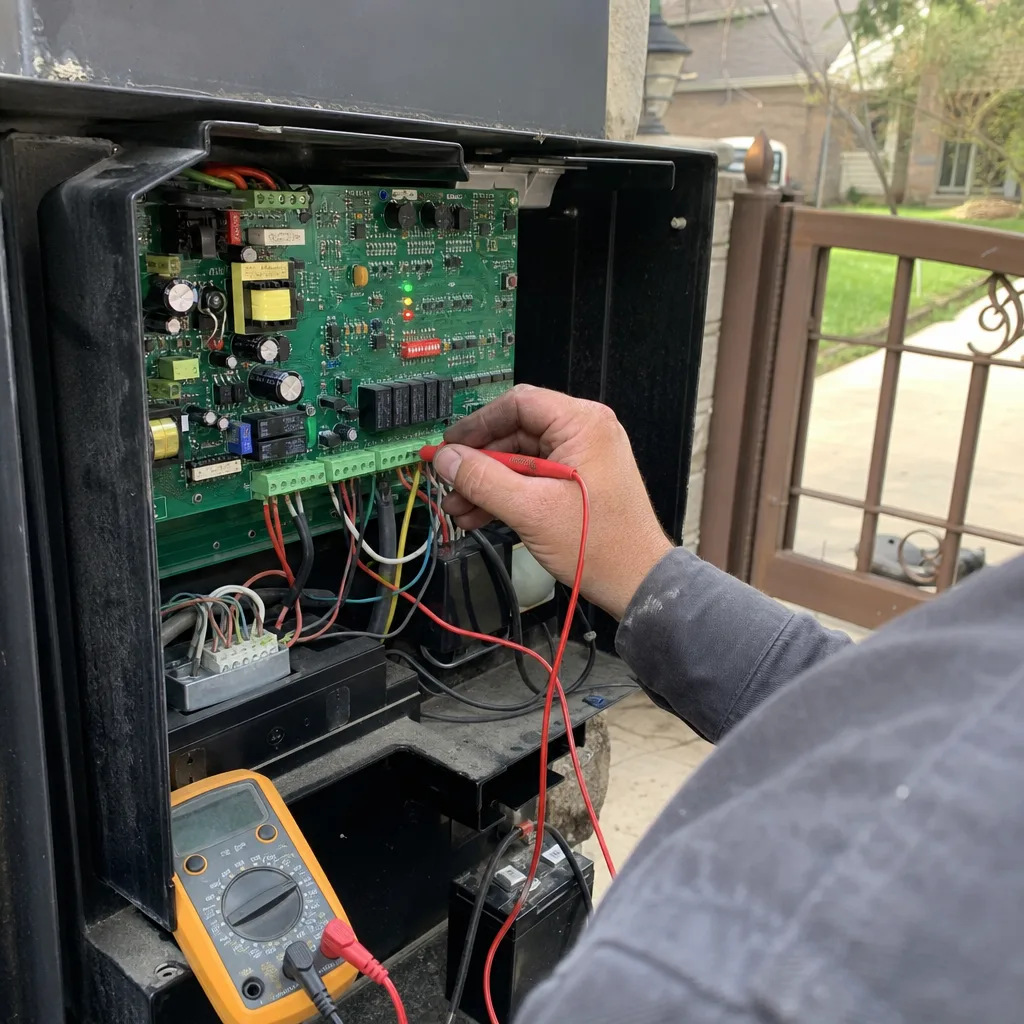
- Open the control box (with power off) and look at the transformer and capacitor. Swollen capacitor, burnt smell, or a transformer that looks like it sweated. These are visible warning signs. If you smell burnt electronics, stop and call someone before you run the gate again.
- Check the operator’s mounting bolts and the drive arm or chain. Heat and the expansion-contraction cycle of a Texas day loosens hardware. A loose bolt on a swing arm changes the geometry and forces the motor to work against itself.
If the operator passes the test, you’ve bought yourself a season with reasonable confidence. If it stalls, trips, or smells hot, you now have a name for the problem you were going to have in August. We work on operators from BFT, Linear, Viking, and Ghost Controls, and we’d rather see you before the motor cooks itself than after. A hot motor is often repairable. A seized one is usually a replacement. That’s a difference of several hundred dollars in a Fort Worth summer.
For more detail on what those symptoms look like across different brands, see our guide to Gate Motor and Opener in Fort Worth.
Weld Seams and Paint: What to Check After a Hail or Wind Event
Fort Worth doesn’t get coastal hurricanes, but the storms that sweep across North Texas in April and May carry wind gusts and hail that beat on a gate like a hammer. Most homeowners check the roof after hail. Fewer check the gate. But the gate is a welded steel structure sitting out in the same storm, and hail damage on a gate is real.
After a significant hail or wind event, walk the gate and look at the weld seams first. Those are the lines where the frame rails meet the vertical pickets, and where the frame attaches to the hinge plates. Hail doesn’t usually break a weld outright, but it can crack the paint film over the weld, which lets moisture in and rust start. The same goes for wind, which flexes the panel and can open hairline cracks at the corners.
Look specifically for:
- Cracked or chipped paint at the weld joints. These show up as spider-web lines radiating from the weld bead. If you see bare metal, it’s already time to address it.
- Dents on the top rail and the upper third of the panel. Hail hits the top rail hardest. A dented top rail isn’t just cosmetic; it changes the load path through the panel and can cause a twist over time.
- Bent pickets or a bowed panel. Wind can twist a gate enough to bend pickets, especially on lightweight residential tubular gates.
- Loose hammered-finish hardware. Vibration from high wind loosens nuts and bolts. A quick pass with a wrench on exposed hardware is cheap insurance.
Small paint cracks can be sanded, primed, and touched in an afternoon. Bare metal left through a Fort Worth winter will rust, and surface rust on a gate spreads faster than most people expect. If the panel itself is bowed or the welds have cracked through, that’s not a paintbrush job. That’s when the gate needs to be laid out, straightened, and re-welded. Hal has been doing on-site welding in Fort Worth driveways since 2001, and the fix usually happens without hauling the gate anywhere.
The Month-by-Month Fort Worth Gate Calendar
Here’s the whole year, laid out by month. This is the list we hand to our Fort Worth customers who want to do their own upkeep and only call us when something’s genuinely wrong.
January - February
- Full inspection of hinges, latch, and posts after the first hard freezes.
- Check for ice damage on wheel surfaces and track edges.
- Test the operator once at its normal setting; cold weather can stiffen lubricant.
March - April
- Spring rains begin. Watch the post soil lines weekly for shrinking and cracking.
- Clean the track and clear drainage away from post bases.
- Run the five-cycle operator heat stress test as a baseline before summer.
May - June
- First lube pass with high-temp grease before the heat hits.
- Run the five-cycle operator test again in early June; compare to the May baseline.
- Check that the gate’s reveal gap is stable as the clay starts drying.
July - August
- Monthly lubrication check and monthly walkaround.
- Watch the operator for thermal reset behavior after long hot afternoons.
- Listen for new grinding or scraping sounds; heat makes every problem louder.
September - October
- Second lube pass of the year before the weather flips.
- Post-storm weld and paint inspection after any hail or high wind events.
- Check chain tension if you have a chain-drive operator.
November - December
- Full end-of-year inspection: hinges, posts, welds, operator, and paint.
- Clean and dry the track before winter moisture sits in it.
- Note anything that was marginal in the summer so you address it before the cold.
Six habits a year, spread out so each one is small. You’ll catch the post that’s settling before the hinge tears loose, and you’ll hear the motor struggling before it stops. That’s the whole game.
Common Mistakes to Avoid
- Greasing a squeaky hinge without cleaning it first. New grease over old grit turns the hinge into a lap for a grinder. Clean the old grease out with a wire brush or solvent, then re-grease.
- Lubricating a slide gate track. Oily tracks collect grit and dust, and then the gate rides on the grit instead of the track. Keep the track clean and dry. The wheels are the only thing that needs lubrication.
- Ignoring a gate that drags and hoping it “settles back.” It won’t. Fort Worth clay doesn’t settle back; it keeps moving. A dragging gate is a post moving or a hinge wearing. Both get more expensive the longer they go.
- Using WD-40 as your primary hinge lubricant. It’s a water displacer, not a long-term lubricant. In Fort Worth heat it evaporates within weeks. Use a heavy, high-temp grease for hinges.
- Testing the thermal reset too often after it trips. Once is a warning. Repeated resets mean the motor is overheating past the point of survival. Every reset buys you less time. Get it looked at.
- Painting over surface rust without treating it first. Rust under paint keeps rusting. Wire-brush, treat with a rust converter, then prime and paint. Otherwise you’re just making the rust look better for a few months.
- Assuming the panel bent when the latch stopped catching. The post is the usual suspect in Fort Worth soil. Check the post’s plumb and movement before you start blaming the panel.
When to Call a Professional
Some things on this list are homestead projects. Some are not. Call a professional when the post is visibly moving, when the hinge has pulled away from the post, when the weld seam is cracked through rather than just cracked, or when the operator trips its thermal reset more than once in a season. Those are structural and electrical problems, and they get dangerous and expensive in a hurry. A gate under spring tension can do serious damage to a hand or a face. If you’re not sure, don’t guess.
Gatewood Fence & Gate offers free estimates in Fort Worth. Call (817) 241-4067 and someone with a name will answer. Hal has been fixing gates in Fort Worth since 2001, and the 90-Day Done Right Promise is in writing on every job. If it’s not done right, we make it right.
Frequently Asked Questions
Every 90 days from March through October, using a high-temperature synthetic grease. Fort Worth’s triple-digit summer heat thins lighter greases and evaporates light oils faster than the manufacturer’s typical schedule assumes, so a quarterly pass keeps the hinges quiet and protected.
In Fort Worth, the Blackland Prairie clay under your gate swells with spring rain and shrinks hard during the summer dry spell. That expansion and contraction shifts gate posts enough to change the gate’s alignment, causing it to drag at the latch end. The fix starts with re-plumbing the post, not bending the panel.
If your gate stops working during the hottest part of the day and resumes after 20 to 30 minutes, the operator’s thermal overload has tripped. Once is a warning sign that the motor is running hotter than designed. If it happens again within a week or two, the motor is failing and needs professional evaluation before it fails for good.
Yes. Hail chips the paint film over weld seams, which exposes steel to Fort Worth humidity and starts rusting faster than most people expect. Check the top rail and weld joints for cracked paint and bare metal after any significant hail event, and touch up damage before winter moisture gets into the steel.
Check the hinge post, not the panel. A gate sags because the post holding it has moved or settled in Fort Worth’s shifting clay soil. Push against the post to feel for movement, and look for gaps between the concrete pad and the surrounding soil. The panel is rarely the problem.
Most of the monthly walkaround and lubrication tasks are safe for a homeowner. The work that needs a pro includes any post that’s moved, any hinge that’s pulled out of the gate or post, any cracked weld, and any operator that trips its thermal reset repeatedly. Those are structural and electrical problems. For a free second opinion on any written estimate, call (817) 241-4067.
The Bottom Line
A gate in Fort Worth lives a harder life than the same gate in most of the country. The clay soil flexes your posts, the summer heat cooks your operator, and the spring storms take their swings at your welds and paint. The maintenance that actually prevents breakdowns here is not complicated, but it is specific: check the posts for movement every month, re-grease the hinges every 90 days with a high-temp grease, stress-test the operator in May and July, and walk the welds after every storm. Do those six things and you’ll catch the small problems before they become stopped gates and open driveways. If you’d rather have someone else do the looking, Gate Installation in Fort Worth and ongoing maintenance are both part of what we do. The name is on the shop, and the shop is down the road. That’s the oldest accountability there is.
Written by Hal Gatewood, Owner at Gatewood Fence & Gate, serving Fort Worth since 2001.