
Last updated August 26, 2026
Free on-site gate assessment - hinges, posts, and your LiftMaster or Nice gate operator checked before anything is quoted
The assessment is free and the quote is the invoice.
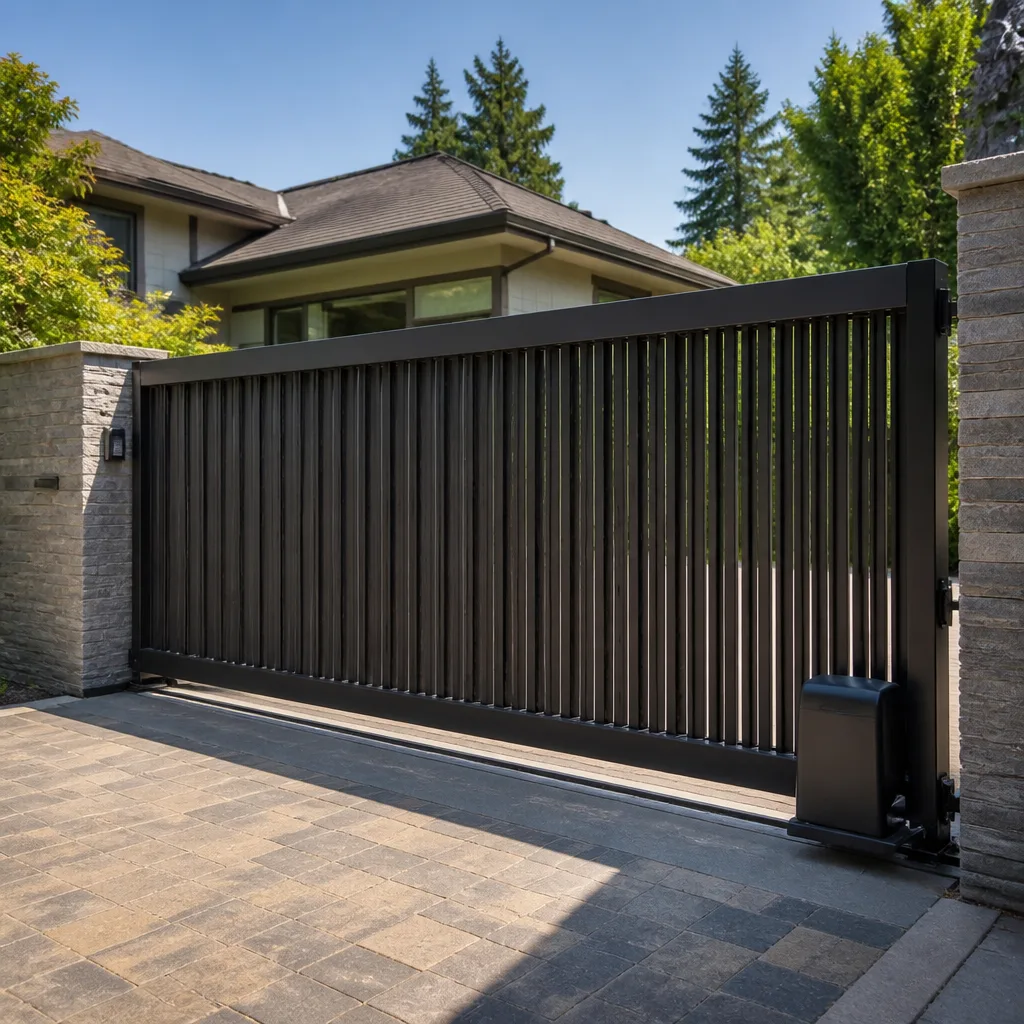
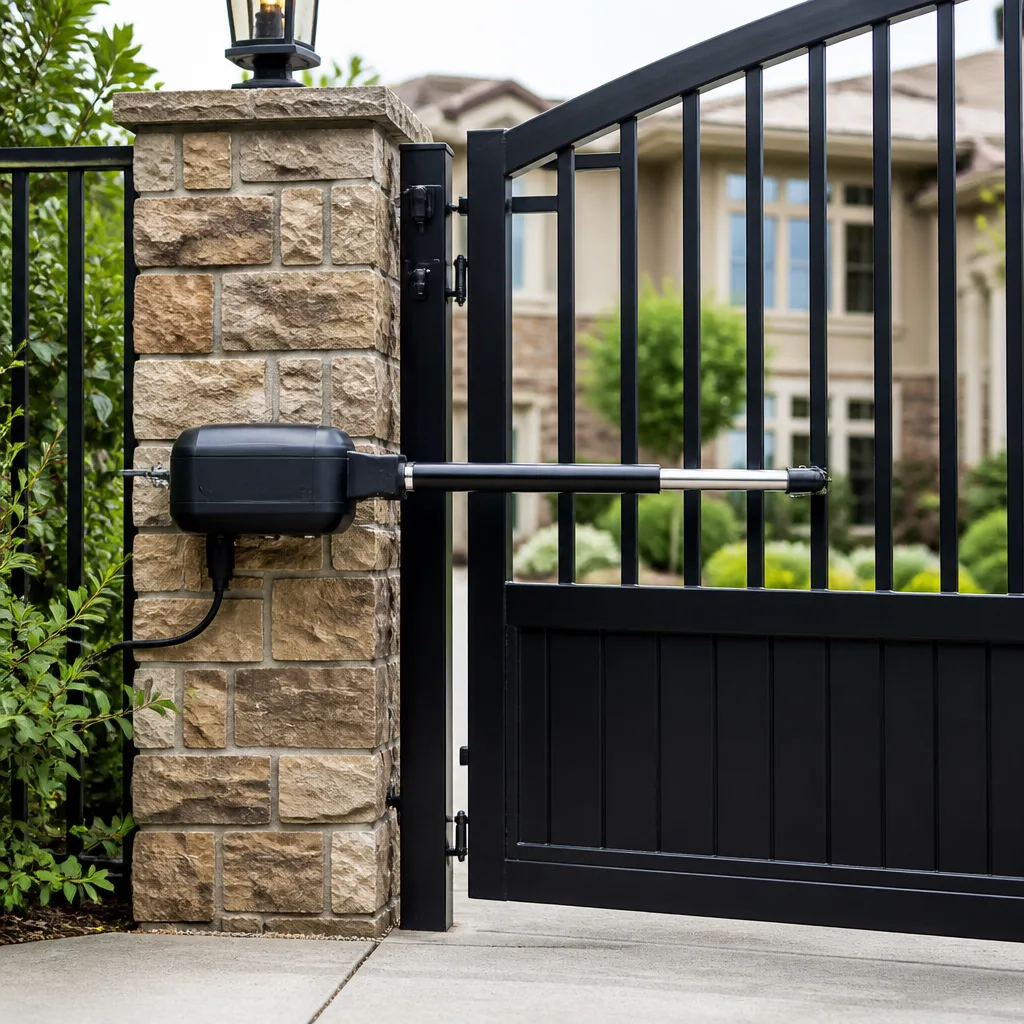
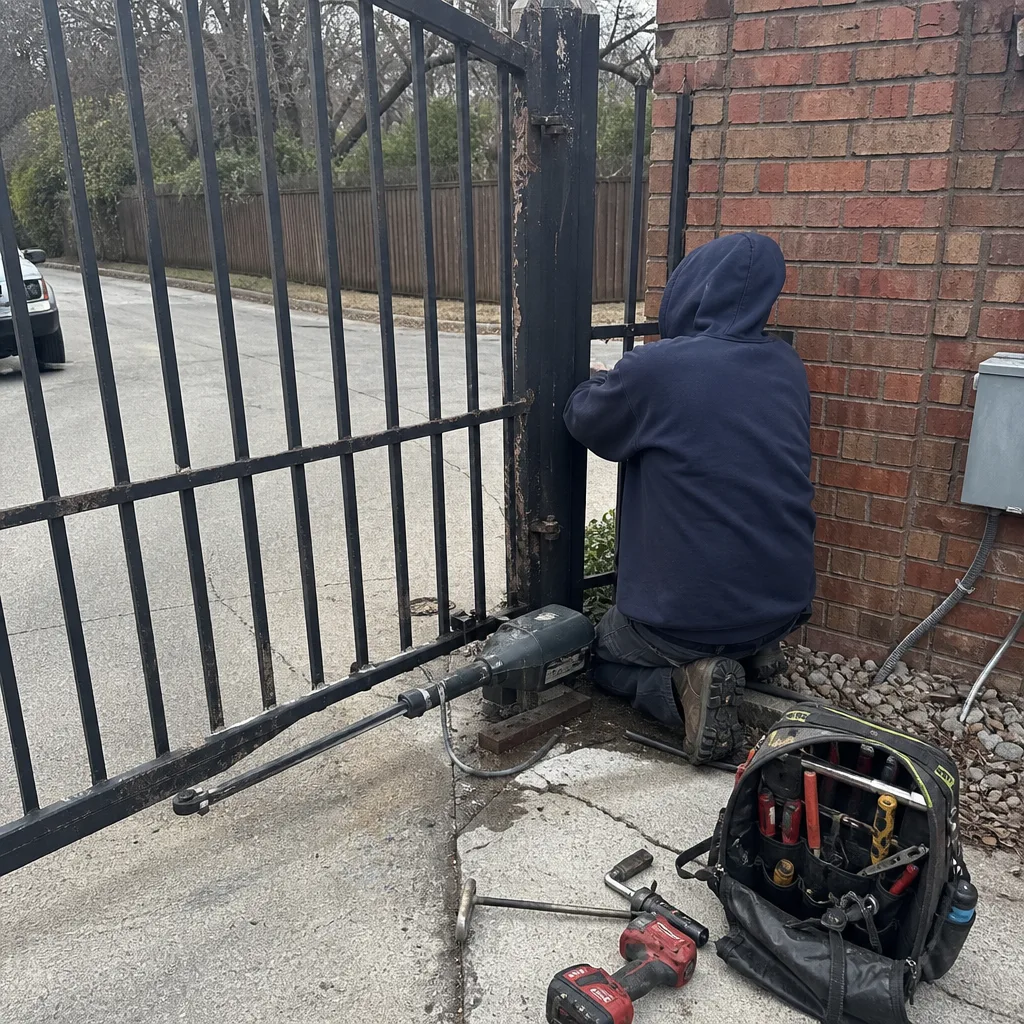 Before
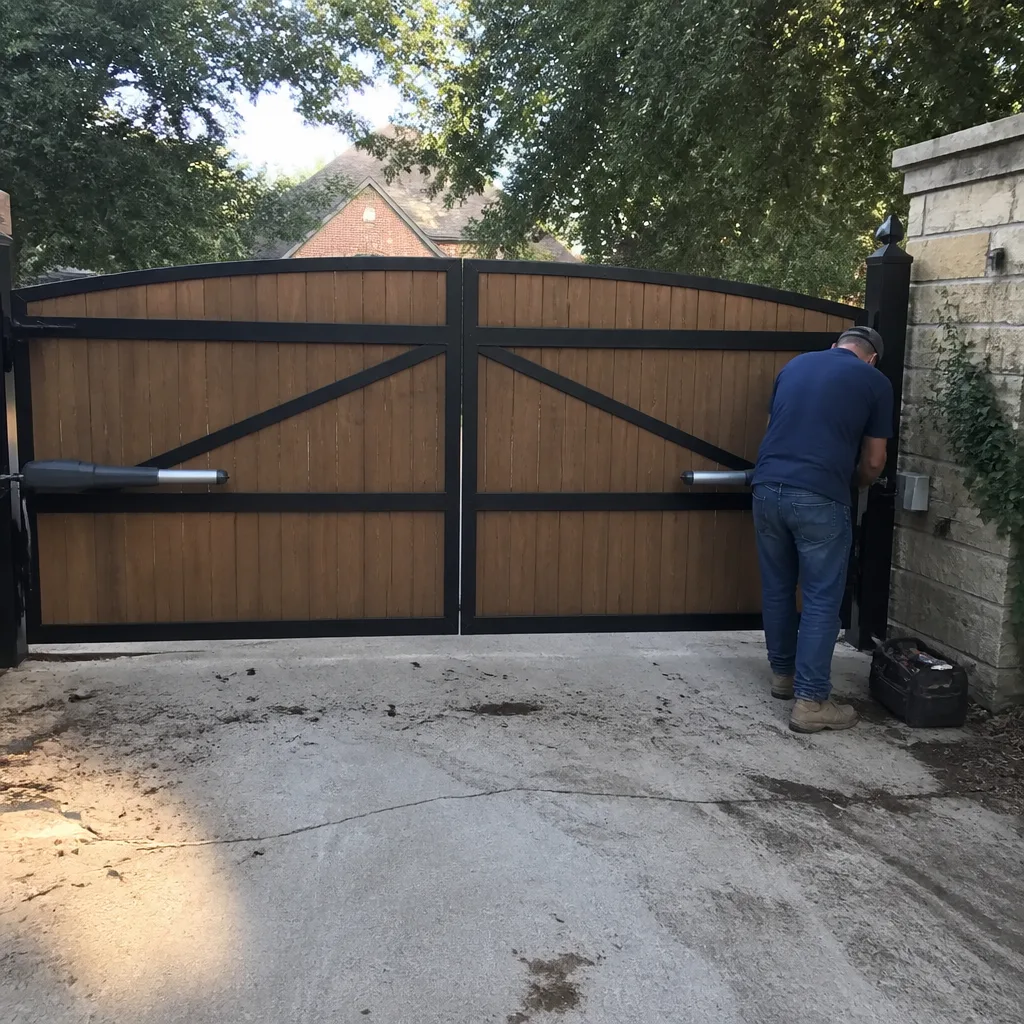 After
After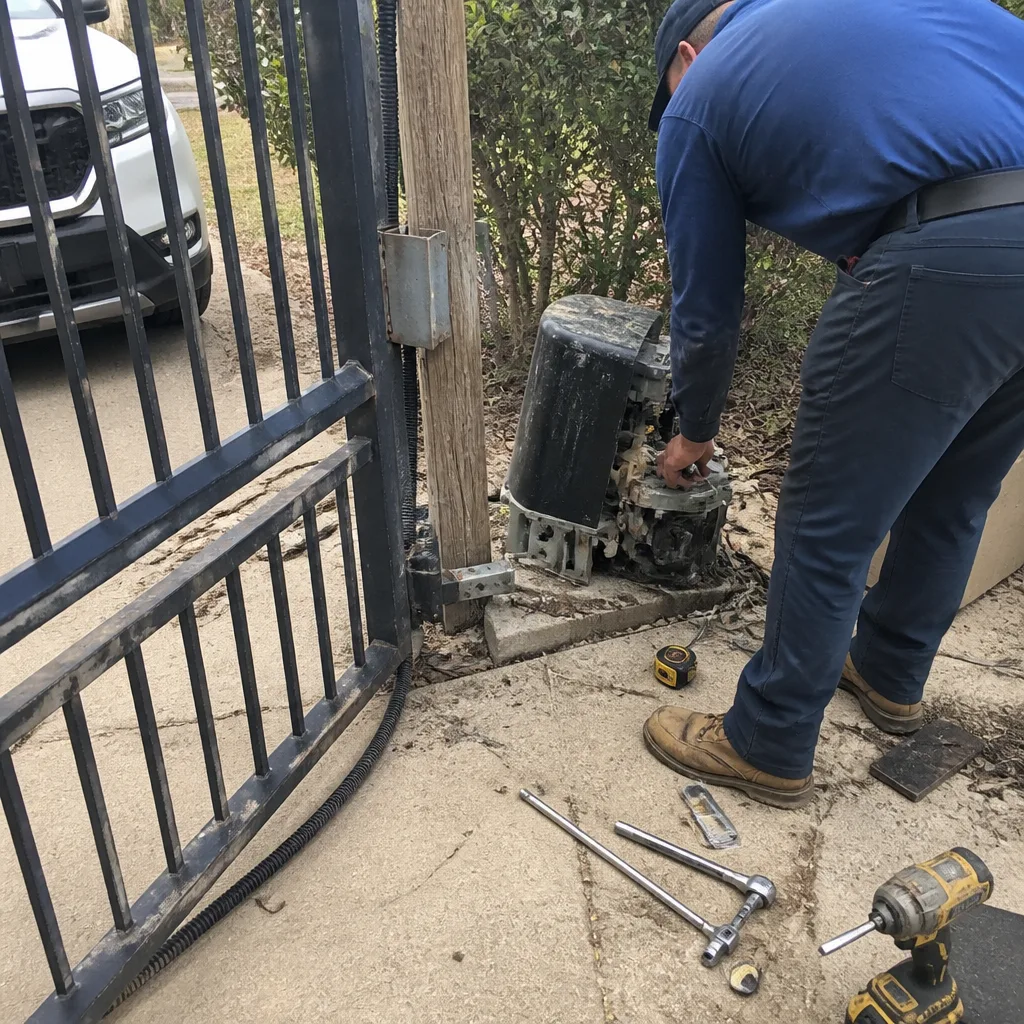 Before
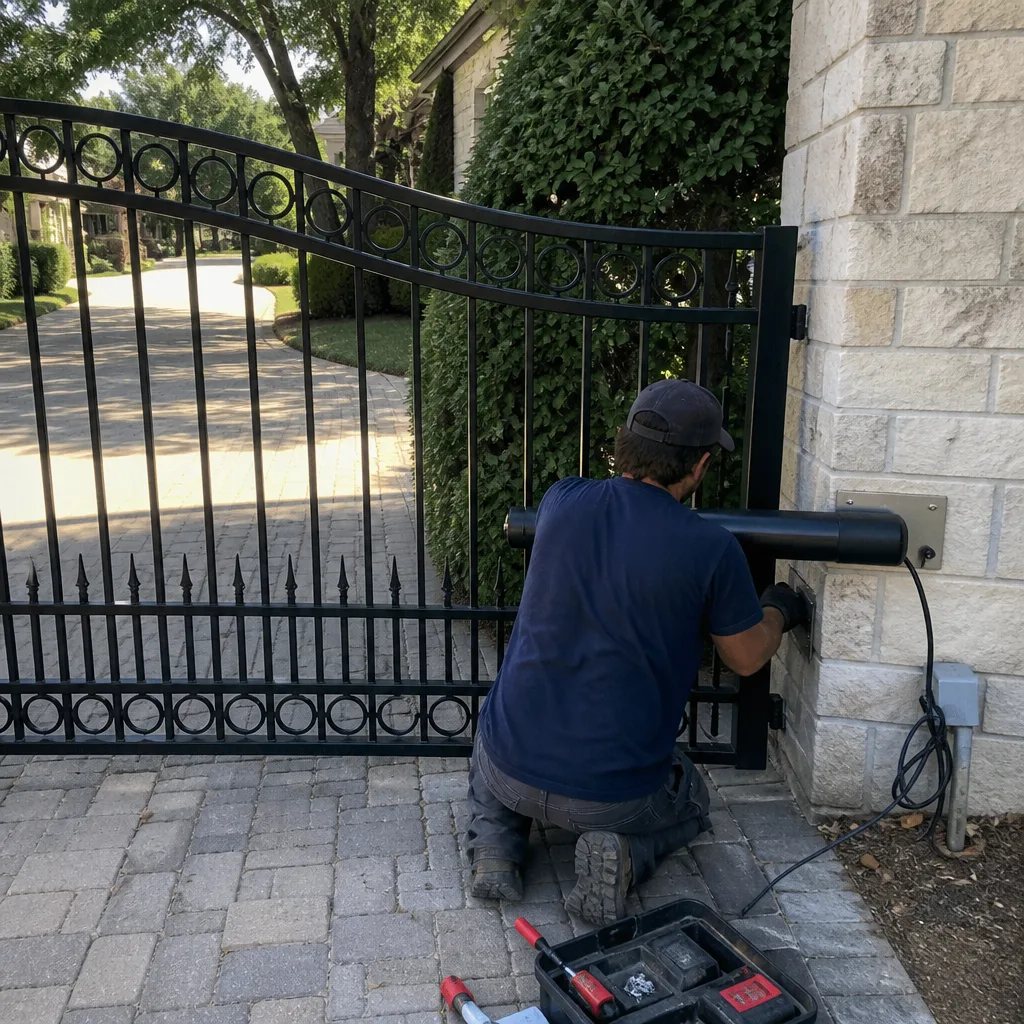 After
After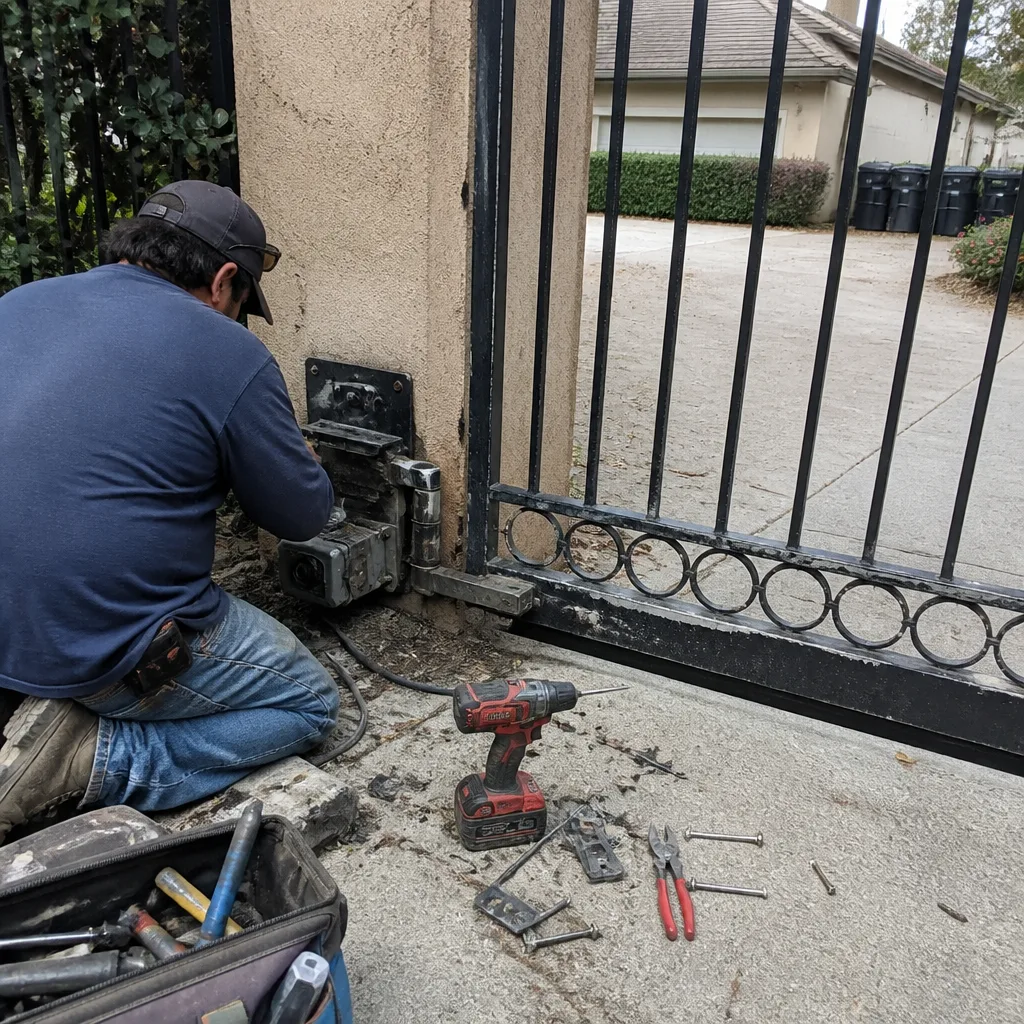 Before
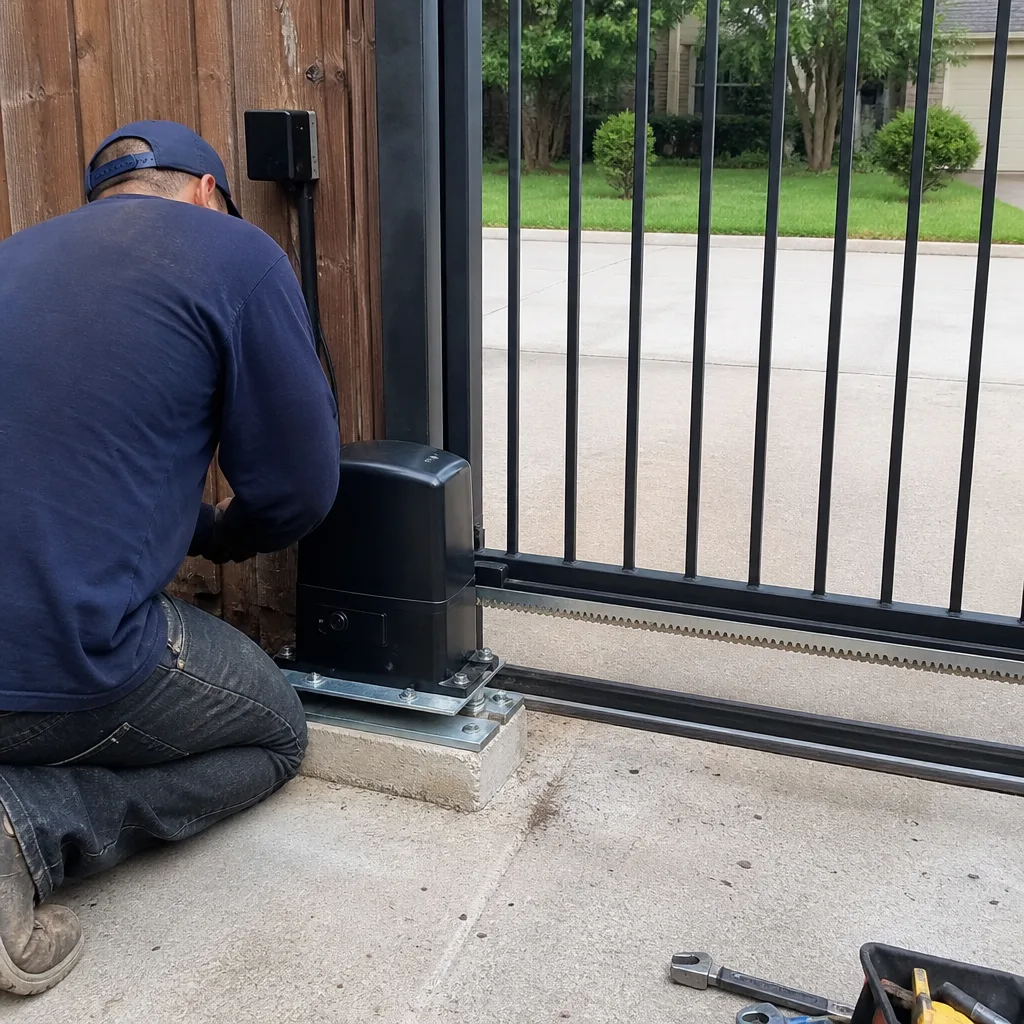 After
AfterGate Repair Permits, Codes & Inspections in TX: What You Need to Know
Nobody’s going to knock on your door because you replaced a hinge. Nobody from the city, anyway. But swap out a gate with a taller one near a pool, or change a driveway gate’s swing path so it arcs over a sidewalk or right-of-way, and you’ve just made a paperwork problem for yourself. Most gate work in Fort Worth and surrounding Tarrant County doesn’t need a permit at all. The exceptions are narrow, but they’re specific, and they bite. This guide walks through exactly which repairs trigger city review, what the Texas Pool Safety Act actually requires, where HOAs fit in, and how to check the rules yourself without sitting on hold with a city department. For related reading, see our Gate Repair Warning Signs: A Fort Worth Homeowner’s Reference Guide.
Quick Answer
Most gate repairs in Texas do not require a permit. Replacing hinges, welding a cracked frame, swapping a gate opener or motor, installing a new latch, or rebuilding the gate on its existing posts is permit-exempt in nearly every municipality. You generally need a permit only when you change the gate’s height, move its posts, install a new gate in a fence line that fronts a right-of-way, or build a pool-safety gate where one didn’t exist before. If you’re unsure whether your project needs professional help, our Gate Repair team can assess the situation. Fort Worth follows this pattern with a few local twists we’ll cover below.
Table of Contents
- What Counts as a Repair vs. New Construction in Texas
- Fort Worth and Tarrant County Permit Thresholds
- The Texas Pool Safety Act and Gate Codes
- HOA Deed Restrictions vs. City Code
- What Happens When an Unpermitted Change Gets Flagged at Sale
- How to Look Up Fort Worth Permit Requirements Yourself
- What the Inspection Process Actually Looks Like
- Common Mistakes to Avoid
- When to Call a Professional
- Frequently Asked Questions
- The Bottom Line
What Counts as a Repair vs. New Construction in Texas
Here’s the line most people miss: Texas building codes draw a distinction between maintaining something that exists and creating something new. The International Residential Code, which Texas municipalities adopt with local amendments, treats repair as work that restores a structure to its original condition or replaces components with equivalent ones. That’s the legal phrase: “equivalent to the original.” If your gate repair keeps the same posts, same height, same swing path, and same footprint, it’s a repair. No permit. If you change any of those four things, it starts looking like new construction, and new construction has paperwork.
In our experience in Fort Worth, that distinction catches people in three specific ways. First, they decide to “upgrade” from a 4-foot gate to a 6-foot gate while they’re at it, not realizing the added height triggers a fence permit review. Second, they move the gate from the side of the house to the front lot line, which changes setback and right-of-way rules. Third, they widen a driveway gate from a single swing to a double swing, which changes the opening’s geometry and can trigger a zoning check. None of these feel like big changes in the moment. All of them are the kind of thing a city inspector notices.
What this means practically: replacing a gate motor or opener is a repair. Replacing the gate leaf itself on existing posts is a repair. Welding a broken frame or repairing a sagging post is a repair. Pouring a new concrete footer because you’re moving the post to a different spot is not a repair. That’s the line.
Fort Worth and Tarrant County Permit Thresholds
Fort Worth Development Services handles permits for the city itself, and their threshold for fence and gate work is height-based. A fence or gate under 6 feet 6 inches in height in a residential zone does not require a building permit, provided it’s in the rear or side yard. Front yard fences and gates have a different standard: 4 feet max height without a permit, and even with a permit, front yard fences facing a street cannot exceed 4 feet in most residential zoning districts. If you live in a neighborhood like Wedgwood or Ridglea Hills and you want a taller front gate with brick columns, you’re in permit territory.
Unincorporated Tarrant County follows county rules, which are generally looser than city rules but still enforce setback requirements along county roads. The key variable in unincorporated areas is whether your property sits in a floodplain or an easement. County engineers review gate placement that might obstruct drainage or utility access, even when no formal permit is required. We’ve seen cases in the Crowley and Burleson area where a gate that was perfectly legal to build got flagged because it blocked a drainage swale the owner didn’t know existed.
Here’s the practical breakdown for Fort Worth residential work:
- Repairing or replacing a gate on existing posts: no permit, regardless of material, provided height and location don’t change.
- Installing a new gate in an existing fence opening: no permit if under height limits and not facing a right-of-way.
- Building a new fence line with a gate: permit required if the fence exceeds 6’6″ in rear/side yard or 4′ in front yard.
- Adding a gate to an unmanned driveway entrance on a shared or private easement road: check with county or city engineering before you build. Easement gates are the most common permit denial we see.
- Electric gate openers and motors: not a building permit item, but any new electrical run to the gate does require an electrical permit if it’s a new circuit, not a replacement.
One more Fort Worth nuance: the city’s Residential Fence Standards include a rule about gate clearance over sidewalks. A swing gate cannot extend over a public sidewalk or alley right-of-way when open. If your gate arcs over the sidewalk, that’s a violation regardless of whether a permit was needed, and it’s the kind of thing that gets flagged by a code enforcement officer doing a routine neighborhood drive-through.
The Texas Pool Safety Act and Gate Codes
The Texas Pool Safety Act is the one piece of state law that absolutely changes the permit math for gate work. If you have a residential swimming pool and you’re modifying, replacing, or installing a gate that serves as a barrier to that pool, the gate must meet specific requirements. Here’s the part most homeowners don’t understand: the pool safety gate rules apply whether or not a building permit is required. The safety standard is independent of the permit requirement. A gate that’s the wrong height or doesn’t self-latch is a violation even if the work itself was permit-exempt.
Under the Pool Safety Act and the Fort Worth amendments to the International Swimming Pool and Spa Code, a pool barrier gate must:
- Be at least 48 inches tall measured from the ground on the outside of the gate.
- Open outward away from the pool enclosure.
- Be self-closing and self-latching. The latch must be on the pool side of the gate, mounted no lower than 54 inches from the ground, or at least 3 inches below the top of the gate on the pool side.
- Have a release mechanism that cannot be operated by a child under 5. That means no simple thumb latch at 48 inches. It means a magnetic latch, a keyed lock, or a release at least 54 inches up.
- Close completely on its own. If the gate is pushed to within 2 inches of the latch, the spring or closer mechanism should pull it shut and engage the latch without assistance.
“Self-closing and self-latching” in code language means two separate things working together. Self-closing means the gate physically swings shut when released, with enough tension to overcome the hinge’s natural resistance. Self-latching means the latch mechanism engages when the gate reaches the closed position, without someone needing to lift or twist anything. In practice, most pool gates we inspect fail on the latching side: the gate closes but the latch doesn’t catch because the post shifted slightly and the strike plate is misaligned. A gate that closes but doesn’t latch passes visually and fails functionally. That’s exactly the situation that leads to a toddler wandering into a pool enclosure.
Elite and Mighty Mule both make magnetic pool gate latches that meet Texas code, and we install those more than anything else on pool-adjacent gates in Fort Worth. The older mechanical self-latching hardware fails in Texas heat, the internal springs rust out, and the plastic components warp. If your pool gate has a 20-year-old latch, assume it no longer self-latches reliably, even if it feels “fine” when you test it by hand.
HOA Deed Restrictions vs. City Code
Here’s a situation we deal with in Fort Worth neighborhoods like Mira Vista, Montserrat, and Bella Ranch all the time: the city says your gate is fine without a permit, and the HOA says you can’t have it at all. HOA covenants are property deed restrictions, which means they’re contractual obligations attached to the land itself, not suggestions from a neighbor committee. They’re enforceable in court and they run with the property through every subsequent sale. City code tells you what’s legal. HOA restrictions tell you what’s allowed. Both control.
And the HOA is frequently stricter. A city doesn’t care if your gate is iron or aluminum or if the finish matches the house. An HOA architectural control committee absolutely does. A city doesn’t care if your driveway gate is a slide or a swing. A gated community’s covenants might mandate a specific gate type, height, material, and even a specific opener brand because the community has a single access control system.
The order of operations that keeps you out of trouble is simple:
- Read your deed restrictions first. They’re superior to city code in the sense that they impose additional limits the city doesn’t.
- Check city permit requirements second. Just because the HOA approved it doesn’t mean the city doesn’t need to review it.
- Get HOA approval in writing before you pour concrete or set posts. Verbal approval from a board member at the mailbox isn’t worth anything.
- If the HOA and the city conflict, the stricter standard wins. Build to the stricter standard.
One more thing: HOA fines are not like city code violations. The city has due process, hearings, appeal rights, and generally reasonable timeframes. An HOA in Texas can assess fines for covenant violations much faster, and unpaid fines can become a lien against your property. A lien shows up at closing. This is why we tell Fort Worth homeowners to treat HOA approval as seriously as a city permit, maybe more seriously.
What Happens When an Unpermitted Change Gets Flagged at Sale
This is the scenario that turns a $900 gate project into a $4,000 closing problem. A buyer’s home inspector flags a gate or fence that doesn’t match city records, or the title company pulls a permit search and finds that a permitted improvement was never final-inspected. Either way, you’re dealing with it before closing or you’re losing the sale.
Texas doesn’t require a seller to disclose unpermitted work unless asked, but the standard Texas Real Estate Commission seller’s disclosure form asks specifically about improvements made without required permits or not in compliance with building codes. If you answer incorrectly, that’s not just an awkward conversation. That’s a potential misrepresentation claim in a state where property disclosure litigation is a real industry.
When an unpermitted gate change gets flagged, here’s what actually happens:
- The buyer’s lender may refuse to fund until the permit is pulled retroactively and the work is inspected. This is especially common with VA and FHA loans, which have stricter property condition requirements.
- You, as the seller, apply for an “as-built” permit with Fort Worth Development Services. That means you’re asking the city to approve work that’s already done, which requires the work to meet current code as if it were new.
- If the work doesn’t meet code, you fix it or you offer a credit to the buyer. The credit is almost always larger than the fix would have cost.
- If the work is a pool barrier gate that doesn’t meet the Pool Safety Act, the lender will almost certainly require correction because it’s a safety issue, not a cosmetic one.
We’ve been called in on these retroactive permit fixes in Fort Worth enough times to know the pattern: the seller is under a closing deadline, the buyer’s lender won’t move, and the gate work that was “no big deal” two years ago is suddenly the thing holding up the whole transaction. It never has to get there. A 10-minute phone call to the city before you build costs nothing.
How to Look Up Fort Worth Permit Requirements Yourself
You don’t need to call the city and wait on hold. Fort Worth Development Services has put most of what you need online, and there’s a specific path to get the answer for your address.
- Go to the Fort Worth Development Services page and click “Permits.” The city’s Accela Citizen Access portal is where all permitting happens now.
- Use the “Do I Need a Permit?” tool. It’s a simple questionnaire organized by project type. Fence and gate work is under “Residential > Fence.”
- For anything that triggers a “maybe,” use the Ask a Permit Technician form. You’ll get an email response, usually within one business day, and that response is in writing.
- Check your zoning district before you build. Fort Worth’s zoning map is publicly searchable by address. Front yard setbacks and height limits vary by district, and a gate that’s legal in one part of Fort Worth is not legal in another.
- If a permit is required, the online application shows the fee schedule before you submit. Residential fence and gate permits in Fort Worth are among the cheapest permits in the city’s fee schedule, typically well under $150 for a straightforward project.
If you’re in unincorporated Tarrant County, you don’t go through Fort Worth at all. The county’s permitting rules for fence and gate work are different, and in most unincorporated areas there’s no building permit for a residential fence under 8 feet unless it’s within a floodplain or drainage easement. The county’s online resources are less centralized than Fort Worth’s, which means the phone becomes more useful. Call the Tarrant County engineering department and ask specifically about drainage and easement review. That’s the question that matters.
What the Inspection Process Actually Looks Like
If your gate project does require a Fort Worth permit, here’s the sequence you’ll move through. It’s not onerous, but it does have checkpoints that people miss because they assume gate work is watched-over more loosely than it actually is.
- Application and plan review. For most residential fence and gate permits, plan review is a zoning review, not a structural engineering review. The city is checking height, location, setback, and right-of-way compliance. They’re not designing your post footings for you.
- Permit issuance. Once approved, you pay the fee and the permit is issued. It’s valid for a specific period, usually 180 days to start the work.
- Work begins. For most gate projects, no inspections are required during construction. Footing inspections are not typically required for residential gate posts under 8 feet.
- Final inspection. The city requires a final inspection that verifies the completed work matches what was approved. This is usually brief: inspector confirms the gate height, its location, the swing direction, and for pool barrier gates, the self-closing and self-latching hardware.
- Closure. Once final inspection passes, the permit is closed and the work becomes part of the property’s official record.
Inspectors don’t care about your gate opener brand. They don’t care whether you used a LiftMaster or a FAAC motor, and they don’t check that. What they check is the physical built condition: height, placement, swing path, clearance, and for pool-adjacent gates, the latching hardware. We’ve had inspectors in Fort Worth pull out a measuring tape and test a pool gate latch’s release height in front of us. They take the Safety Act seriously. So should you.
Common Mistakes to Avoid
- Assuming a gate “upgrade” is still just a repair. Changing height, moving posts, or widening an opening changes the classification. The most common version we see in Fort Worth is taking down a 4-foot side yard gate and putting up a 6-foot one for privacy, not realizing the height change alone triggers review.
- Ignoring the sidewalk clearance rule. A swing gate that opens over a public sidewalk is a code violation even when no permit was needed. Code enforcement in Fort Worth does respond to citizen complaints about this, and the fix often requires changing the gate to a slide or reversing the hinge side.
- Taking the HOA board’s word over the city’s rules. They’re separate authorities. An HOA approval doesn’t satisfy the city, and a city permit doesn’t satisfy the HOA. You need both.
- Replacing a pool gate latch with a regular gate latch. The Pool Safety Act doesn’t care if the gate is 15 years old. The moment you replace hardware, the replacement latch has to meet current code. A basic barrel latch at 48 inches will fail the standard.
- Building a gate across a drainage or utility easement. This is the one we see most often in rural parts of Tarrant County. The owner assumes their land is theirs to gate. The easement says otherwise.
- Not keeping the permit records. When you sell, the buyer’s title company will run a permit search. A closed final inspection is gold. A missing one is a negotiation problem. Keep the records.
When to Call a Professional
If your gate project involves moving posts, changing gate height, touching a pool barrier, crossing an easement, or facing an HOA architectural review, call someone who has done it in your specific jurisdiction before. This is not the time for your nephew with the tube welder. The cost of a pro who knows Fort Worth’s rules is almost always less than the cost of fixing an unpermitted or noncompliant gate later. Gate Installation in Fort Worth is work we handle start to finish, permits included where required. Gatewood Fence & Gate offers free estimates in Fort Worth, and we’ll tell you outright whether a permit is needed, based on the actual property and the actual scope. Call (817) 241-4067 if you’d rather ask a human than search a city website.
Frequently Asked Questions
No. Replacing an existing gate opener or motor, including swapping in a newer LiftMaster or FAAC unit, is considered a repair and does not require a building permit anywhere in Texas. The only exception is if you’re running a new electrical circuit to the gate, which requires a separate electrical permit.
No. Front yard gates in Fort Worth facing a street are limited to 4 feet in height without a permit in most residential zoning districts, and even with a permit, front yard fences and gates generally cannot exceed that height. Side and rear yard gates can go up to 6 feet 6 inches without a permit.
Yes. The Texas Pool Safety Act requires every residential pool barrier gate to be self-closing and self-latching, with the latch mounted on the pool side at least 54 inches high or 3 inches below the top of the gate. This applies even if the gate was never required to have a building permit.
The HOA wins. Deed restrictions are contract terms attached to the property and are enforceable independently of city code. The HOA can deny a gate for aesthetic reasons, material choices, or brand restrictions, and you have to comply or fight them in court. The HOA cannot approve something the city prohibits, but they can absolutely prohibit something the city allows.
Yes, and it happens more often than people think. Lender-required repair lists, title company permit searches, and buyer inspection findings all surface unpermitted gate work at closing. The fix usually involves a retroactive permit, a required correction, or a seller credit.
Use the Fort Worth Development Services “Do I Need a Permit?” tool online, or submit a written Ask a Permit Technician question through the Accela Citizen Access portal. For more guides & resources on gates and fencing in the Fort Worth area, visit our blog. You’ll get a written answer within one business day in most cases, and you can also call (817) 241-4067 and ask us, because we’ll tell you what we know about your specific situation at no charge.
The Bottom Line
Most Gatewood Fence & Gate home service calls in Fort Worth start with a gate that doesn’t need a permit, just a repair. The cases that go sideways involve a change to the gate’s height, its location, its swing path, or its relationship to a pool. The Texas Pool Safety Act has teeth, and the city enforces it. HOAs can be stricter than municipalities. The easiest way to avoid a problem is to check before you build or modify, and a 10-minute check beats a $4,000 fix at closing. If we can help you sort out whether your situation requires paperwork, we’ll tell you straight. That’s the job.
Written by Hal Gatewood, Owner at Gatewood Fence & Gate, serving Fort Worth since 2001.