
Last updated August 26, 2026
Free on-site gate assessment - hinges, posts, and your LiftMaster or Nice gate operator checked before anything is quoted
The assessment is free and the quote is the invoice.
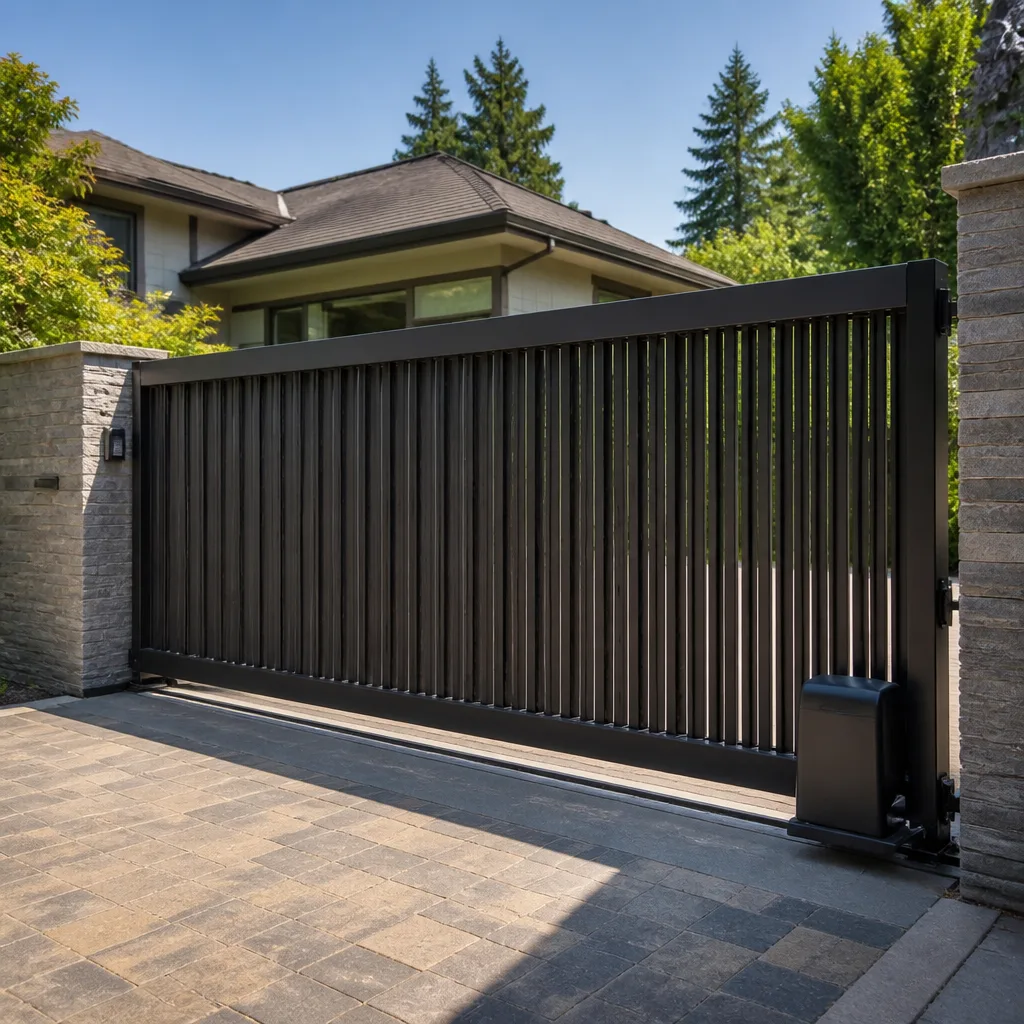
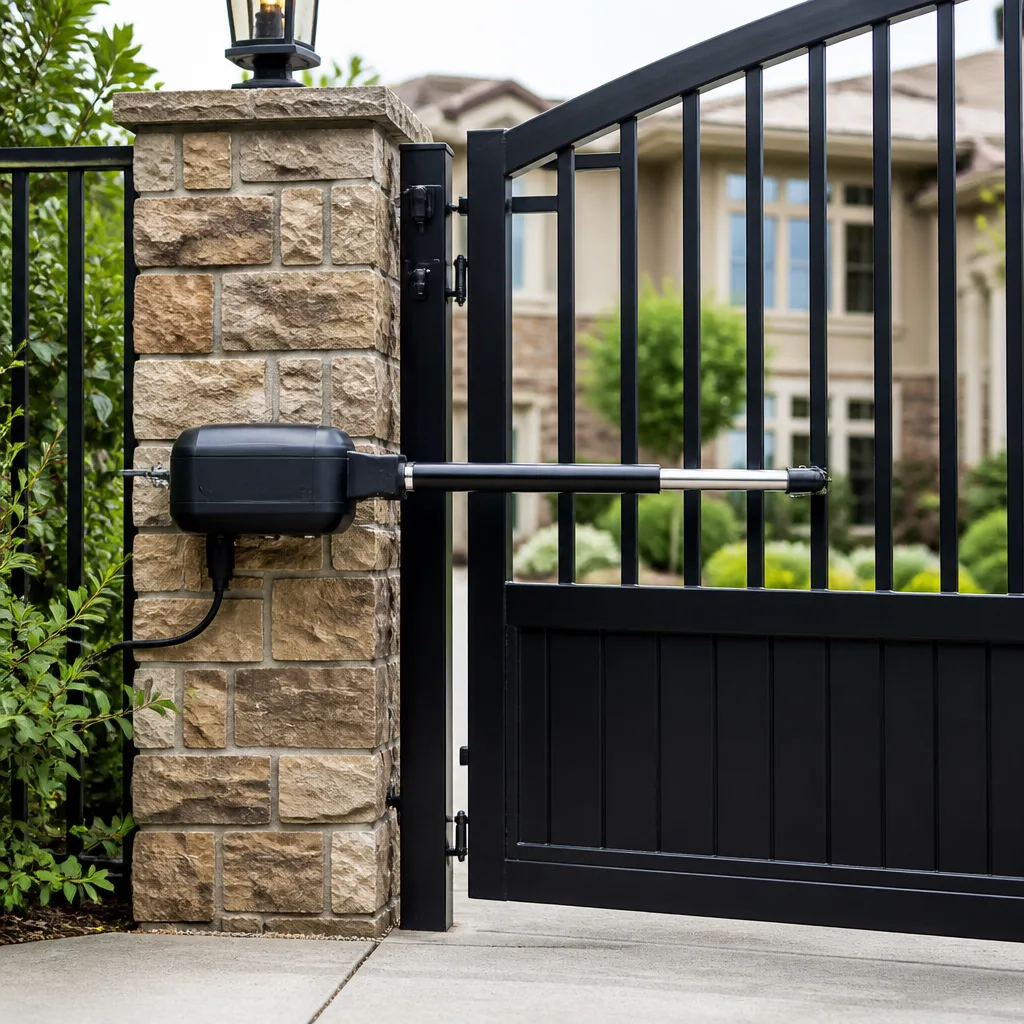
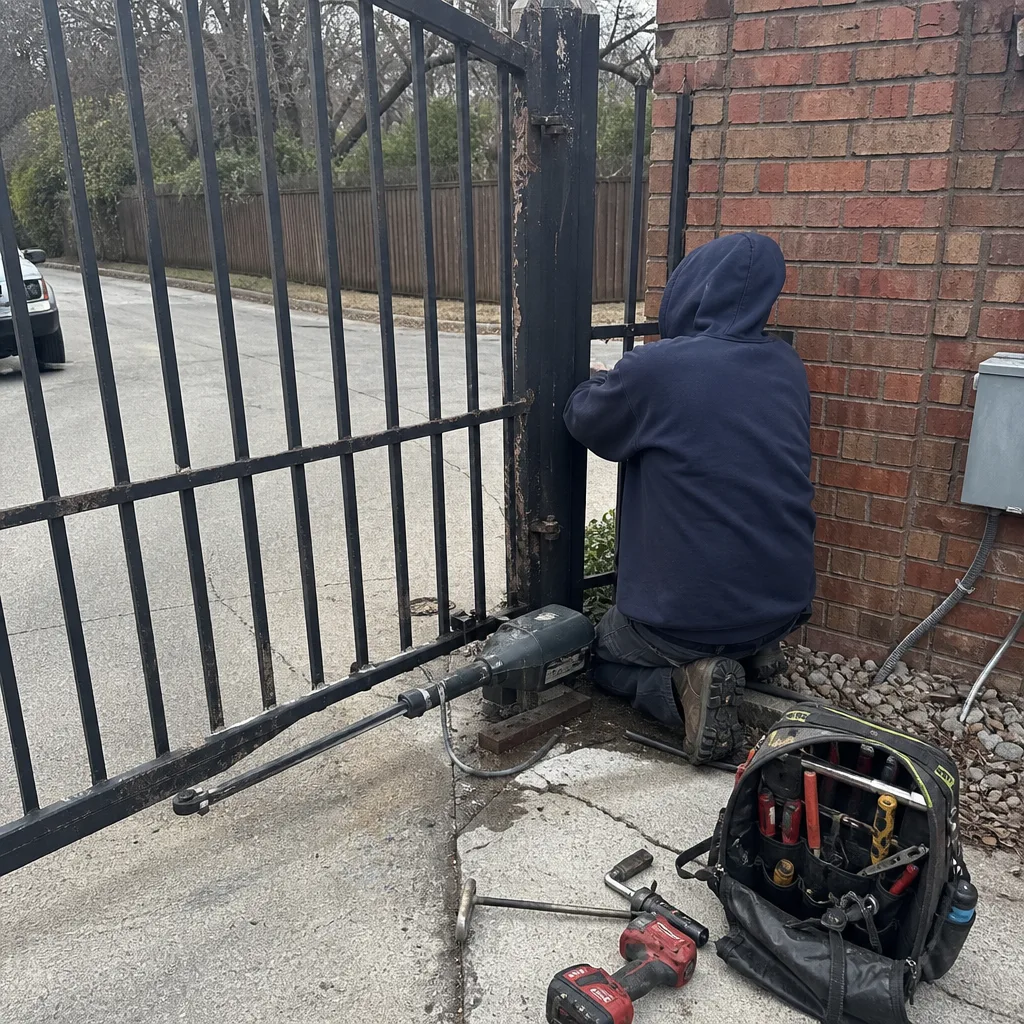 Before
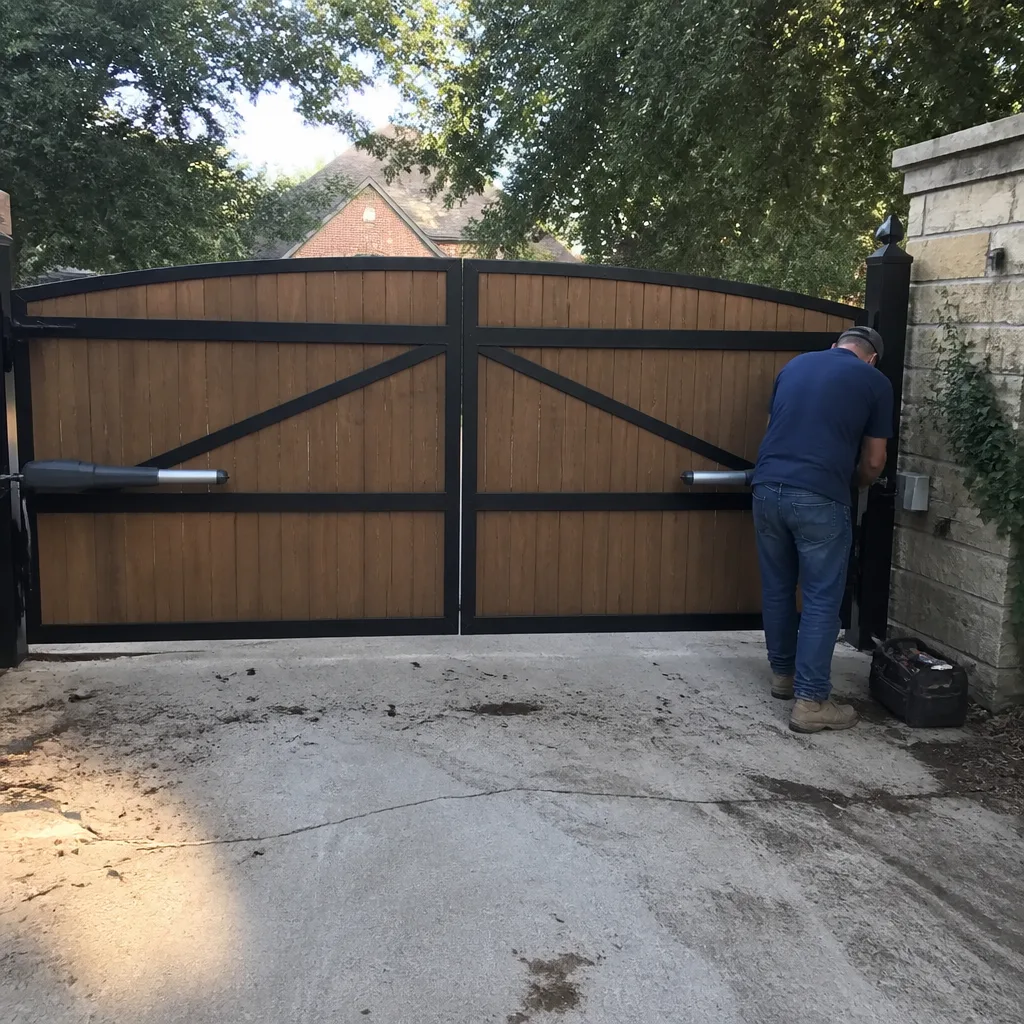 After
After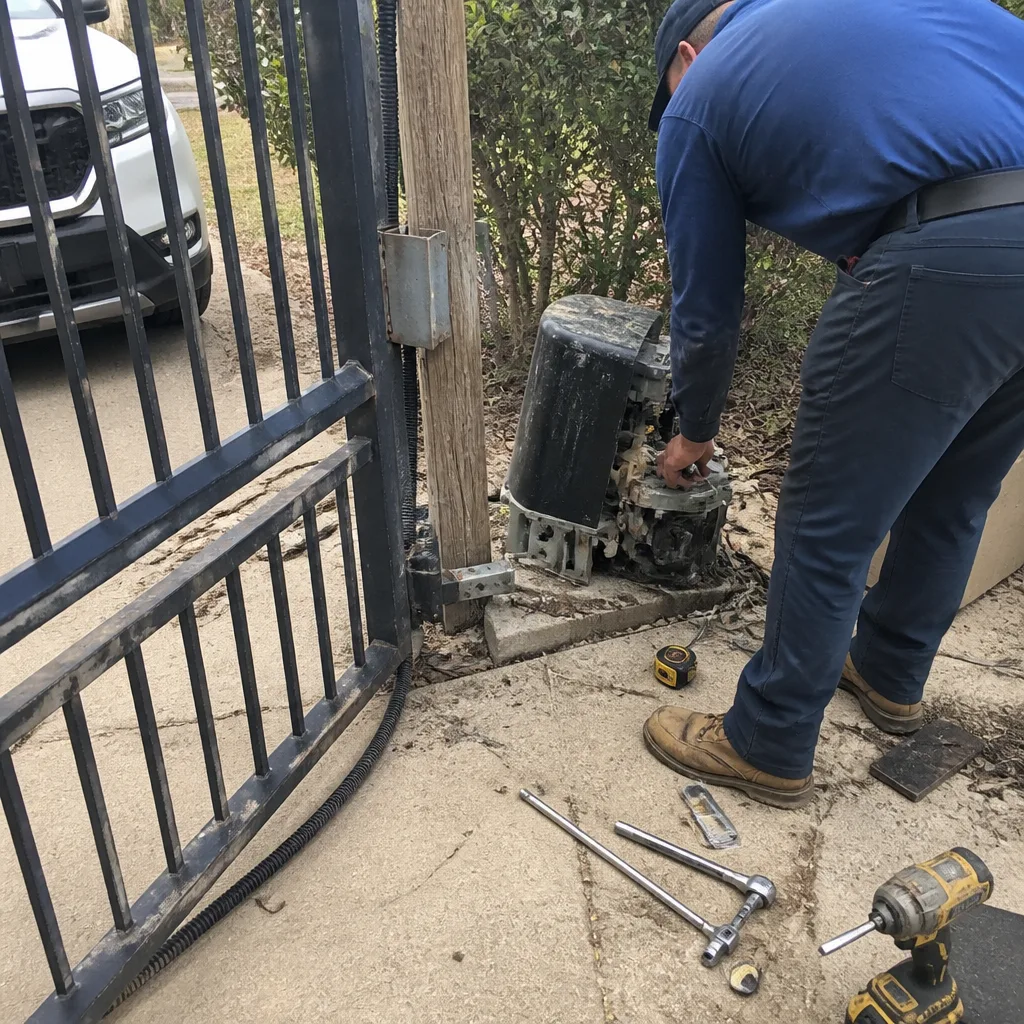 Before
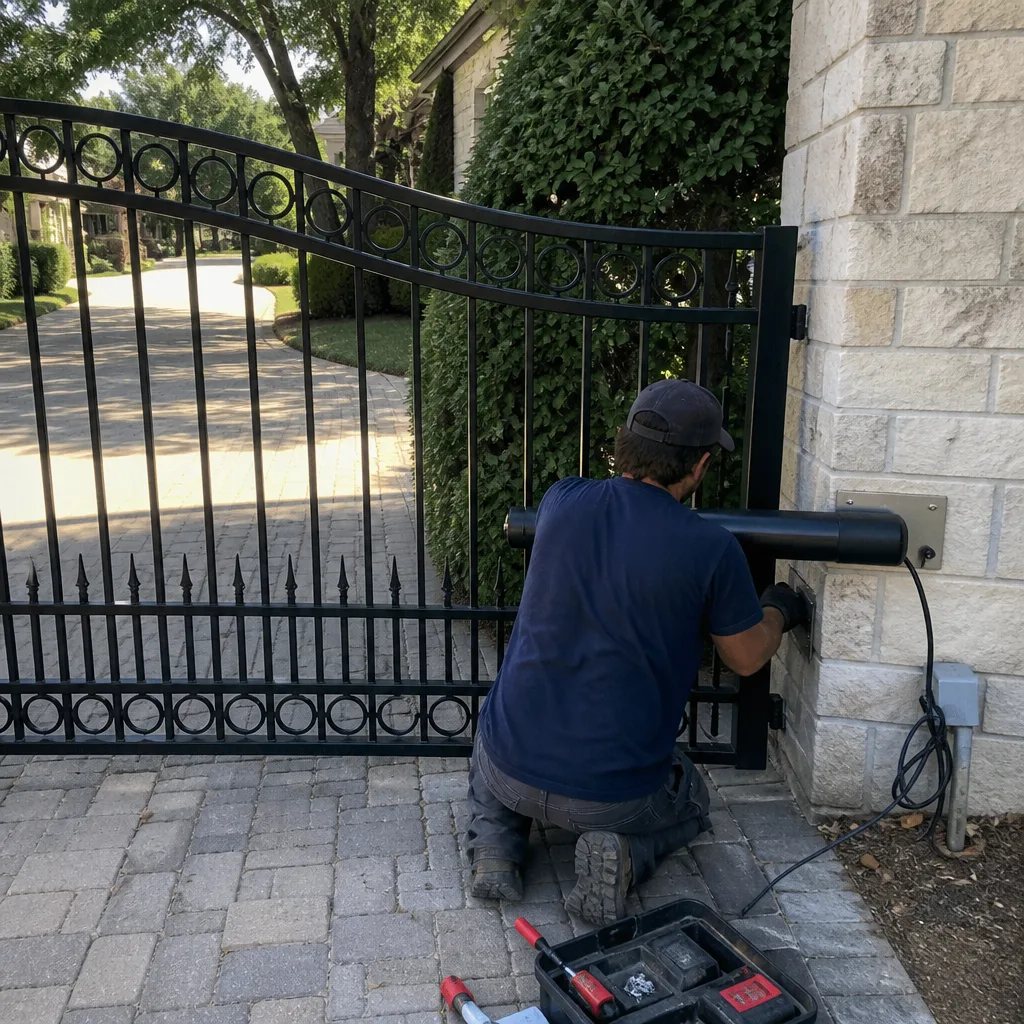 After
After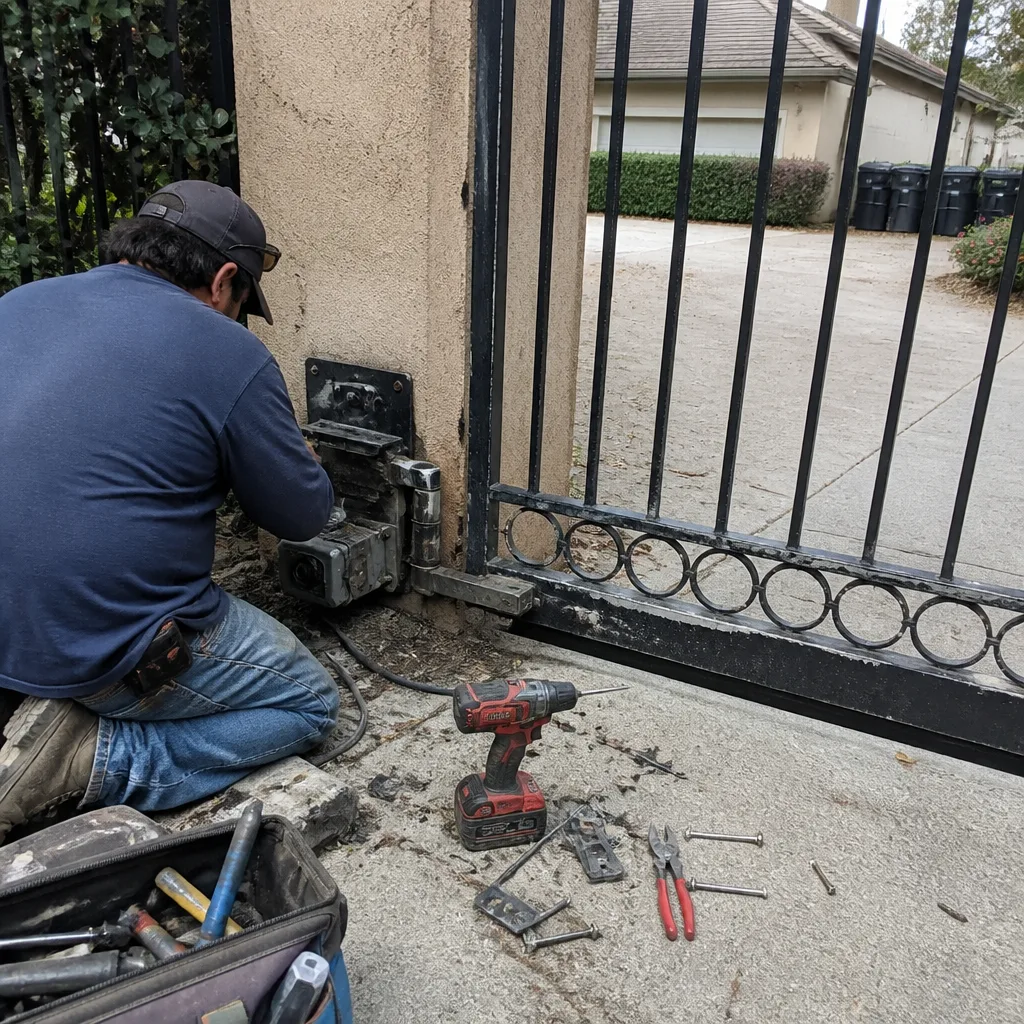 Before
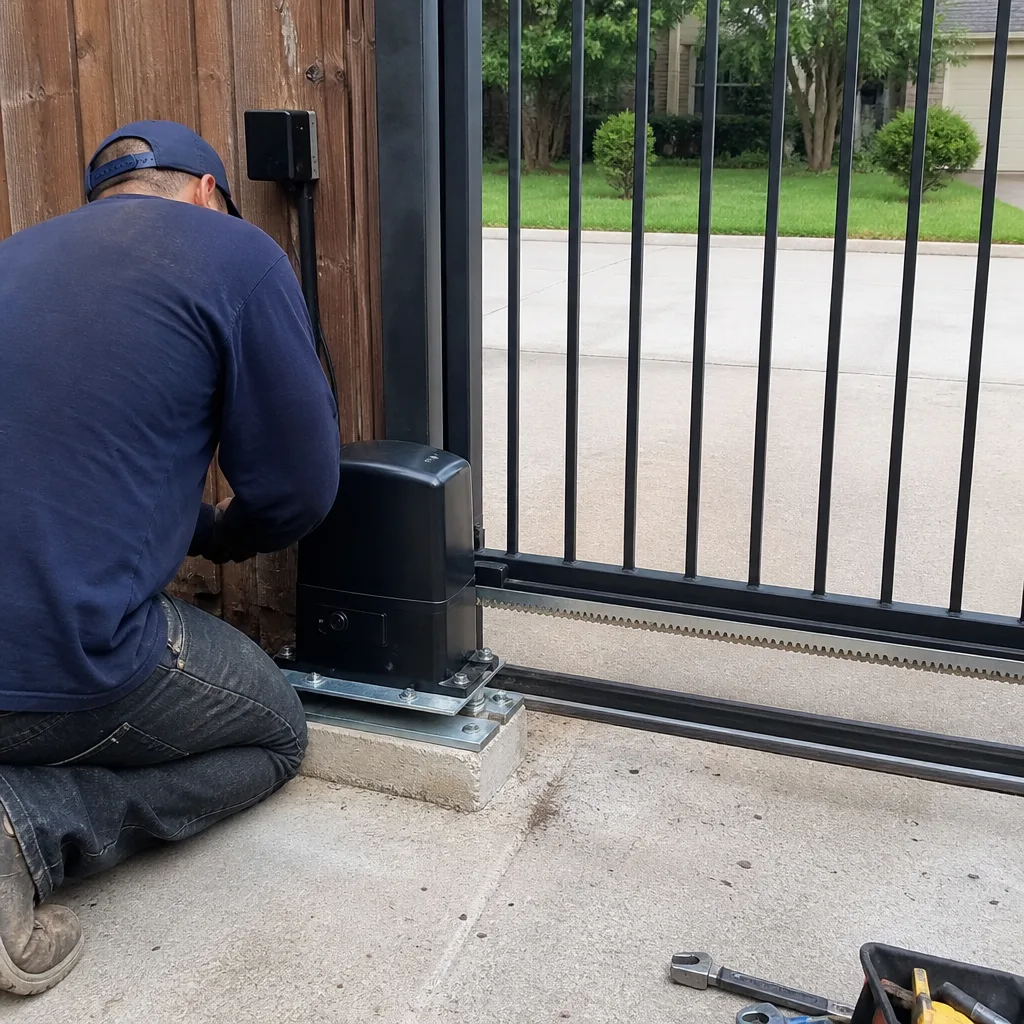 After
AfterGate Repair Warning Signs: A Fort Worth Homeowner’s Reference Guide
When a gate starts dragging on the ground by an inch, most people adjust their opener’s force setting. What they should be doing is checking the post that’s starting to lean. In Fort Worth, where clay soil swells and shrinks with every rainless summer and wet spring, that leaning post is the single most common gate failure we see, and it almost never announces itself with a bang. It announces itself with a scrape, a slow close, a latch that needs a little more effort than it did last fall. Our Seasonal Gate Repair Care for Fort Worth: Year-Round Homeowner’s Guide and this guide will teach you to read those early signals for what they actually are: your gate telling you exactly what’s wrong, weeks or months before the repair bill gets serious. By the time you finish, you’ll know the difference between a hinge problem, a post problem, and an operator problem, and you’ll know which ones you can watch and which ones need a call today.
Quick Answer
The most common gate repair warning signs in Fort Worth are a gate that scrapes or drags on the ground, a visible lean in the post or the gate itself, slow or jerky movement on an automatic opener, a latch that no longer lines up, rust or cracked welds at stress points, and unusual noise from the motor during operation. A scraping gate usually means the post is leaning, not just that the gate needs adjusting. A gate that needs a push to latch is usually telling you the frame has twisted or the post has moved, not that the latch is worn out.
Table of Contents
- Hinge, Post, or Operator: Three Very Different Warnings
- When Your Gate “Just Needs a Little Extra Push”
- How to Read Weld Cracks Versus Surface Rust
- Automatic Operator Warning Signs That Texas Heat Makes Worse
- The Level and Tape Measure Test: Hinge or Post?
- Why Fort Worth Soil Is Hard on Gate Posts
- Common Mistakes to Avoid
- When to Call a Professional
- Frequently Asked Questions
- The Bottom Line
Hinge, Post, or Operator: Three Very Different Warnings
A gate fails in one of three places: the hinges, the posts, or the operator. The warning signs are distinct, and so are the fixes. Mistaking one for another is how homeowners end up paying for a new opener when the actual problem is a hinge that seized three months ago and has been bending the post ever since.
Hinge warning signs
Hinges speak through friction. When a hinge starts wearing, you’ll hear a high-pitched squeal when the gate moves, or a grinding feel when you push it by hand. On heavy steel driveway gates, a failing hinge often shows a small line of rust-colored dust staining the post below the hinge barrel. That dust is powdered metal from two surfaces grinding together. Left alone, the hinge binds, and then the opener has to work harder. And then the opener fails. Which is why so many “motor failures” are actually hinge failures that were ignored for a year.
Post warning signs
Posts speak through gaps and alignment. Walk to the hinge side of your gate and sight down the post like you’re lining up a fence rail. A post that’s leaning will show it as a gap opening between the gate and the post at the top or bottom of the hinge line. On brick or stone columns, look for a hairline crack running horizontally through the mortar near where the hinge plate is bolted. In Fort Worth, where winters are mild but summer heat bakes the ground dry, posts work loose in cycles. The soil contracts, the post leans a fraction, the soil swells back, and the post stays where it leaned.
Operator warning signs
Operators speak through behavior. A gate that used to close in ten seconds and now takes twenty is not “just getting older.” Mid-cycle stops, reversing for no reason, a motor that hums before it engages, or a control board that trips the breaker are all the operator’s way of saying the load has changed or the internal components are dying. When we arrive at a Fort Worth home for what the owner thinks is an opener replacement, we often find the opener was working against a post that moved or a hinge that locked up. The opener was the messenger. It got shot for delivering bad news.
If you’re not sure which system is failing, start with our Gate Repair in Fort Worth overview or read on. The next section covers the most misleading symptom in all of gate repair.
When Your Gate “Just Needs a Little Extra Push”
We hear this phrase at least once a week, and it’s almost always a structural problem hiding behind a minor inconvenience. A gate that latches smoothly one month and needs a shove the next is telling you that something moved. Gates don’t gradually need more effort for no reason. The latch didn’t suddenly become harder to reach. The gate moved, or the post moved, or the frame twisted.
What’s usually happening
- The latch side post has leaned away. The gate still swings fine on its hinges, but the latch bar now sits a quarter inch out of line. The fix is re-setting the post, not bending the latch. Bending the latch buys you a few months. Re-setting the post buys you years.
- The gate frame has racked. On a welded steel or wrought iron gate, the rectangle that is the frame has shifted off square. This happens when one hinge wears faster than the other, or when the post leans and the gate’s weight shifts onto one corner. A racked frame will fight the latch forever until the frame is squared and re-welded.
- A hinge barrel has worn oval. Hinge pins wear on their inside face over years of swinging. When the barrel gets oval instead of round, the gate drops slightly at the latch end. The drop might be a quarter inch. That’s all it takes to make the latch miss.
- The concrete pad or driveway has shifted. In Fort Worth, driveways heave with the same clay soil that moves posts. If the gate no longer has clearance at the bottom because the concrete rose, the gate will bind before it reaches the latch. This looks like a gate problem. It’s a concrete problem. The gate needs to be trimmed or re-hung, and the pad may need attention.
Here’s what you don’t do: keep turning up the force dial on the opener so it pushes harder. All that does is force a misaligned gate into a latch it doesn’t line up with, bending the gate or the post a little more each time. Show me the gate closing on its own and I’ll show you where it’s failing. When it needs help, something is already wrong.
How to Read Weld Cracks Versus Surface Rust
Steel gates in Fort Worth live hard. Summer heat cycles expand the metal; winter fronts contract it. That repeated cycle is how stress cracks start, and stress cracks are the reason gates fall off their hinges. The good news is that a stress crack looks completely different from surface rust, and you can learn to tell them apart in about ten minutes.
Step-by-step visual inspection
- Start at the hinges. Look at where the hinge plate meets the gate frame. Run your eye along the weld bead. A stress crack will run through the weld or along its edge, usually in a straight or slightly jagged line. Surface rust stays on the surface; a crack is a line that has depth, like a hair caught in paint.
- Check the bottom corners of the gate frame. The lower corner opposite the hinges takes the most flex. On a welded frame gate, this is often where the first crack appears. Look for a thin dark line running through the paint or powder coat. If the paint is intact but the line is visible underneath, that’s a crack opening and closing with every swing.
- Inspect welds where pickets or infill meet the frame. On ornamental iron gates, each picket is welded top and bottom. A picket that rattles when you shake it has lost its weld. One loose picket is a five-minute fix. Twelve loose pickets mean the gate has been flexing for years and the frame itself may be compromised.
- Use a flashlight at an angle. Hold a light flat against the metal, shining across the weld. A crack will throw a shadow inside the line. Surface rust won’t. This one trick will catch cracks you’d miss in daylight.
- Tap test the welds. With a small hammer or the butt of a screwdriver, tap the metal near each weld. A solid weld rings with a bright, short ping. A broken weld thuds with a dull rattle. Do this every six months and you’ll hear a problem before you see it.
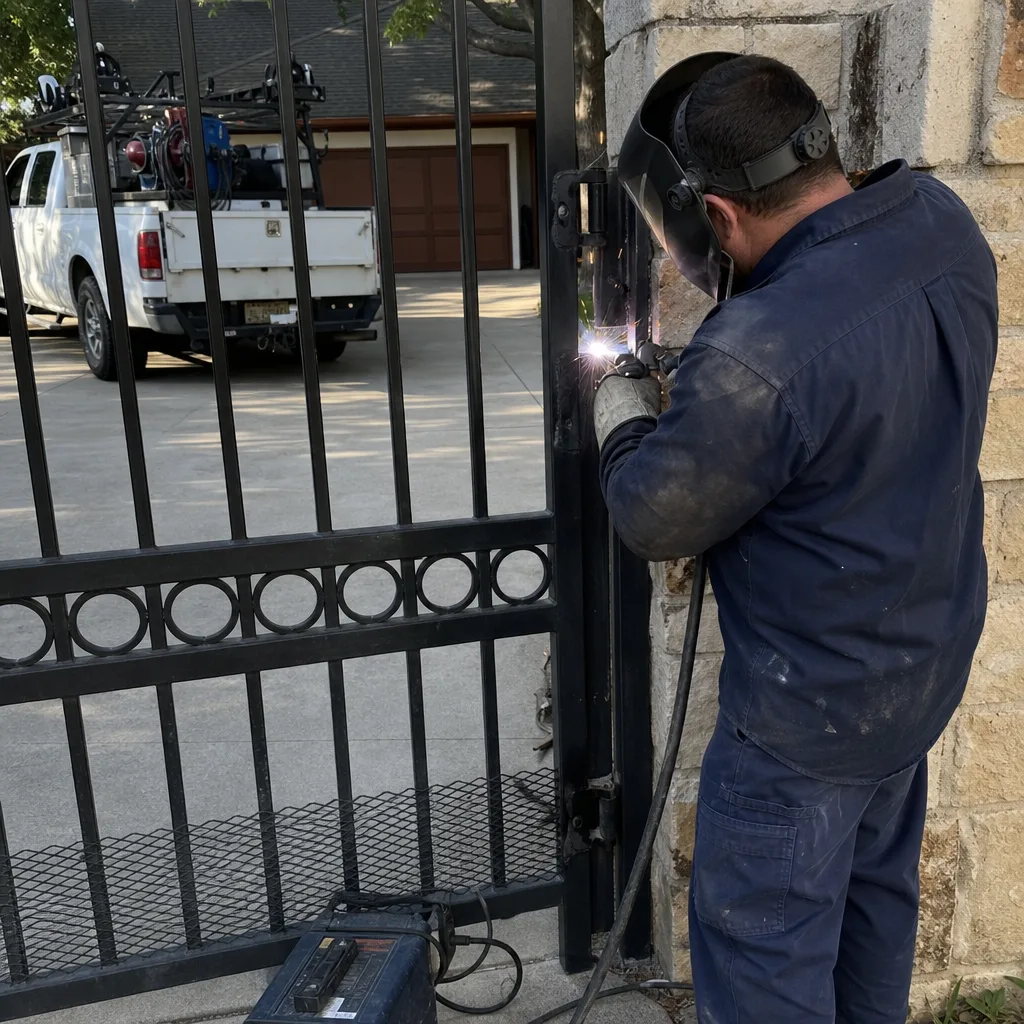
Surface rust, by contrast, stays on the metal. It flakes, it discolors, it spreads across the surface. It’s a cosmetic and protective coating issue, not a structural one, unless it’s been pitting the metal for a decade or more. When in doubt, take a photo with your phone and zoom in. If the line disappears when you clean the rust away with a wire brush, it was just rust. If the line is still there, that’s a crack, and on-site welding is how we fix it without hauling your gate across town.
Automatic Operator Warning Signs That Texas Heat Makes Worse
Automatic gate operators in Fort Worth have a specific enemy: the hundred-degree stretch from June through September, when the motor housing bakes in direct sun and the control board inside runs twenty degrees hotter than the air outside. Heat doesn’t just stress the motor. It changes how the electronics behave, which means the warning signs in a Texas summer are a little different from what a homeowner in Michigan would see.
Behavioral warnings to watch for
- Slow close in the afternoon, normal in the morning. Heat increases electrical resistance. An operator that runs noticeably slower at 3 p.m. than at 8 a.m. is running hot. The motor windings are degrading, or the capacitor is on its way out. Both are replaceable if caught early.
- Mid-cycle stops that self-correct. If the gate stops halfway, waits a few seconds, and then continues without you touching anything, the control board is experiencing a thermal fault. This is the operator’s version of a computer overheating. Each event shortens the board’s life a little more.
- A hum that precedes movement. When you trigger the opener and hear a low hum for a second or two before the gate starts moving, the capacitor is struggling to deliver the starting torque. That’s the part that fails first in Texas heat. A forty-dollar capacitor replaced in time saves a four-hundred-dollar motor.
- Phantom reversals. The gate starts closing, then suddenly reopens as if it hit something. Nothing’s there. This is a safety sensor misreading, often caused by heat expanding the sensor housing just enough to shift the beam alignment. It’s also a sign the obstruction sensitivity is set wrong, which we see on a lot of DIY installations and older LiftMaster and Mighty Mule units.
- Erratic behavior only after heavy rain followed by heat. Fort Worth storms soak the ground, then the heat bakes it dry. That cycle can shift underground wiring just enough to crack insulation. A gate that works fine on dry days and acts possessed after a storm has moisture getting into the circuit, usually at a splice in an underground run.
If your operator is a LiftMaster, Mighty Mule, FAAC, or BFT, the specific failure points vary, but the heat-related warning signs above apply across the board. Our Gate Motor & Opener in Fort Worth page covers the service side if you need more depth. The rule of thumb: when behavior changes with the temperature, don’t wait for total failure. Heat damage compounds.
The Level and Tape Measure Test: Hinge or Post?
You can determine whether a sagging gate is a hinge problem or a post problem in under five minutes with two tools you already own. This is what we do on the first visit to almost every sagging gate in Fort Worth, and it tells us more than a phone call ever could.
Step 1: Level the post, not the gate
- Place a level against the hinge-side post, holding it vertical along the face of the post. Check both sides of the post.
- If the post itself is out of plumb, the gate will never hang straight no matter how many times you adjust the hinges. The post is the problem. A post that has moved is the most common cause of a dragging gate, and it’s a structural repair, not an adjustment.
- If the post is plumb and true, move to Step 2.
Step 2: Measure the reveal gap
- Measure the gap between the bottom of the gate and the ground at the hinge end. Write it down.
- Measure the same gap at the latch end. Compare.
- If the latch end is lower by more than half an inch on a walk gate, or more than three-quarters of an inch on a driveway gate, the gate has dropped. The question is why.
Step 3: Isolate the hinge wear
- With the gate in the closed position, lift up on the latch end. Use both hands and lift firmly.
- If the gate moves upward visibly when you lift, the hinge pins or barrels are worn. The wear is the slack you feel. New hinge barrels or bushings fix this.
- If the gate doesn’t move but the drop is still there, the gate frame itself has racked, or the hinges are bent, or the post moved, and you missed it in Step 1. Re-check the post with the gate open so the weight isn’t loading it.
Step 4: Check the reveal on the hinge side
Close the gate and look at the gap between the gate frame and the hinge post. If the gap widens at the top and narrows at the bottom, the hinges are binding and the gate is twisting its own frame. If the gap is uniform top to bottom but the gate still drags, the opening itself may have narrowed as the posts moved toward each other.
A gate sags in the hinge post, not in the middle, and that is where we start. Fix the panel without the post and you’ll fix it twice.
Why Fort Worth Soil Is Hard on Gate Posts
If you’ve lived in Fort Worth for more than a year, you know the soil. It’s a heavy black clay that shrinks in drought and swells after a hard rain. A gate post set in that soil is sitting in a material that moves constantly. The post isn’t attached to the earth in any stable sense; it’s being squeezed and released by it.
The depth of the post matters more than the diameter. In our experience across Fort Worth and the surrounding communities, a post set less than 30 inches deep will lean within five years, often sooner. A post set at 36 to 42 inches with a proper concrete footer will usually hold for decades. When we repair a leaning post, we often find the original install was two feet of concrete in a hole that should have been three feet or more. The soil moved, the post came with it, and the gate started dragging.
This is also why we don’t recommend the quick fix of driving a steel wedge between the post and the concrete collar. It might straighten the post for a season. But the same soil pressure that moved it the first time will move it again, and the wedge makes the next movement worse. The fix is to dig it out, re-set it deeper, and let the concrete cure before re-hanging the gate. It’s slower and it costs more than the wedge trick, but you won’t call us about the same post again next spring.
Seasonal timing in Fort Worth
Post movement accelerates in two windows: late summer, when the clay has been dry for months and shrinks away from the concrete, and late winter, when the soil saturates and expands. A gate that’s always been fine might start dragging in August, then seem better in October. It isn’t better. The post moved in the dry spell, and the autumn rain just softened the ground around it. The lean is permanent until the post is re-set.
Common Mistakes to Avoid
- Adjusting the opener’s force instead of fixing the alignment. Crank the force up to push through a binding gate and you’re not extending the opener’s life, you’re burning it out faster while the underlying problem gets worse. The fix is alignment first, motor second.
- Bending the latch bar to make it catch. A latch that won’t catch means the gate and post no longer line up. Bending the latch bar treats a symptom. The misalignment remains, and each forced close bends the gate a little more.
- Greasing hinges without loosening them first. Most gate hinges have no grease fitting. Spraying lubricant on the outside of the hinge just makes a mess. If a hinge is squealing, it’s already worn. Lubrication buys weeks, not months. The hinge needs replacement or repair.
- Ignoring a gate that scrapes the ground only when the weather changes. Fort Worth clay soil moves with moisture levels. A gate that scrapes in August but not in January has a post on the move. Seasonal scraping is not seasonal inconvenience; it’s a warning that the post is losing its grip.
- Waiting until the opener stops completely. By the time an automatic opener won’t respond at all, the motor, the capacitor, and often the control board are all damaged. The repair is a replacement. The early warnings were the slow close and the mid-cycle stop. Catch it then and you’re replacing one part, not the whole unit.
- Propping a heavy gate open with a rock or a block. A driveway gate that’s being held open with a chunk of concrete is telling you the opener can’t hold it. The rock hides the symptom. The motor is still trying to hold position every minute the gate is powered. Guess what gives out next.
When to Call a Professional
Call a professional when the post is visibly out of plumb, when you find a stress crack in a weld, when the operator behaves differently than it did a month ago, or when the gate needs manual help to latch. These are not adjustment problems. They are structural or electrical problems that get more expensive every week they’re ignored. For help deciding who to call, see our How to Hire a Gate Repair Contractor in Fort Worth: A Step-by-Step Guide. If you’re not sure, the level and tape measure test above will tell you a lot in five minutes, but some failures are hidden inside the operator housing or underground. Gatewood Fence & Gate offers free estimates in Fort Worth and the surrounding county. We’ll tell you what’s wrong, what it costs to fix, and whether it can wait. Call (817) 241-4067 and a live person answers, any hour.
For a broader look at what full repairs involve, see our Gate Repair in Fort Worth page. If you’re weighing repair against replacement, our Gate Installation in Fort Worth guide walks through the math.
Frequently Asked Questions
Gate Repair services in Fort Worth typically run $75 to $150 for minor adjustments like hinge lubrication or latch realignment, $150 to $350 for hinge replacement or gate re-hanging, and $500 to $1,200 or more for post re-setting, which requires digging, new concrete, and curing time. Automatic opener repairs usually land between $150 and $500 depending on whether you’re replacing a capacitor, a board, or a motor. We quote every job before work starts, and the price on the written estimate is the price on the invoice. Call (817) 241-4067 for a free estimate.
If the post reads plumb on a level, the drop is likely in the hinge wear or the gate frame. Lift the latch end of the gate and feel for play. If it moves, the hinge barrels or pins are worn oval and need replacement. If it doesn’t move, the frame itself may be racked and needs to be squared and re-welded.
For hinge replacements, latch adjustments, and most operator repairs, we can often complete the job the same day we see it. Post re-setting requires excavation and concrete curing time, which typically takes two to three days before the gate can be re-hung. When we give you a time window, we show up in it. Call (817) 241-4067 to get on the schedule.
A properly set gate post, meaning a hole at least 36 inches deep with a solid concrete collar, should last 20 to 30 years in Fort Worth’s clay soil. A post set 24 inches deep or less will often begin leaning within three to five years. The difference is the depth of the hole, not the brand of the post.
We service and repair Mighty Mule, LiftMaster, FAAC, BFT, and a half dozen other major opener brands, and we stock or can source replacement parts for most models. A noisy capacitor, a failing limit switch, or a worn gear doesn’t require a new opener. We’ll tell you honestly whether the repair is worth the cost of the part, compared with what it would cost to replace the unit. The estimate is free either way.
Yes, it’s worth checking. Heat-related phantom reversals usually point to a safety sensor alignment problem or an obstruction sensitivity setting that’s too tight, both of which can damage the board over time if ignored. In a Fort Worth July, the sensor housings expand enough to shift the beam. It’s a quick calibration fix in most cases. Call (817) 241-4067 and we’ll get it sorted before it starts refusing to close at all.
The Bottom Line
Most gate failures in Fort Worth announce themselves weeks or months ahead, but only to someone who knows how to listen. A scraping gate is a post problem until proven otherwise. A latch that needs help is a frame or post alignment problem, not a worn latch. A heat-sensitive opener is a capacitor or sensor problem waiting to become a full motor replacement. Learn to read the signals, check the welds twice a year, and don’t turn up the force dial to mask what’s really wrong. When you catch it early, the repair is measured in hundreds, not thousands. And when you need a second set of eyes, Gatewood Fence & Gate has been fixing gates in Fort Worth since 2001. Call (817) 241-4067, and you’ll get Hal or someone who works with him every day, not a phone tree.
Written by Hal Gatewood, Owner at Gatewood Fence & Gate, serving Fort Worth since 2001. For more guides & resources, visit our blog.