
Free on-site gate assessment - hinges, posts, and your LiftMaster or Nice gate operator checked before anything is quoted
The assessment is free and the quote is the invoice.
 Before
 After
After Before
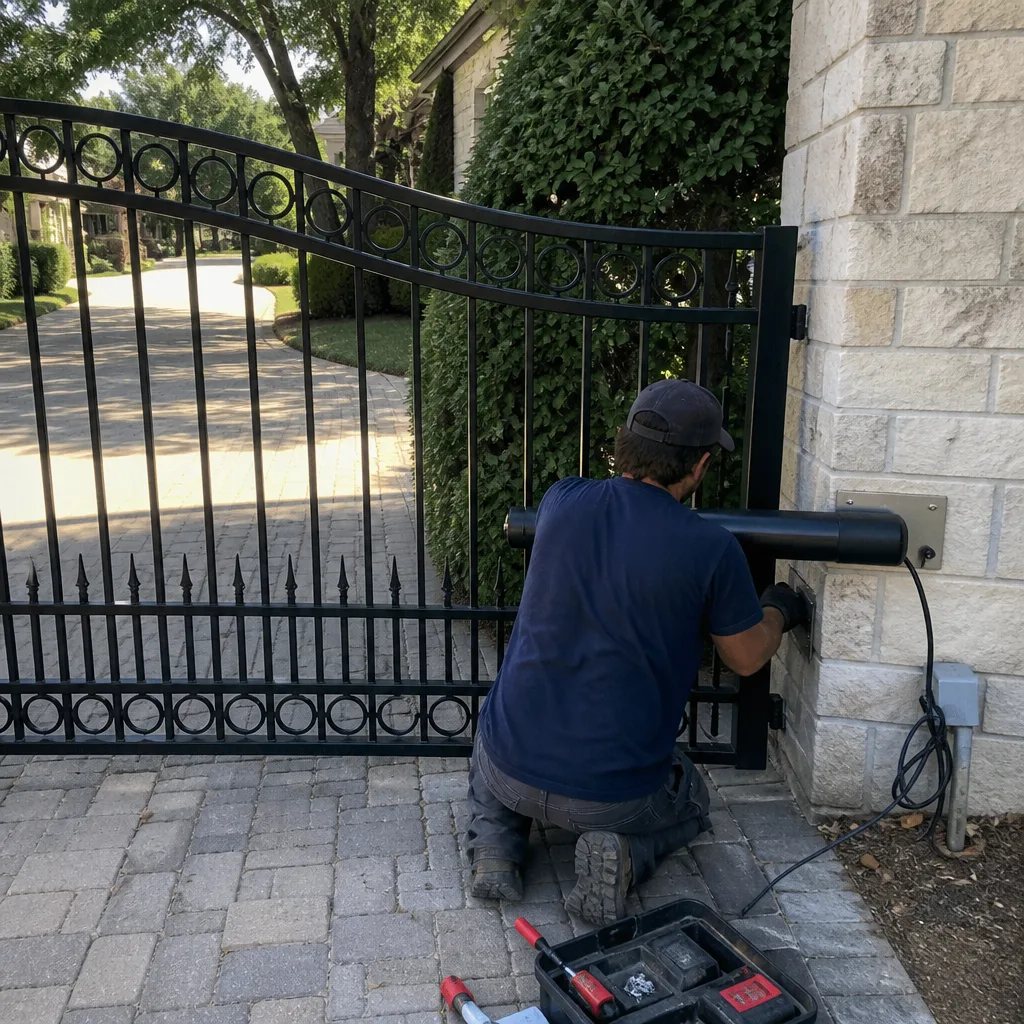 After
After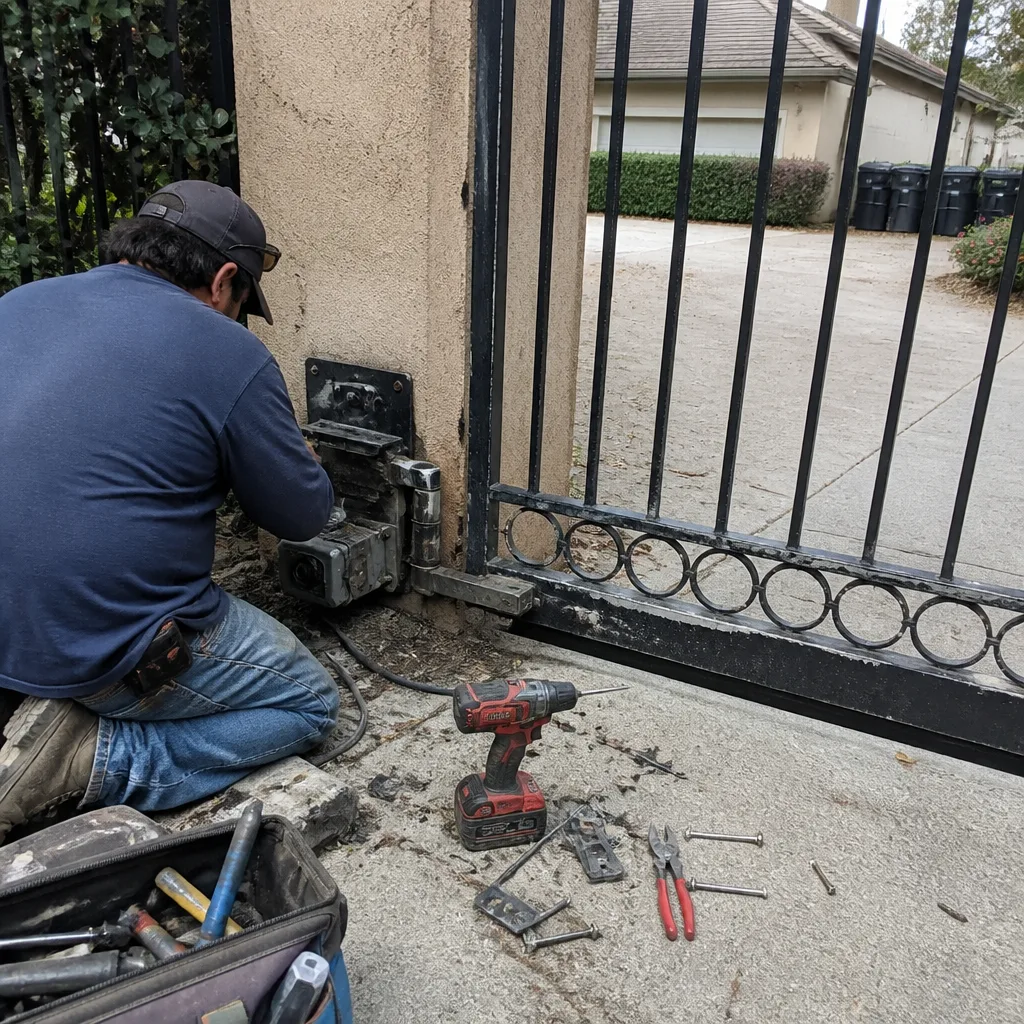 Before
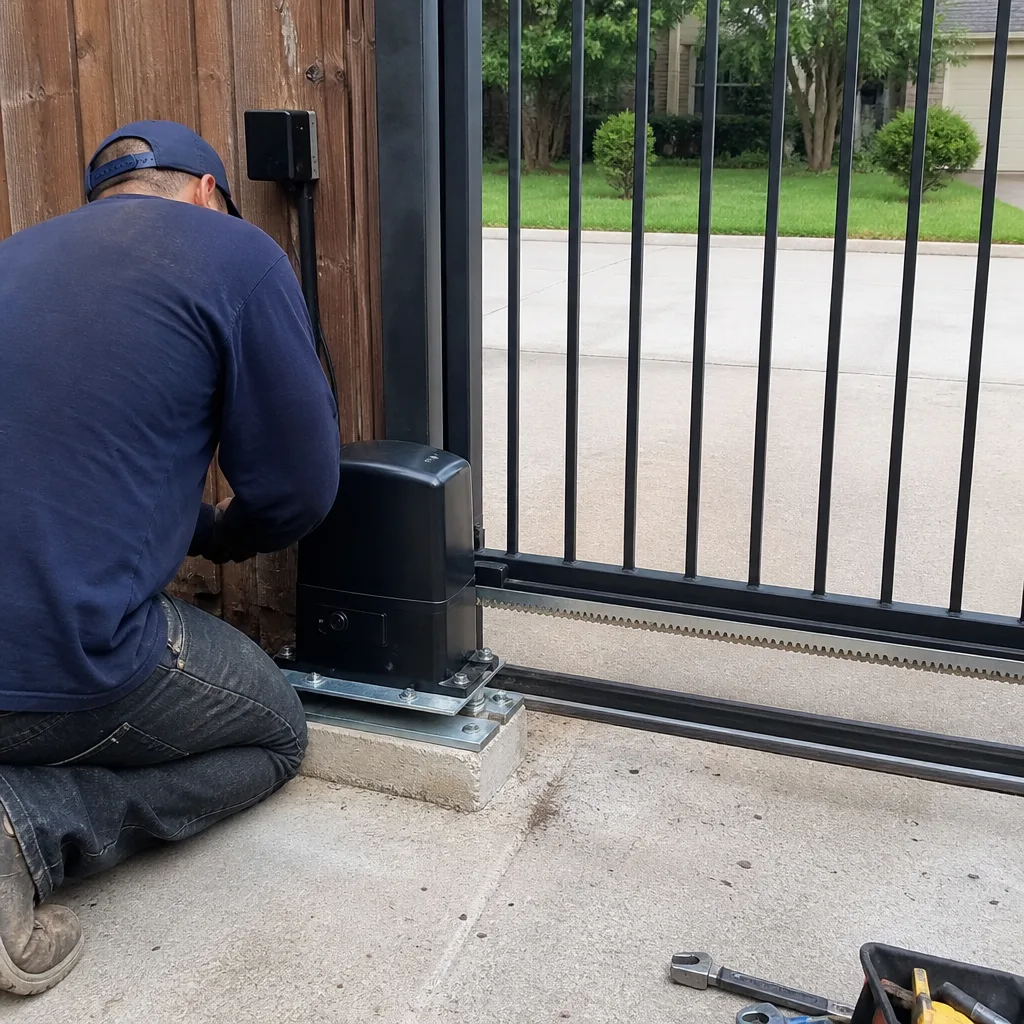 After
AfterGhost Controls Access Control Installation: The Fort Worth Owner’s Guide
Ghost Controls access control installation in Fort Worth typically runs $220-$480 installed, depending on which module your system needs and how the existing wiring looks. We stock the keypad, receiver, and wireless intercom parts on the service truck, so most jobs are one trip and done. The way most folks discover this part has failed is simple: the keypad stops opening the gate, or the remote that worked last week suddenly does nothing, and the gate motor still runs fine when you jump it at the panel.
That’s the tell. When the motor works but the access control doesn’t, the problem is almost never the motor. It’s the brain between your finger and the motor, and Ghost Controls uses a few different brains depending on the year and the series. We see this every week across Fort Worth, from Benbrook to Keller, and it’s one of the more straightforward fixes we do. Hal Gatewood has been sorting out Ghost Controls systems since they first showed up in the local market, and he’ll tell you honestly whether you need a full module replacement or a $40 fix.
Which Ghost Controls Models This Applies To
Ghost Controls runs three main control board generations: the AXPB, the AXDP, and the newer GLD series. Older systems from the mid-2010s use the AXPB boards, which you’ll identify by the single push-button programming interface and the green status LED. The GLD boards moved to a digital display and added the battery-backup terminals. Before you order anything, open the control box and look at the board’s silkscreen label. It’s printed right on the board, no guesswork.
The compatibility gotcha with Ghost Controls is the receiver frequency. The brand shifted from 318 MHz to 433 MHz around 2019. If you have a 318 MHz board and buy a new keypad, it won’t talk to the receiver unless you get the matching frequency part. We’ve seen owners buy the right-looking keypad online and get stuck because nobody checked the frequency. For the Fort Worth market specifically, we lean toward OEM Ghost Controls parts for the control board and receiver, but for keypads and push buttons we’re comfortable with quality aftermarket units that match the frequency and voltage spec. The Texas heat degrades the soft-touch buttons on the older keypads faster than anything else. Vinyl button membranes crack and let moisture in, and once that happens the contacts corrode and you’re getting intermittent codes or no codes at all.
Signs Your Ghost Controls Access Control Installation Is Failing
- Keypad lights up but the gate won’t move. This usually means the keypad is transmitting but the receiver isn’t picking it up. Could be a frequency mismatch (if the keypad or receiver was replaced at different times) or the receiver antenna has come loose inside the box. We chase this one down with a multimeter and a known-good remote in about ten minutes.
- Gate opens from the remote but not from the keypad. That isolates the problem to the keypad itself or the wiring between the keypad and the board. The most common culprit is corroded wire terminals at the keypad mounting post, especially in Fort Worth’s clay-heavy soil that holds moisture against the post base.
- Gate opens randomly with nobody near it. A failing control board or a shorted wire can send phantom open commands. This is also a security problem you should not ignore. If the relay contacts are sticking or the board is getting voltage sag from a failing transformer, the gate can trigger on its own.
- Access control works intermittently, worse after rain. Water intrusion at the keypad or control box seal is the classic Fort Worth problem. The storms in March and April will reveal any leak that has been hiding all winter. Once moisture gets into the board, corrosion accelerates and the fix gets more expensive the longer you wait.
- New batteries in the remote but still no response. This points hard at the receiver board itself. Ghost Controls receivers do fail, and when they fail they don’t usually limp along with a weak signal. They just stop. Replacing the receiver module is faster and cheaper than replacing the whole control board, and we stock both.
Replacement Cost & What’s Included
Here’s the straight pricing for Fort Worth, not a national chart. A new keypad, installed, runs $220-$310. A receiver module is $180-$260. A full control board replacement runs $350-$480 including the board, labor, and re-programming all your existing remotes and keypad codes. What drives the range is wire condition. If the existing low-voltage wire is intact, you’re at the low end. If we have to pull new wire from the house to the gate, that adds time and material, and we’ll tell you before we start. The price is quoted and agreed before any work begins, and there is no trip charge inside Tarrant County. Every job carries our 90-Day Done Right Promise in writing, so if the new part misbehaves within three months, Hal comes back and makes it right without a debate. We also offer $40 off any repair over $200, and seniors and veterans get 10% off permanently.
DIY or Call Us?
You can safely do a couple of checks yourself without touching anything dangerous. First, verify the gate motor still works by using the manual open button on the control board itself. If the motor opens from the board, the issue is upstream in the access control, and that narrows the problem. Second, check the keypad mounting screws and the wire terminations for visible corrosion. If you see green or white fuzz on the terminals, that’s the likely gremlin. Low-voltage access control work is not the same danger as the high-tension springs or the 120-volt feed to the operator, but it does involve live low-voltage circuitry and programming modes that are easy to get wrong. If you short the wrong terminals on a Ghost Controls board, you can burn out the relay and turn a $40 wire repair into a $400 board replacement. We’d rather see you call than smoke a board. Reach Hal directly at (817) 241-4067 and he’ll talk you through what you’re seeing, no charge for the conversation.
FAQs
A Ghost Controls keypad in the Fort Worth climate typically lasts 5-8 years before the Texas sun and rain take their toll on the faceplate and buttons. The control board itself can run 10-12 years if it stays dry inside the box. If you’re replacing parts every two or three years, there’s usually an underlying wiring or moisture problem that the part swap isn’t fixing.
Often yes, and we’ll try the repair first when it makes sense. A corroded terminal, a loose antenna, or a cracked wire connector is a repair, not a replacement. When the board itself has failed or the keypad membrane is split open, repair doesn’t pencil out against the cost of a new part, and we’ll tell you that straight. Call (817) 241-4067 and Hal will give you an honest read on which way to go.
Most keypad, receiver, and control board swaps on Ghost Controls systems take 60-90 minutes from arrival to testing, assuming the existing wiring is usable. We program your existing remotes into the new board, test every function, and clean up before we leave. You’ll be opening your gate with your own remote before we pull out of the driveway.
Yes. We keep Ghost Controls keypads, receivers, and the common control boards on the service truck, along with parts for LiftMaster, Mighty Mule, and DoorKing. That means most access control jobs don’t wait on a shipment. If we don’t have your exact module on board, we’ll tell you that upfront and have it in hand before we schedule the install.
Give Hal a Call
If your Ghost Controls access control has quit on you, don’t guess at the part and don’t pay for a board you might not need. Call (817) 241-4067 and explain what’s happening. Hal will help you sort out what’s actually wrong, give you a straight price before any work starts, and show up when he says he will. Give me a call - that’s my real number, and I’ll pick up.
Written by Hal Gatewood, Owner, Gatewood Fence & Gate at Gatewood Fence & Gate, serving Fort Worth and nearby areas.