
Free on-site gate assessment - hinges, posts, and your LiftMaster or Nice gate operator checked before anything is quoted
The assessment is free and the quote is the invoice.
 Before
 After
After Before
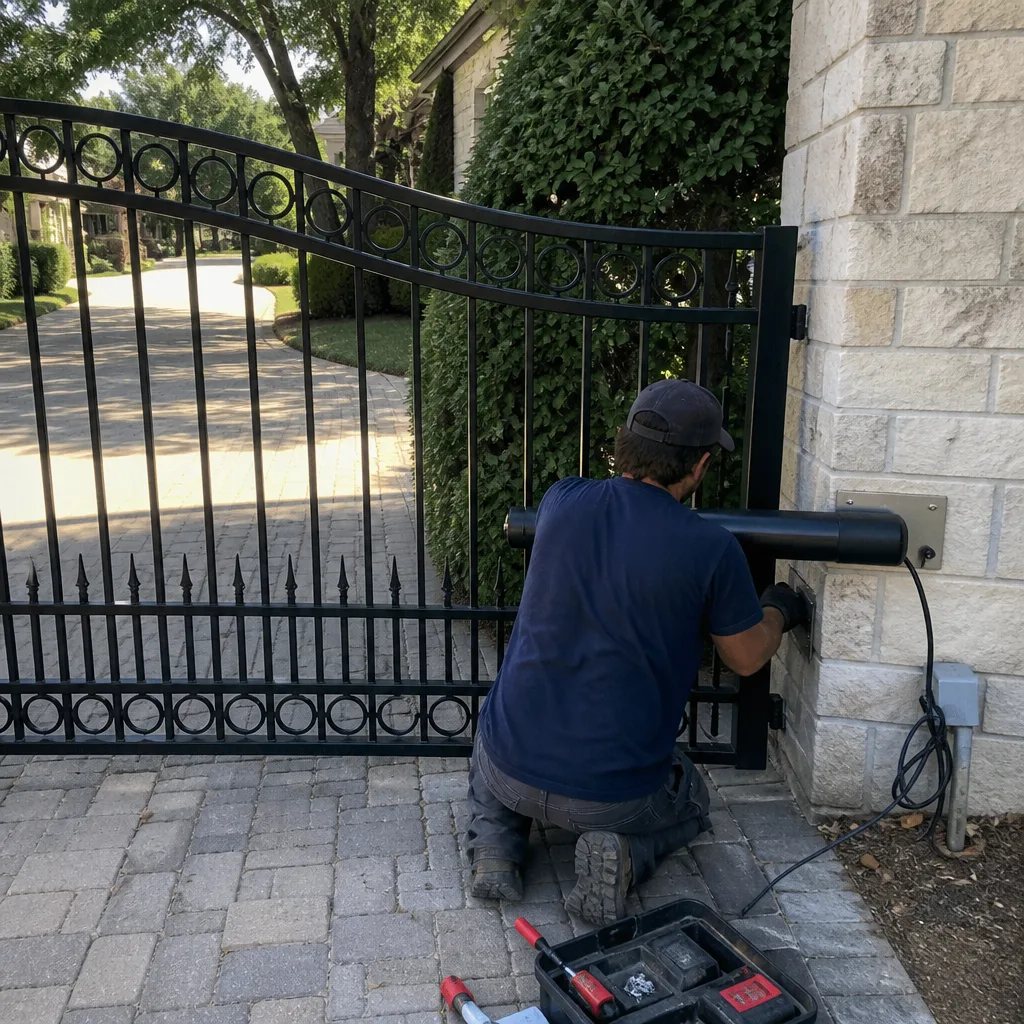 After
After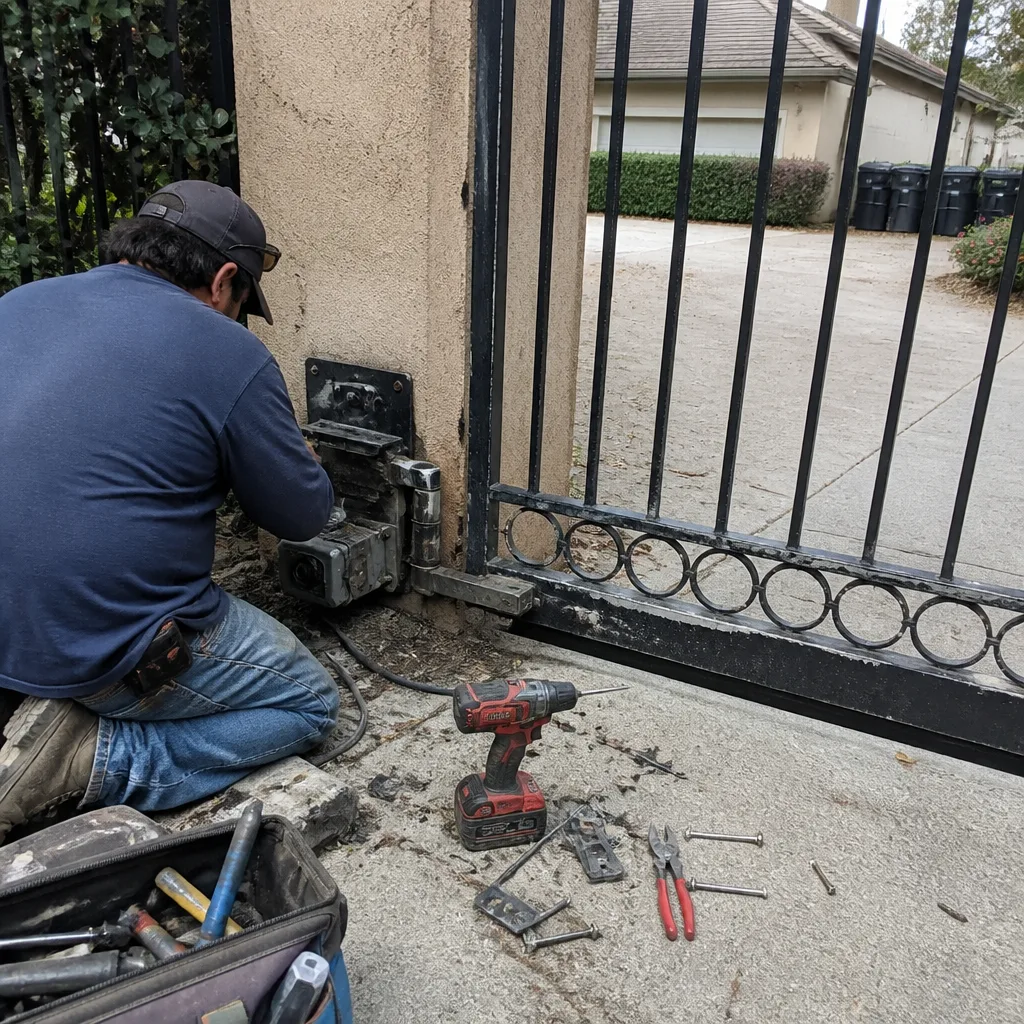 Before
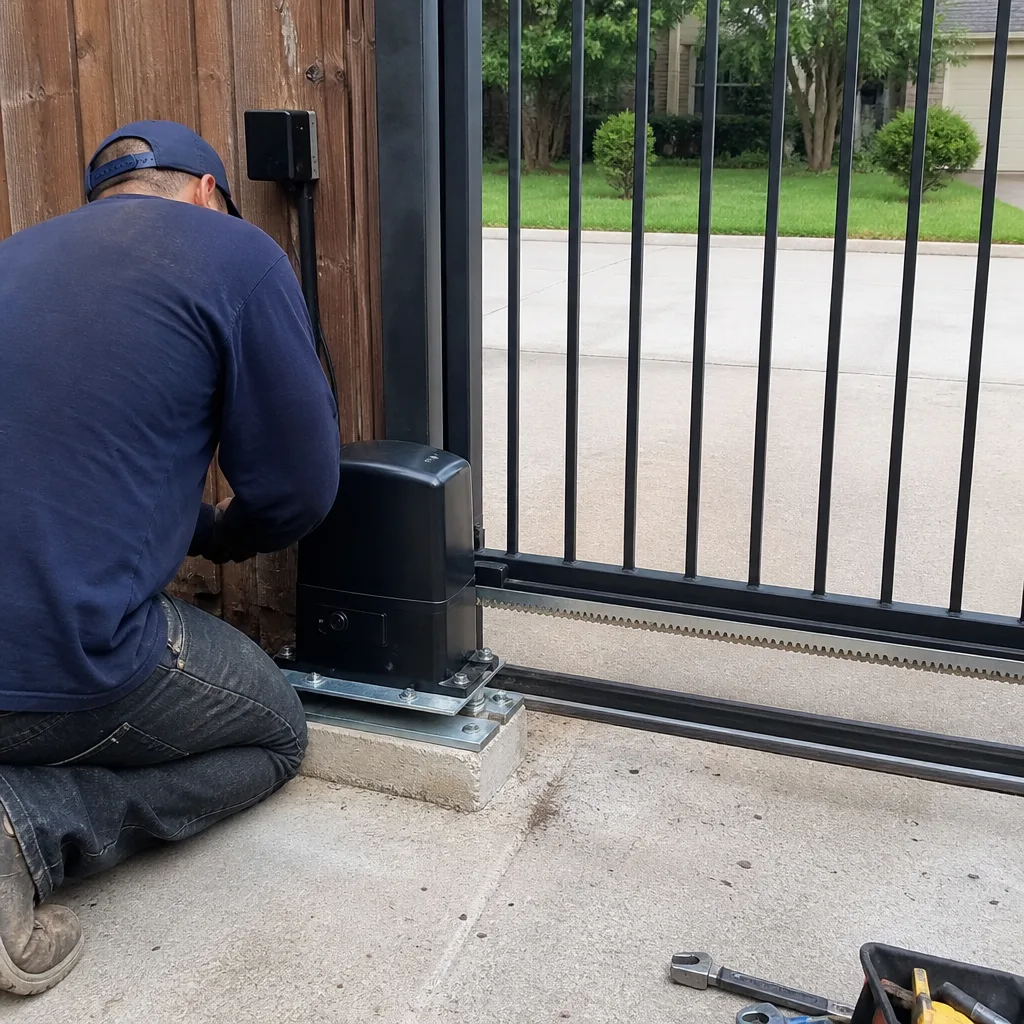 After
AfterFAAC Keypad & Intercom Repair: The Fort Worth Owner’s Guide
A FAAC keypad or intercom that’s stopped working usually comes down to one of three things: a dead keypad membrane, a failed relay on the control board, or corrosion inside the housing from Texas weather. In Fort Worth, expect to pay between $185 and $420 installed for a keypad replacement and $220 to $560 for an intercom swap, depending on the model and whether we need to run new low-voltage wire. Most owners notice the problem when the gate stops responding to a code that worked last week, or when the intercom makes a crackling sound and then goes silent while the gate still works from the opener.
We’re an independent gate company that repairs FAAC equipment every week. We’re not affiliated with FAAC, and we don’t have to be. We stock their common keypads and intercom parts on the truck, we know which models cross over to aftermarket equivalents that hold up, and we’ll tell you honestly if a repair makes more sense than a replacement. Hal Gatewood has been doing this in Fort Worth since 2001, and he still answers his own phone.
Which FAAC Models This Applies To
FAAC has been around a long time, and their product lines don’t always play nice with each other. The keypads and intercoms come in two main generations. The older 400 series, including the 404 and 412 keypads and the 450 intercom modules, run on a 24V DC signal and wire directly to the control board’s open command terminals. The newer X-series, like the XKP 140 keypad and the XIB intercom, use a different communication protocol and often tie into a FAAC bus system. You cannot wire a 404 keypad into an X-series board and expect it to work. That’s the sort of compatibility gotcha that causes a lot of folks to buy a part online and then call us anyway.
When we show up, the first thing we do is read the label on the inside of the keypad housing or on the back of the intercom faceplate. FAAC stamps a model number and a date code on every unit, and that date code tells us more than the model number sometimes. A keypad built before 2010 will usually have a membrane that’s gone brittle, and the buttons stop making contact even though the circuit board is fine. If you’ve got a newer unit that’s failing, it’s often the seal around the faceplate letting moisture in. In Fort Worth, our summer humidity and surprise freezes do a number on outdoor electronics that weren’t sealed properly at the factory. For replacements, we use OEM FAAC parts when the budget allows, but we also stock aftermarket keypads from a couple of manufacturers that machine their housings to the same dimensions and use sealed membranes that last longer in our climate. We’ll show you both prices and let you decide.
Signs Your FAAC Keypad or Intercom Is Failing
- Some buttons work, others don’t. This is almost always the membrane or the dome switches underneath it. One row stops responding while the rest work fine. The board is usually fine, which means a repair is cheaper than you’d think.
- The keypad beeps but the gate doesn’t move. The keypad thinks it’s sending a signal, but the relay isn’t closing on the control board. That’s either a burned relay or a break in the wire between the keypad and the board. We test both in about ten minutes.
- Intermittent operation when it rains or after a cold night. Moisture is getting inside the housing. The seal has failed, condensation is forming on the board, and the traces start shorting. If we catch it early, we can dry it out and reseal it. If it’s been going on a while, the board is usually toast.
- The intercom rings but the audio is garbled, or it doesn’t ring at all. Could be a corroded speaker wire, a failed speaker cone, or the intercom module itself losing voltage. On older FAAC 450 units, we see a lot of dead capacitors on the audio board.
- The keypad locks up and needs to be power-cycled. If you’re flipping the breaker every few days to bring it back to life, the internal power supply is dying. It will fail completely soon, and it usually takes the main board with it when it goes.
Replacement Cost & What’s Included
Here’s the straight pricing for Fort Worth, because nobody likes a mystery invoice.
- Keypad membrane replacement: $85 to $140, if the board is still good and the housing seals are intact.
- Complete keypad replacement (entry-level, non-backlit): $185 to $250 installed.
- Complete keypad replacement (backlit or flush-mount): $280 to $420 installed.
- Intercom handset or speaker replacement: $120 to $220 installed.
- Complete intercom module replacement (FAAC 450 or newer equivalent): $320 to $560 installed.
The price we quote is the price you pay, and it’s agreed before we touch a single wire. That includes the part, the labor, testing the full cycle of the gate, and a written receipt showing everything we did. Every job carries our 90-Day Done Right Promise, which means if it’s not right, we come back and make it right. We’re not going to haunt your voicemail. You call, and Hal or one of his guys will be back out. We also honor a permanent 10% discount for seniors and veterans, $40 off any repair over $200, and no trip charge inside Tarrant County. If you’ve got another company’s written estimate, bring it to us for a free second opinion.
DIY or Call Us?
Keypads and intercoms are low-voltage, so the risk of shock isn’t the concern it is with a gate motor. The real danger is the gate itself. If you’re testing a keypad, you’re standing next to a moving gate, and a gate that’s been acting up can close on you if the safety edges aren’t dialed in. Keep your hands and feet clear, and never reach between the gate and the post while it’s powered up. That said, there are a few things an owner can safely check. Look at the keypad faceplate for cracks or gaps where the seal has pulled away. Listen for beeps when you press buttons. Check the wire at the keypad and at the control board for loose connections or green corrosion. If those all look fine and it’s still dead, the problem is internal, and that’s when we should take over. Digging into a FAAC board without the schematic is a good way to turn a $150 fix into a $500 board replacement. If you’re in Fort Worth and you’re not sure, call (817) 241-4067 and describe what it’s doing. We’ll tell you over the phone whether it sounds like a quick fix or something we need to see in person.
FAQs
A well-sealed FAAC keypad or intercom should last 7 to 10 years here. The Texas heat breaks down the membrane and the faceplate seal faster than FAAC’s own literature suggests. If you’ve got a unit that’s 12 years old and working, it’s on borrowed time. Call (817) 241-4067 and we’ll give you a straight answer on whether to wait or swap it now.
Sometimes. A keypad with dead buttons but a working board can usually get a new membrane for less than half the cost of a new unit. An intercom with garbled audio might just need a new speaker or a bit of wire replaced. The deciding factor is whether the enclosure still seals. If housing has warped or cracked open to the weather, replacing the whole thing is the honest call.
Most keypad replacements take 45 minutes to an hour from the time we park the truck. Intercom swaps run closer to two hours if we’re fishing new wire through a brick column. We test the full cycle at least five times before we leave, and we don’t leave until it works every single time. If you’d like us to come out, call (817) 241-4067 and we’ll get you on the schedule.
We keep the common FAAC 404 and 412 keypads, the XKP 140, and the 450 intercom module in our service vehicles, along with aftermarket equivalents for each. The rarer flush-mount and stainless steel units sometimes need to be ordered, and that’s a two to three day wait in Fort Worth. We’ll tell you before we order anything, and the price doesn’t change once it’s agreed.
Written by Hal Gatewood, Owner, Gatewood Fence & Gate, serving Fort Worth and nearby areas.