
Free on-site gate assessment - hinges, posts, and your LiftMaster or Nice gate operator checked before anything is quoted
The assessment is free and the quote is the invoice.
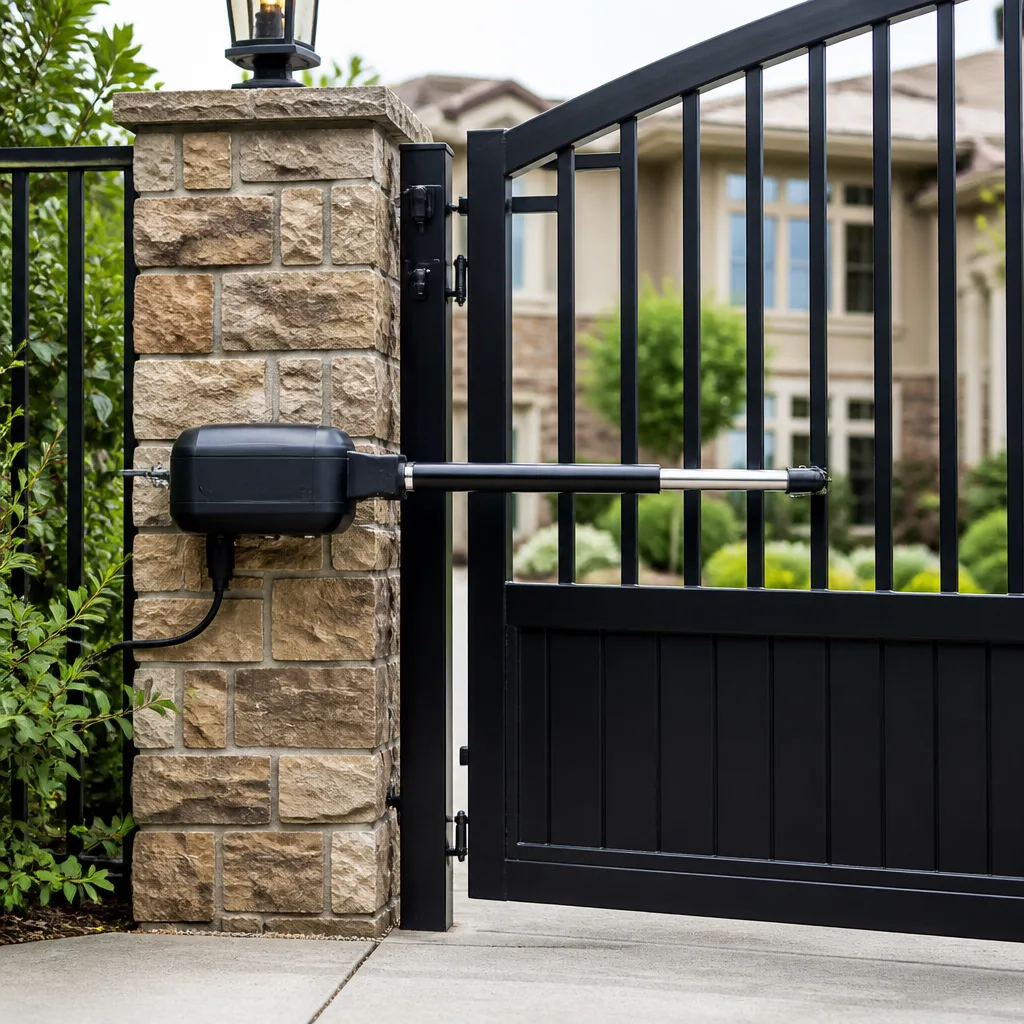
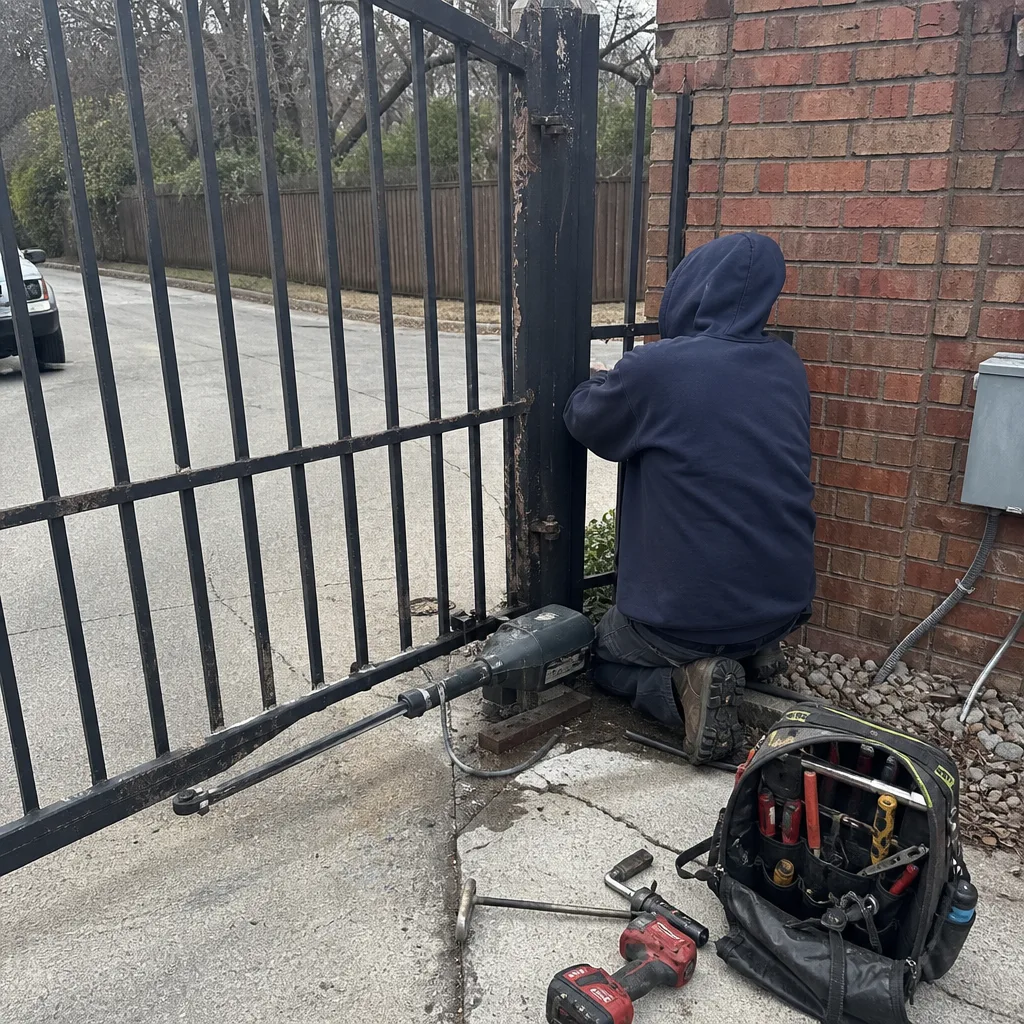 Before
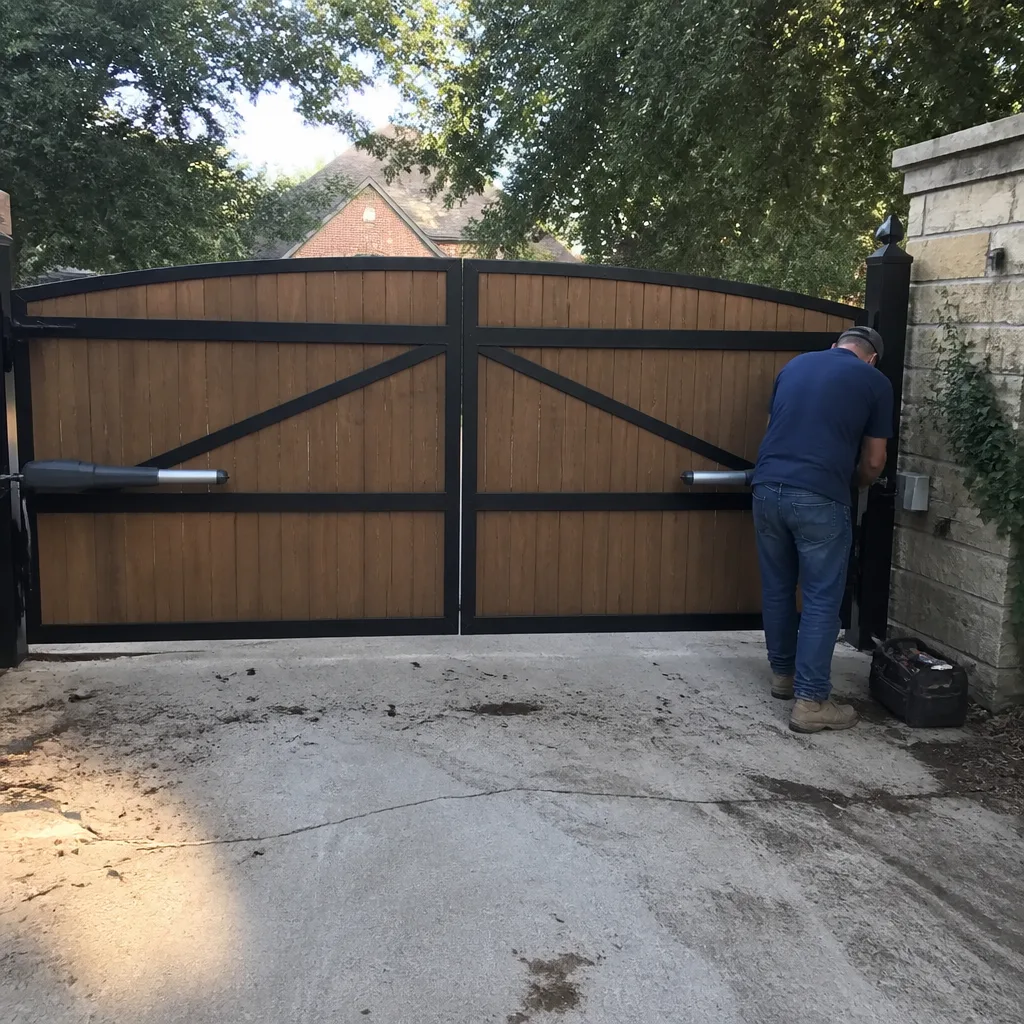 After
After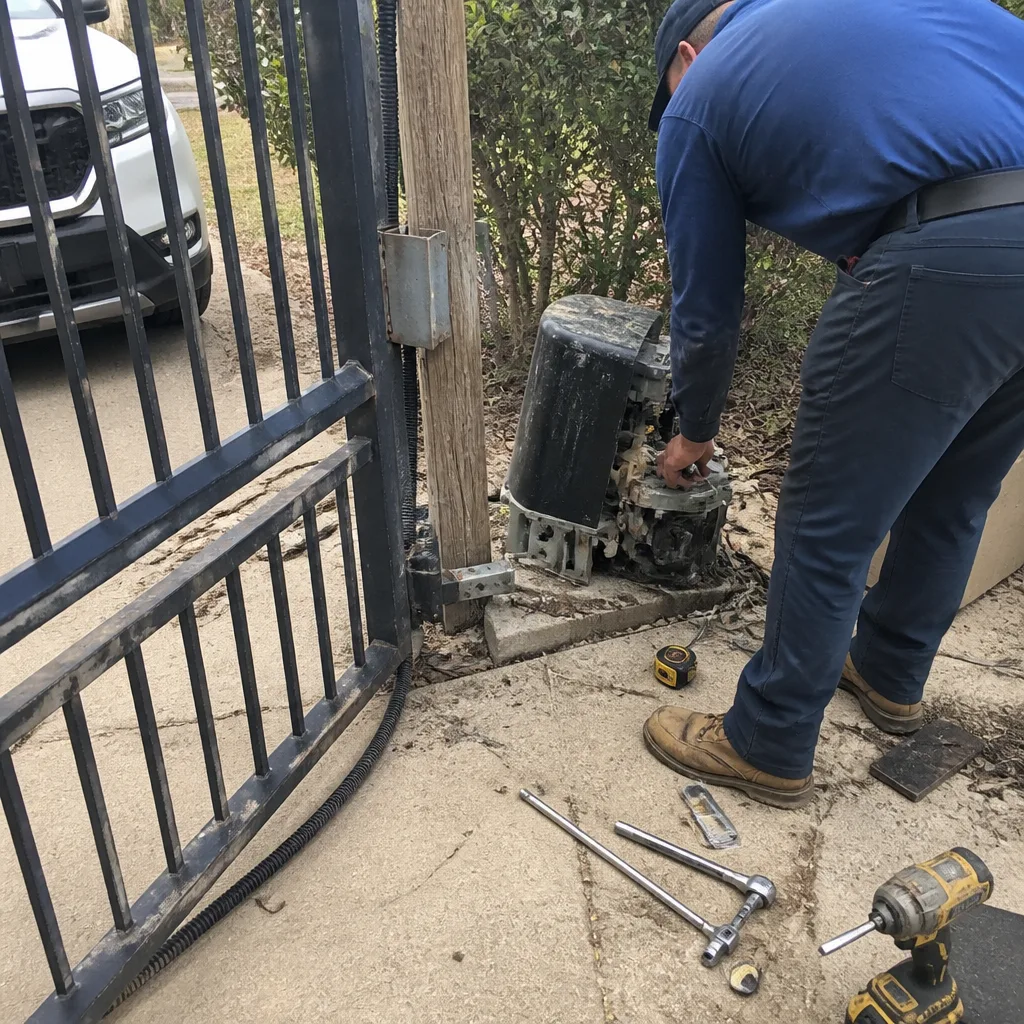 Before
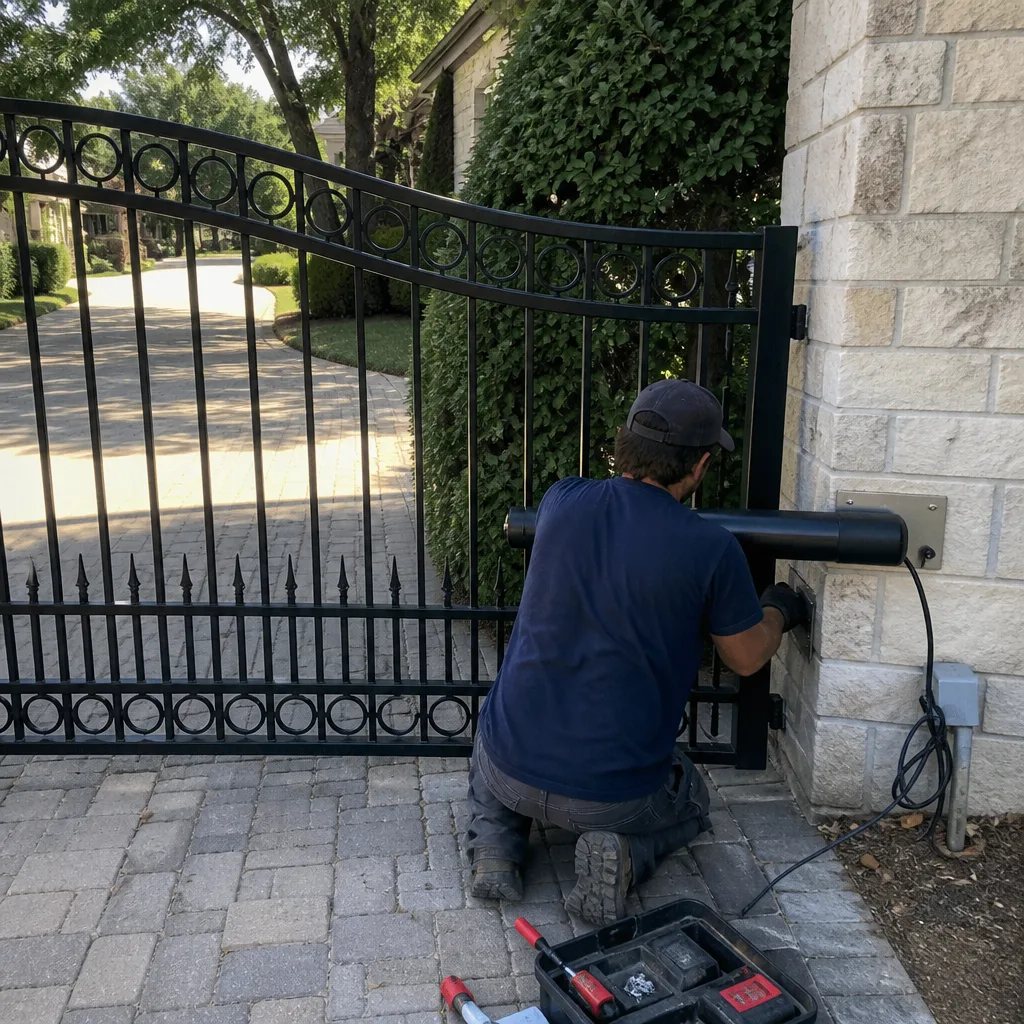 After
After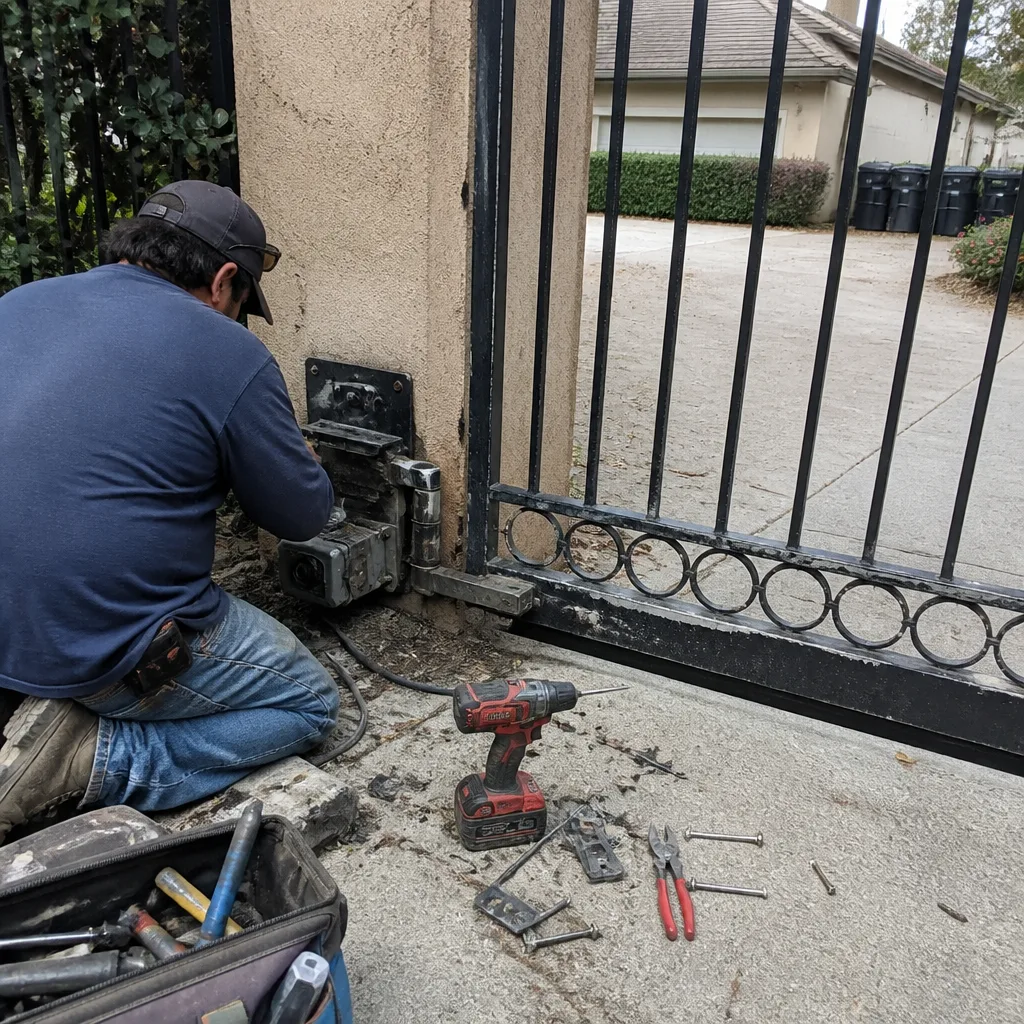 Before
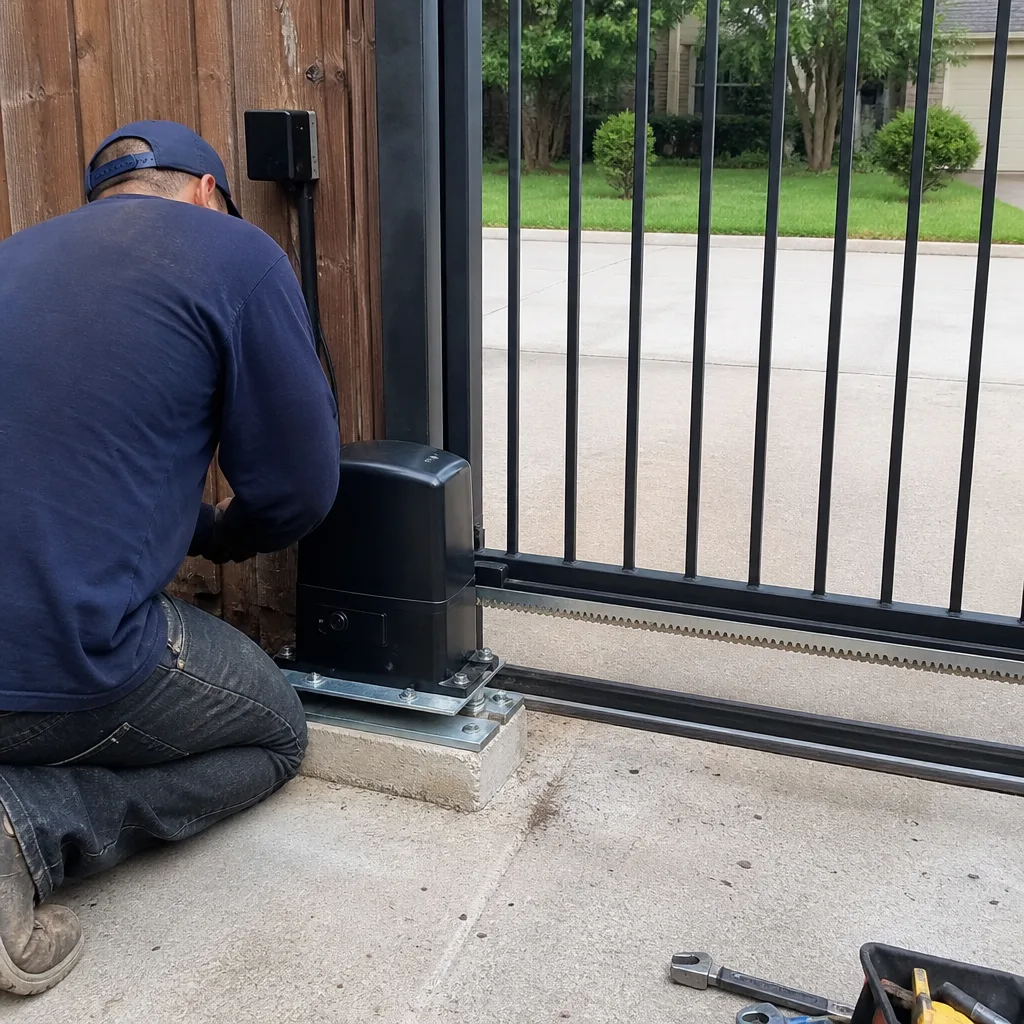 After
AfterBFT Access Control Installation: The Fort Worth Owner’s Guide
BFT access control installation in Fort Worth typically runs $450 to $1,300 installed, depending on whether we’re adding a keypad, card reader, intercom, or full telephone-entry system to your existing gate operator. We stock BFT-compatible parts on the truck and can usually get your system back up the same day. Most owners call us after the keypad stops responding, the remote works from twenty feet instead of two hundred, or the gate opens on its own when a neighbor’s garage door does.
Here’s the thing about BFT gear: it’s solid equipment, but it’s also picky about what it’s paired with. We see a lot of Fort Worth gates where somebody spliced in a generic receiver or used wire that’s too thin for the run, and the whole access system turned flaky within a year. The symptoms come on slow. You’ll notice the gate hesitates, or the keypad takes three tries instead of one, or the intercom buzzes like a hornet in a jar. Then one morning it just won’t open at all.
Which BFT Models This Applies To
This guide covers the BFT operator families we see most in Fort Worth: the Deimos, Phobos, and Rigel swing-gate operators, plus the older Ares and Botticelli lines that are still running in neighborhoods like Wedgwood, Ryan Place, and Benbrook. BFT slide gates from the Mammut and Stoppy series are also in scope. The access control side is where the compatibility headaches live.
The gotcha with BFT is that the control boards changed across generations. An older Deimos BT A400 board won’t take the same plug-and-play radio card as a Deimos BT A400E, and if you buy a universal receiver thinking it’ll just wire in, you’ll find the terminal labeling doesn’t match anything in the manual. You need to match the board revision, not just the model name. We do this by pulling the cover and reading the board number off the PCB itself. Labels fade in Fort Worth sun; we’ve learned not to trust them. On OEM versus aftermarket: for photobeams and keypads, a quality aftermarket part from a reputable supplier works fine and saves real money. For the BFT-specific radio protocol and the control board itself, we recommend OEM. Too many aftermarket “universal” boards have burned out on our watch and cost more in callbacks than they saved up front.
We’re an independent Fort Worth gate company. We’re not affiliated with BFT, but we’ve been installing and servicing their equipment since 2001, and we stock parts for their most common board revisions on the truck.
Signs Your BFT Access Control Installation Is Failing
- The keypad works sometimes and ignores you other times. This usually means the wiring harness at the keypad has corroded from humidity, or the keypad’s membrane has broken down after years of direct Texas sun. The board still works; the input layer is dead.
- The remote range dropped to almost nothing. In most BFT systems, that’s the radio receiver card losing sensitivity. We’ve also traced plenty of these to a gate operator that’s now sitting behind a new privacy fence, sheet metal building, or a row of crape myrtles that weren’t there when it was installed. Radio waves hate metal; BFT’s 433 MHz gear isn’t more immune than anything else.
- The intercom buzzes, clicks, or transmits nothing but wind noise. That’s nearly always a failing power supply on the telephone-entry unit or a ground loop caused by the gate’s 12V wiring sharing a conduit with household current. Cheap wire and cheap conduit planning are the culprits.
- The gate opens by itself at random, or won’t respond to any clicker or keypad at all. Auto-open ghosting is often a failing external receiver picking up stray RF from a neighbor’s opener or a nearby cell tower. The total-dead case is usually the board’s accessory fuse or the transformer feeding the 24V logic rail.
- The exit wand or loop detector stopped seeing your car. Free-exit systems fail in two ways in Fort Worth: the loop saw in the concrete cracks over freeze-thaw cycles and breaks the wire, or the wand’s relay welds shut. Both are fixable without replacing the entire BFT system.
Replacement Cost & What’s Included
In Fort Worth, you’re looking at $450 to $850 for a BFT-compatible keypad or card reader installed, $600 to $1,100 for a radio receiver replacement with new remotes, and $900 to $1,300 for a full telephone-entry or intercom retrofit on a BFT operator. The range depends on wire condition, conduit already in place, and whether we need to convert an older board to talk to newer hardware.
Every price we give is quoted and agreed before we start. You’ll know the number. You’ll know the part. You’ll know what the labor covers. No invoice at the end with a different number on it. The work carries our 90-Day Done Right Promise in writing: if it’s not done right, one call brings us back and we make it right. No fine print, no runaround. That promise is stamped on every job we do in Fort Worth.
DIY or Call Us?
Some access control problems are genuinely diagnostic, and a patient owner can check a few things safely: is the keypad getting power, is the breaker on, are the wire connections at the keypad tight and corrosion-free. You can also check whether the gate operator itself runs when you hit the test button on the control board, because if it does, the operator is fine and the access system is your problem.
But opening a BFT control box and probing a live board with a multimeter is where a careful DIYer can turn a $400 repair into a $1,200 board replacement. The 24V logic side is forgiving, but the 115V side feeding the transformer is not. We’re also called out regularly to undo “fixes” where someone jumped a relay, bypassed a control input, or spliced in a universal receiver the BFT board never liked in the first place. If you’re anywhere near a live board and you don’t know what the terminals read, stop and call us at (817) 241-4067. Hal Gatewood has been doing this in Fort Worth since 2001, and the person who answers the phone is the same person who’ll show up at your gate.
FAQs
In our experience, a BFT keypad or receiver mounted outside in direct Texas sun lasts 5 to 8 years before the weather gets to it; ones mounted under a cover or in a shaded entry can go 10 or more. The heat is harder on the plastic membrane and the electrolytic capacitors inside than the cold is. Call (817) 241-4067 if yours is acting up; we’ll tell you over the phone whether it sounds like a replace or a clean-and-tighten.
Depends on the part. Corroded wiring, loose terminals, a dead fuse, a welded relay: yes, those are repairs we make all the time. A keypad with a cracked membrane or a radio card whose receiver has drifted out of spec: no, those are replacements. We’ll tell you which one you have before any money changes hands, and the estimate is free.
Most single-part installs, which include a BFT keypad, receiver, or photobeam swap, are done in 90 minutes to 3 hours. A telephone-entry or intercom retrofit with new wiring runs half a day. We’ll give you a window before we arrive and we keep it.
We stock the most common BFT radio cards, keypads, photobeams, and remotes on the truck, including parts for the Deimos and Phobos lines. If your board is an older revision or a less common model, we can typically have the part in 2 to 3 business days. We also stock parts for LiftMaster, Mighty Mule, and Ghost Controls if you’ve got a mixed system out there. Call (817) 241-4067 and we’ll check the truck while you’re on the phone.
Give me a call, that’s my real number, and I’ll pick up. If you’re in Fort Worth and your BFT gate won’t open when you need it to, we’ll get you sorted. We serve Fort Worth, Benbrook, Crowley, Burleson, Weatherford, and everywhere in between, with no trip charge inside the county and a free second opinion on any written estimate you’ve already got. If it’s not done right, we make it right. That’s been the deal since 2001.
Written by Hal Gatewood, Owner, Gatewood Fence & Gate at Gatewood Fence & Gate, serving Fort Worth and nearby areas.