
Free on-site gate assessment - hinges, posts, and your LiftMaster or Nice gate operator checked before anything is quoted
The assessment is free and the quote is the invoice.

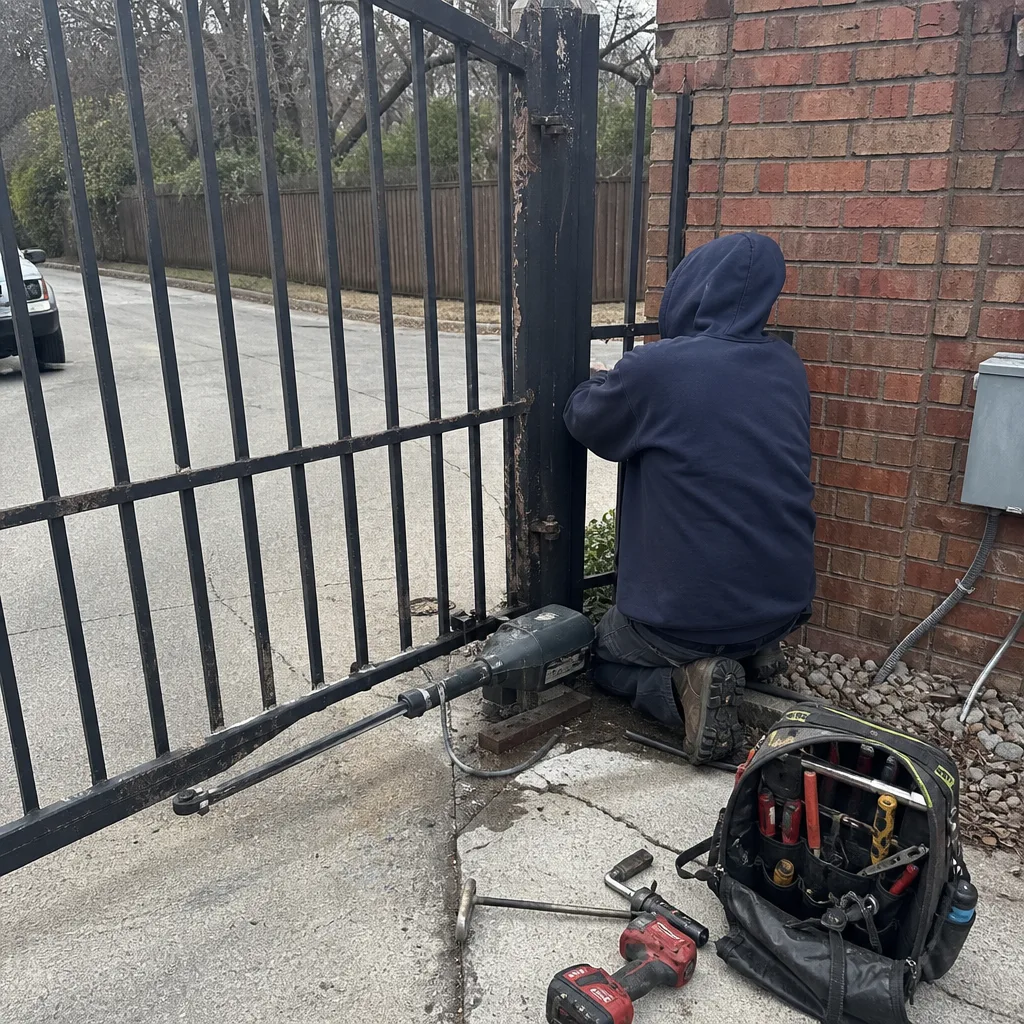 Before
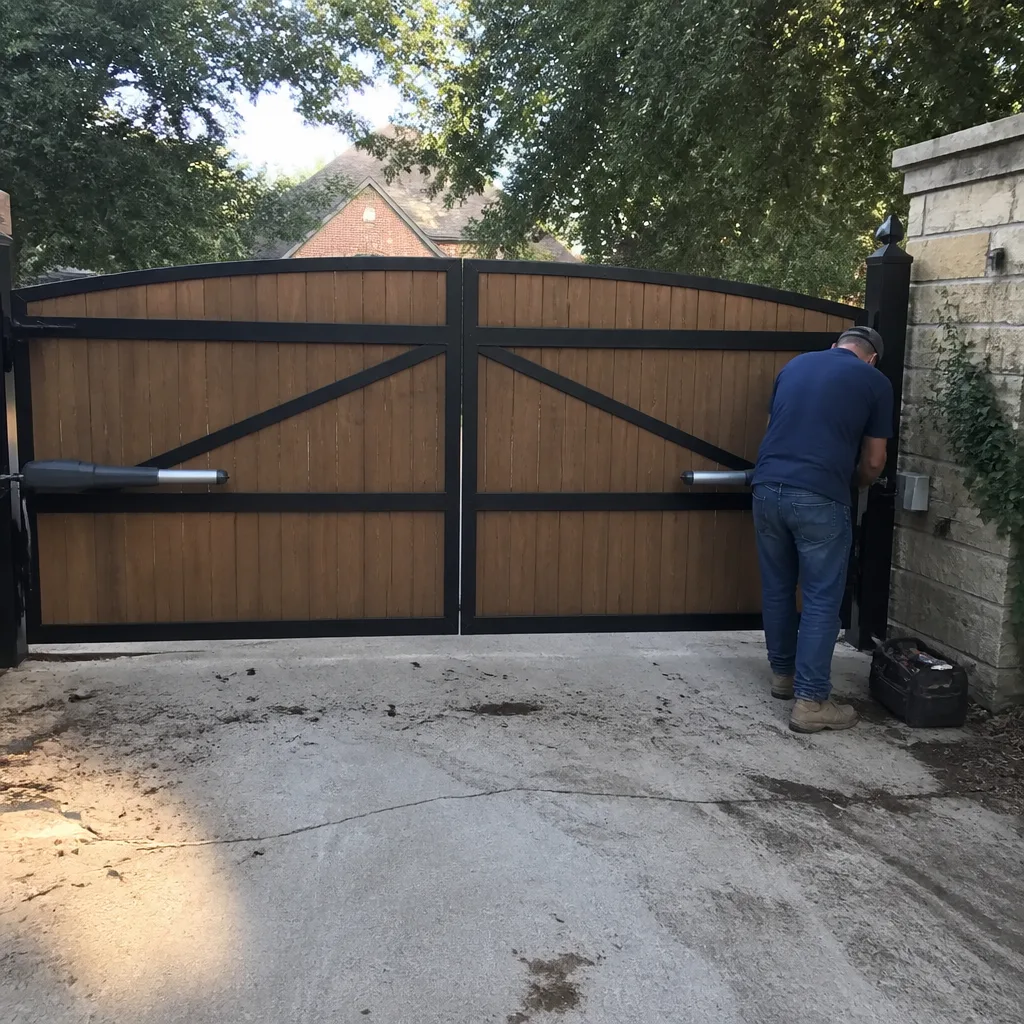 After
After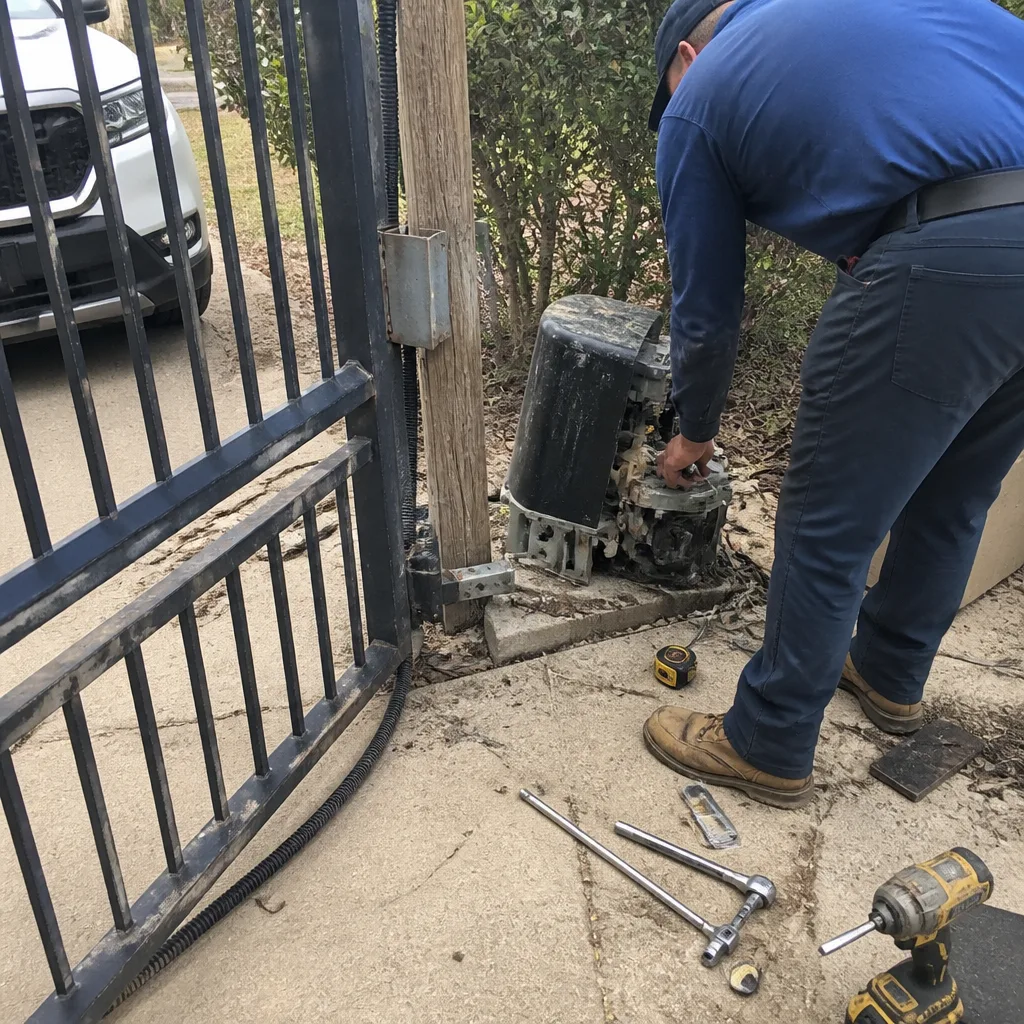 Before
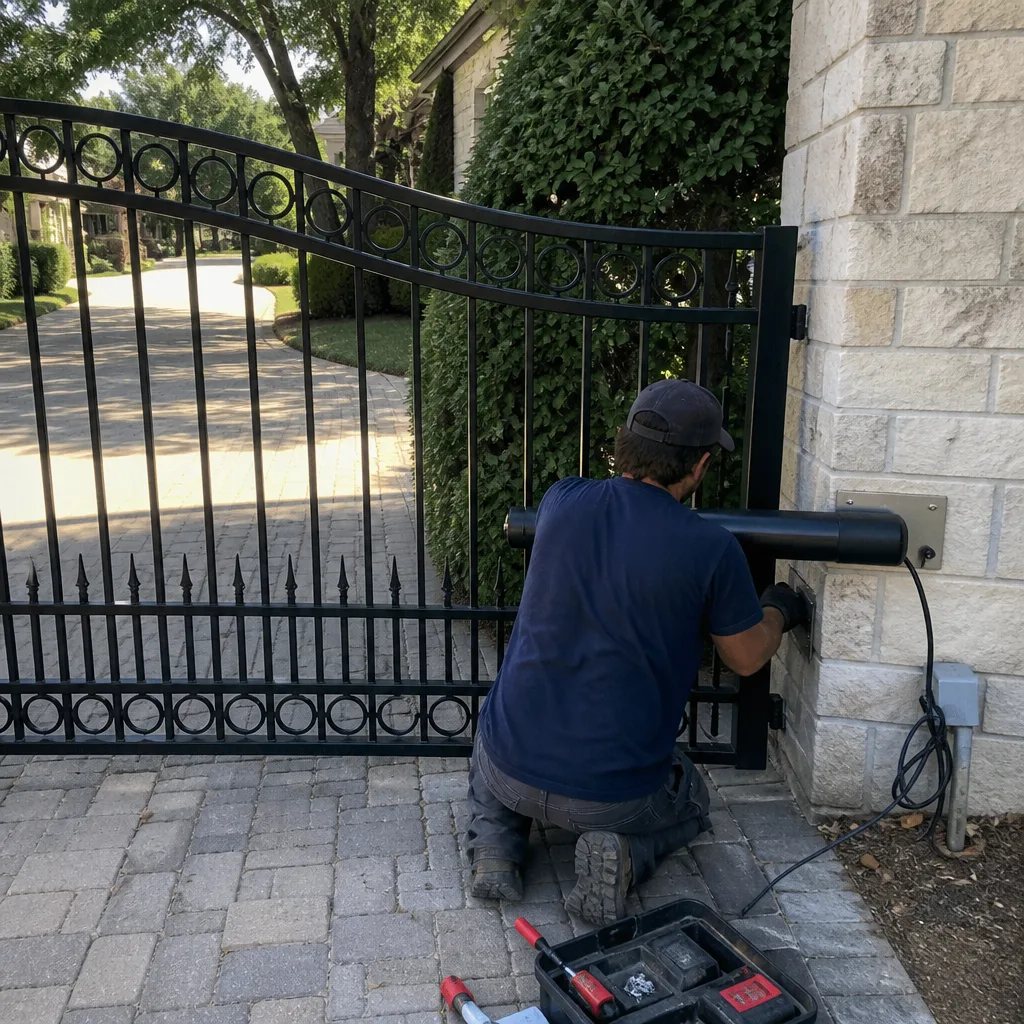 After
After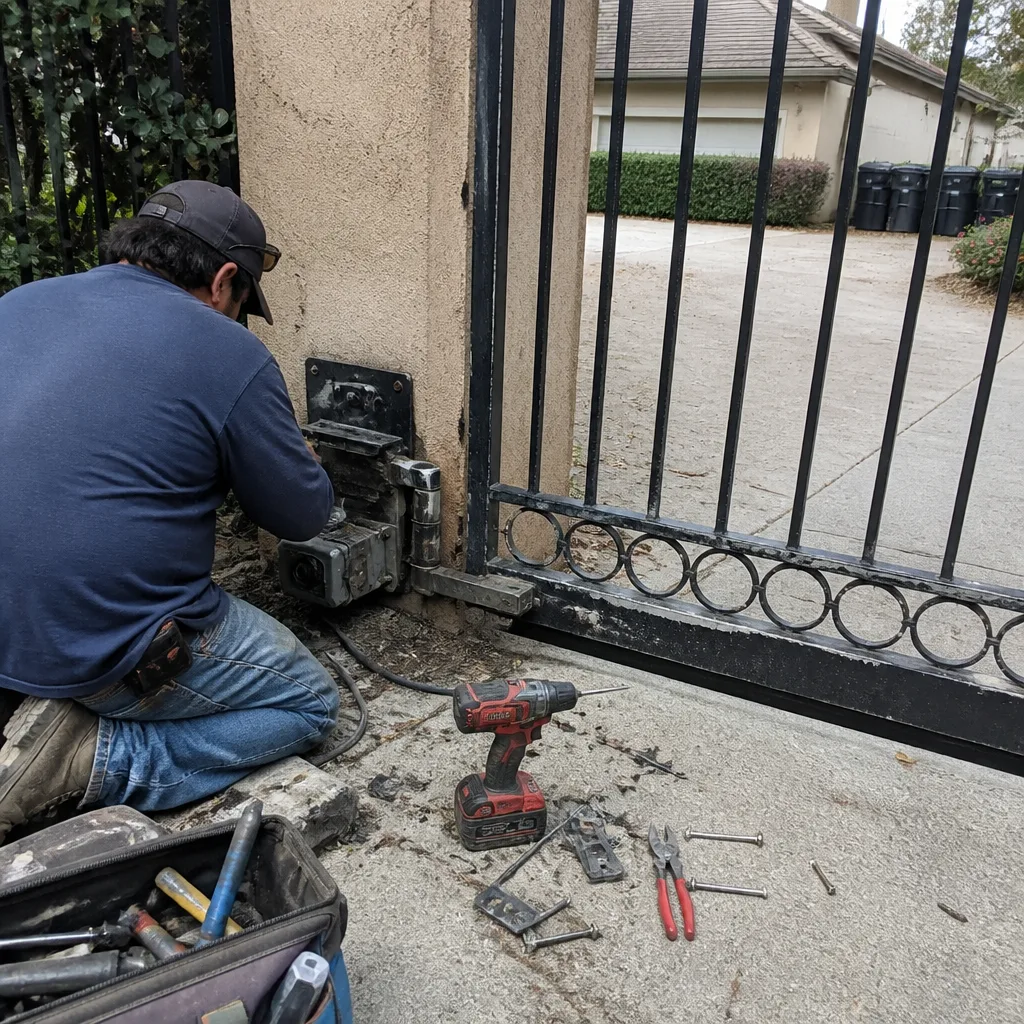 Before
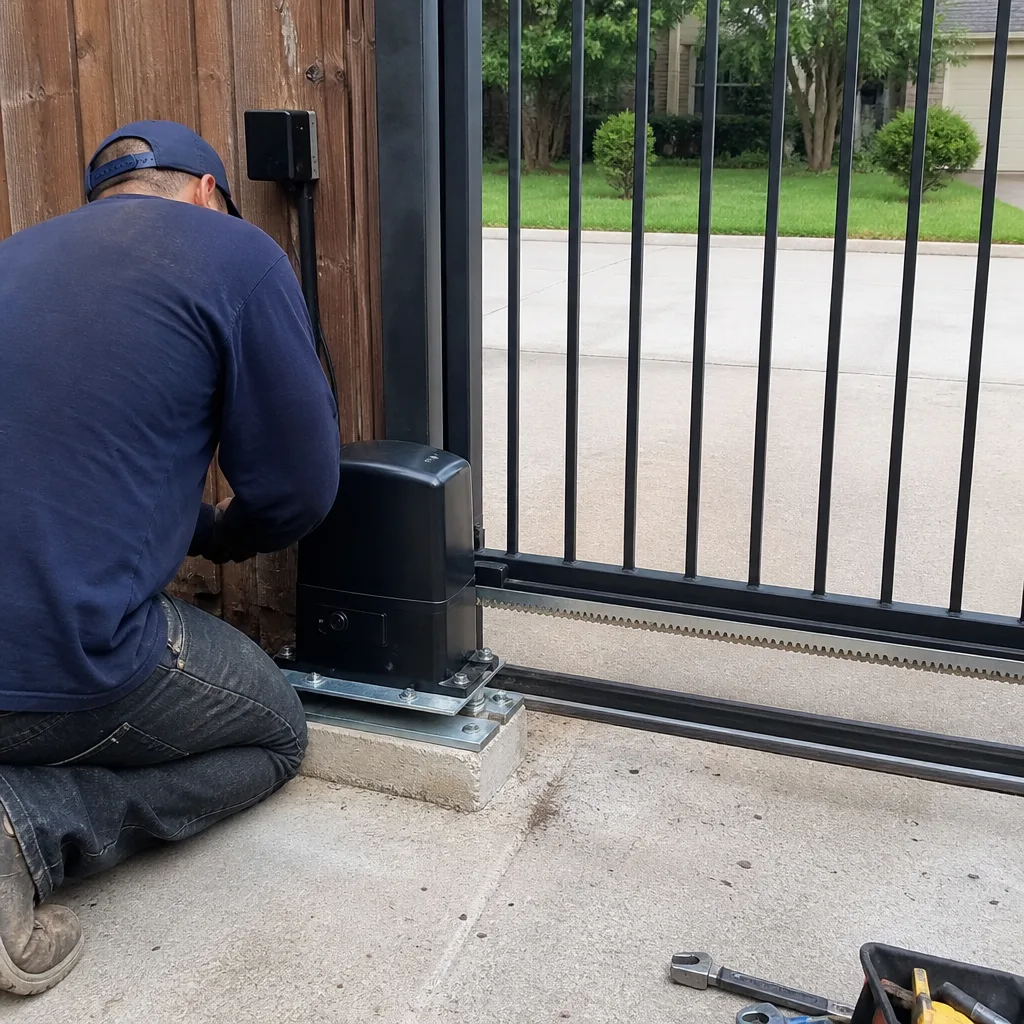 After
AfterViking Hinge & Roller Replacement: The Fort Worth Owner’s Guide
We stock and install Viking-compatible hinge and roller replacement parts across Fort Worth, and a typical hinge and roller replacement runs $180 to $420 installed, depending on your gate’s weight and how many points need attention. Most jobs are done same day if we can get to you before early afternoon. The way you usually find out a hinge or roller has failed is simple: the gate starts dragging on the ground, or it binds halfway through its arc and you have to shove it the rest of the way.
If you’ve got a Viking gate that’s suddenly hard to move, noisy, or sitting crooked in its frame, don’t force it. The problem is almost always mechanical wear at the hinge or roller, not the operator. And the longer it runs with a bad roller or a wallowed-out hinge, the more expensive the fix gets, because that wear migrates into the post and the panel. We’ve been repairing Viking gates in Fort Worth since 2001, and we’d rather catch it before the post needs welding.
Key Takeaways
- Viking hinge and roller replacement in Fort Worth typically costs $180-$420 installed.
- We carry Viking-compatible hinge and roller parts on the truck, not just in a catalog.
- Same-day service is common when you call before early afternoon.
- We’re an independent shop, not affiliated with Viking, which means we match the part to your gate rather than pushing a brand.
Which Viking Models This Applies To
Viking hinges and rollers aren’t one-size-fits-all, and that’s where we see owners get steered wrong. If someone tells you a generic hinge will work on a Viking gate, ask them how they know. The truth is Viking has used different hinge configurations across their product lines over the years: some are bolt-on leaf hinges, some are weld-on barrel hinges, and the roller trucks vary between their lighter residential models and the heavier commercial-duty gates. The hinge that fits a Viking R-6 or T-21 series isn’t necessarily the one that belongs on an older Viking unit from the mid-2000s.
Here’s the compatibility gotcha most people don’t know: Viking has shifted roller truck designs between manufacturing runs over the years. A roller assembly that looks identical from ten feet away may be off by a quarter inch on the axle bore or the mounting bolt spacing. That quarter inch is the difference between a gate that rolls smooth and a gate that eats the new roller in eight months. When we arrive at a Fort Worth home, we measure the existing hinge pins, the panel weight, and the roller track profile before we ever pull a part off the truck. If there’s a manufacturer label still readable on the gate frame or the operator arm, we match that first.
On the OEM-versus-aftermarket question for Viking specifically: we’ve had good results with quality aftermarket hinges and rollers that meet or exceed the original specs, especially for residential gates in the 300 to 600 pound range. For commercial Viking gates or anything over 800 pounds, we lean toward OEM or heavier-duty equivalents, because the cost of a failed hinge on a big gate isn’t just the part, it’s the panel twisting and taking the post with it. We’ll tell you which makes sense for your gate and why, before any work begins.
Signs Your Viking Hinge & Roller Replacement Is Failing
- Gate dragging at the latch end. This usually means a roller has gone flat-spotted or the hinge pins have worn enough to let the panel drop. You’ll see a scrape line in the concrete or gravel under the gate’s travel path. If you keep running it, the bottom rail wears through and the panel starts pulling the hinge post out of plumb.
- Binding or stiff movement in one spot. A roller with a seized bearing won’t spin, so the gate slides instead of rolls. Every cycle grinds the roller flat and puts an extra load on the operator motor. On a Viking, that’s the kind of wear that turns a simple roller swap into a motor replacement if you ignore it long enough.
- Metal-on-metal squeal or crunch when the gate moves. That’s what a roller with no grease left sounds like, or a hinge pin that’s been dry for a decade. By the time you hear it, the part is already failing, not starting to fail.
- Gate panel visibly tilted or sagging at the hinge side. In Fort Worth, our soil expands and contracts with moisture, and hinge posts move over the years. But a panel that’s suddenly lower on the latch side usually points to a hinge that’s worn egg-shaped, not a post problem. We check the post before we blame it.
- Operator struggles or stalls mid-cycle, but the motor tests fine. When the mechanical resistance from bad hinges or rollers goes up, the operator pulls more amps and trips its safety sensor. We’ll test the motor, but nine times out of ten, the motor is working harder because a hinge or roller gave up first.
Replacement Cost & What’s Included
In Fort Worth, a hinge and roller replacement on a residential Viking gate typically lands between $180 and $420, and most single-residence jobs fall in the $240 to $320 range. The range isn’t a trick, it’s just gate math: a six-foot residential gate with two hinges and two rollers is a different job than a twelve-foot driveway gate with four hinges, heavy-duty rollers, and a panel that weighs twice as much. Heavier panel, more hinge points, more time under the gate, higher price.
Every quote includes the parts, the labor, the trip inside the county, and any adjustment to the track or operator limits needed so the gate doesn’t just have new hardware, it actually swings and rolls like it should. We also grease the new bearings and check the hinge post for movement while we’re in there. You’ll know the number before any work starts, and that’s the number on the invoice. We don’t play the call-center game of quoting one price on the phone and “discovering” more after the gate is on the ground. Hal Gatewood’s name is on the shop, and he’s the one who stands behind the 90-Day Done Right Promise on every hinge and roller we install.
DIY or Call Us?
You can safely check a few things on your own: look at the rollers and see if they’re round or flat-spotted, push the gate slowly and feel for a bind, and check whether the hinge bolts are visibly loose. That tells you what you’re dealing with. What we don’t recommend is pulling the gate panel off its hinges without experience. A six-foot Viking gate panel can weigh 150 to 300 pounds, and when a hinge pin comes out, that weight needs to go somewhere. We’ve seen plenty of Fort Worth garages with a bent gate panel and a dented car because the panel came down faster than the homeowner expected.
For heavier gates, or any gate with an operator still connected, call us. Holding a 400-pound panel while trying to line up a hinge pin by yourself isn’t worth the money you’d save. And if the hinge post itself has moved, which is common in our North Texas clay, new hinges alone won’t fix the problem. You’d be paying for a repair that’s doomed. Call (817) 241-4067 and we’ll look at it with you, no obligation.
FAQs
In North Texas, with our heat, dust, and the occasional hard freeze, a well-installed set of hinge and roller parts on a residential Viking gate usually lasts 8 to 12 years before you see meaningful wear. Gates that get cycled several times a day, or gates that never get lubricated, tend to burn through rollers in 4 to 6 years. The Texas summer is rough on grease: it cooks out of the bearings, then the dust gets in, and the roller starts grinding metal on metal.
Sometimes, if it’s caught early. A roller with a dry bearing can often be greased and put back into service with a few more years of life left in it. But a flat-spotted roller or a hinge with an egg-shaped pin bore can’t be economically rebuilt. The time spent trying to machine a worn hinge back to tolerance costs more than the replacement part. We’ll always tell you if your part is salvageable, because repairing what can be repaired is the whole point of how we work.
Most residential Viking hinge and roller replacements are done in 1 to 2 hours on site, including adjusting the gate after the new parts are in. If the hinge post needs welding or shimming because it’s shifted, that adds time, but we do that welding on site, in your driveway, without hauling the gate off to a shop. By the time we leave, the gate should open and close with one hand.
We carry a range of Viking-compatible hinge and roller parts on our service vehicles, so for most residential gates, we show up with what’s needed. For heavier commercial Viking gates or unusual older models, we may need to order a specific part, which is usually a two to three day wait in Fort Worth. Call (817) 241-4067 with your gate’s details and we’ll tell you straight what we’ve got, and if we need to order it, we’ll tell you that too before you spend a dime.
If your Viking gate is dragging, binding, or grinding, don’t wait for the panel to fold or the post to split. Call (817) 241-4067 and we’ll get your hinge and roller replacement scheduled around your day, not the other way around. The estimate is free, the price is agreed before work starts, and if it’s not done right, the 90-Day Done Right Promise means one call brings Hal back. Give me a call, that’s my real number, and I’ll pick up.
Written by Hal Gatewood, Owner, Gatewood Fence & Gate at Gatewood Fence & Gate, serving Fort Worth and nearby areas.